Repairs · Mississauga
Garage Door Tune-Up in Mississauga
The door lands with a thud you can feel through the kitchen floor, and sometimes it bounces back up a few centimetres before settling.
In plain words
A noisy garage door is a door asking for a small amount of attention. Squeaks usually come from dry hinge pins and roller bearings. A rattle is often a hinge screw or track bolt that vibration has backed out. A grinding or popping sound can be a roller worn out of round, or a chain slapping the opener rail. A tune-up goes through these one at a time, tightening, lubricating and adjusting, and separates the sounds that maintenance settles from the ones that point to a worn part. The result is a door your neighbours stop noticing, and a clear list if something needs replacing.
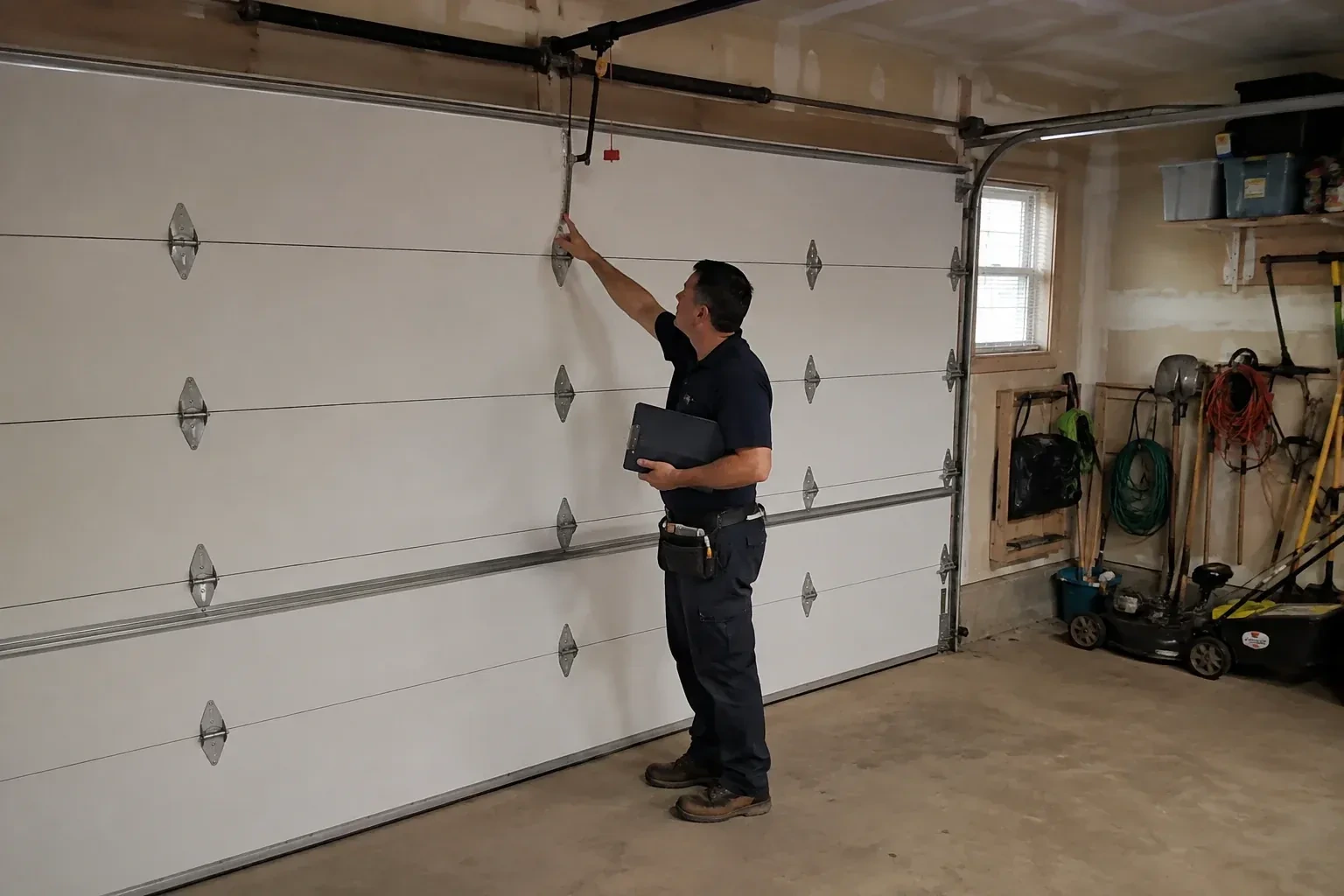
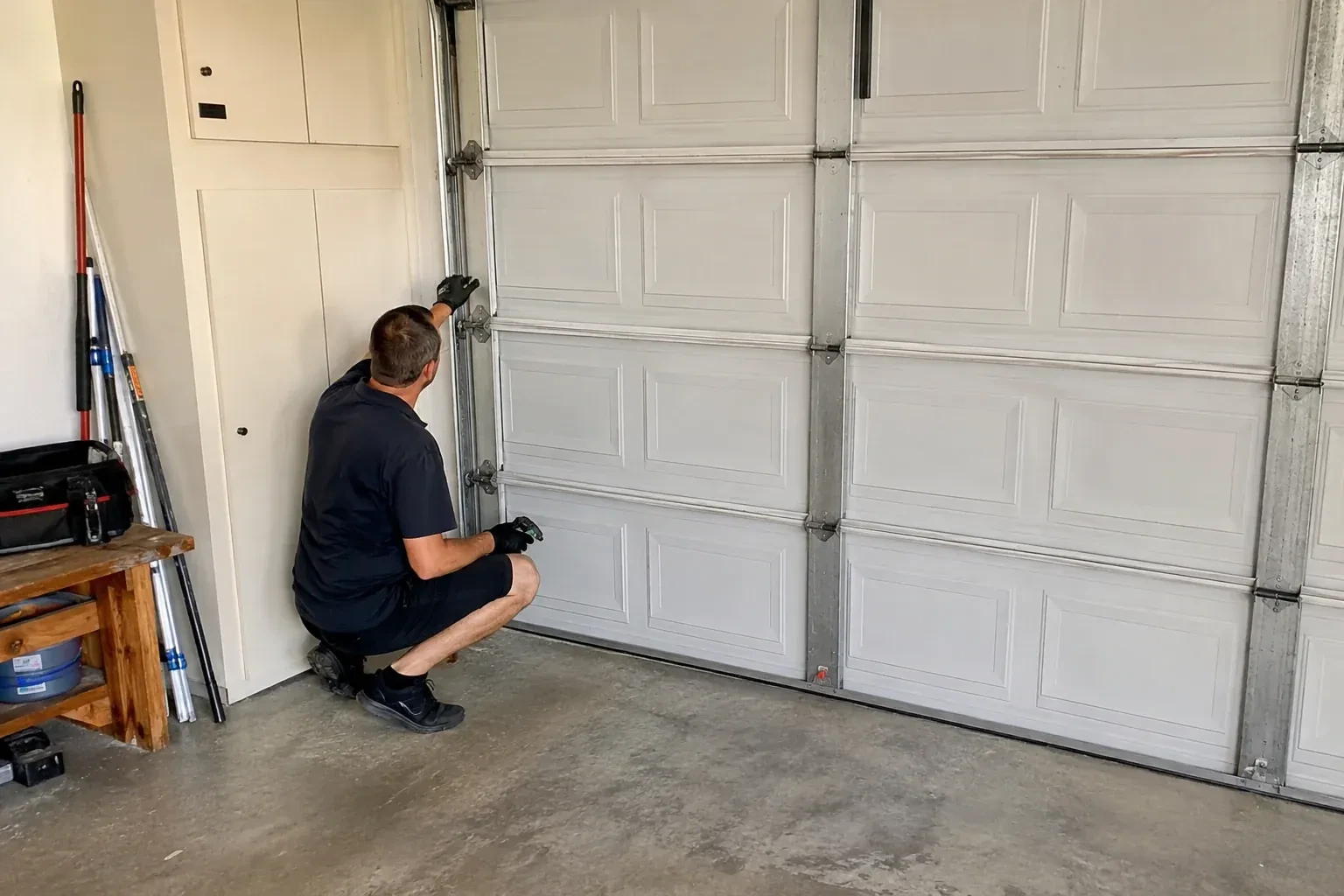
How the visit goesThe door lands with a thud you can feel through the kitchen floor, and sometimes it bounces back up a few centimetres before settling. The bottom section has a small dent where it keeps slamming the concrete.
Garage Door Tune-Up
How the visit goes
The opener's connections and safety devices
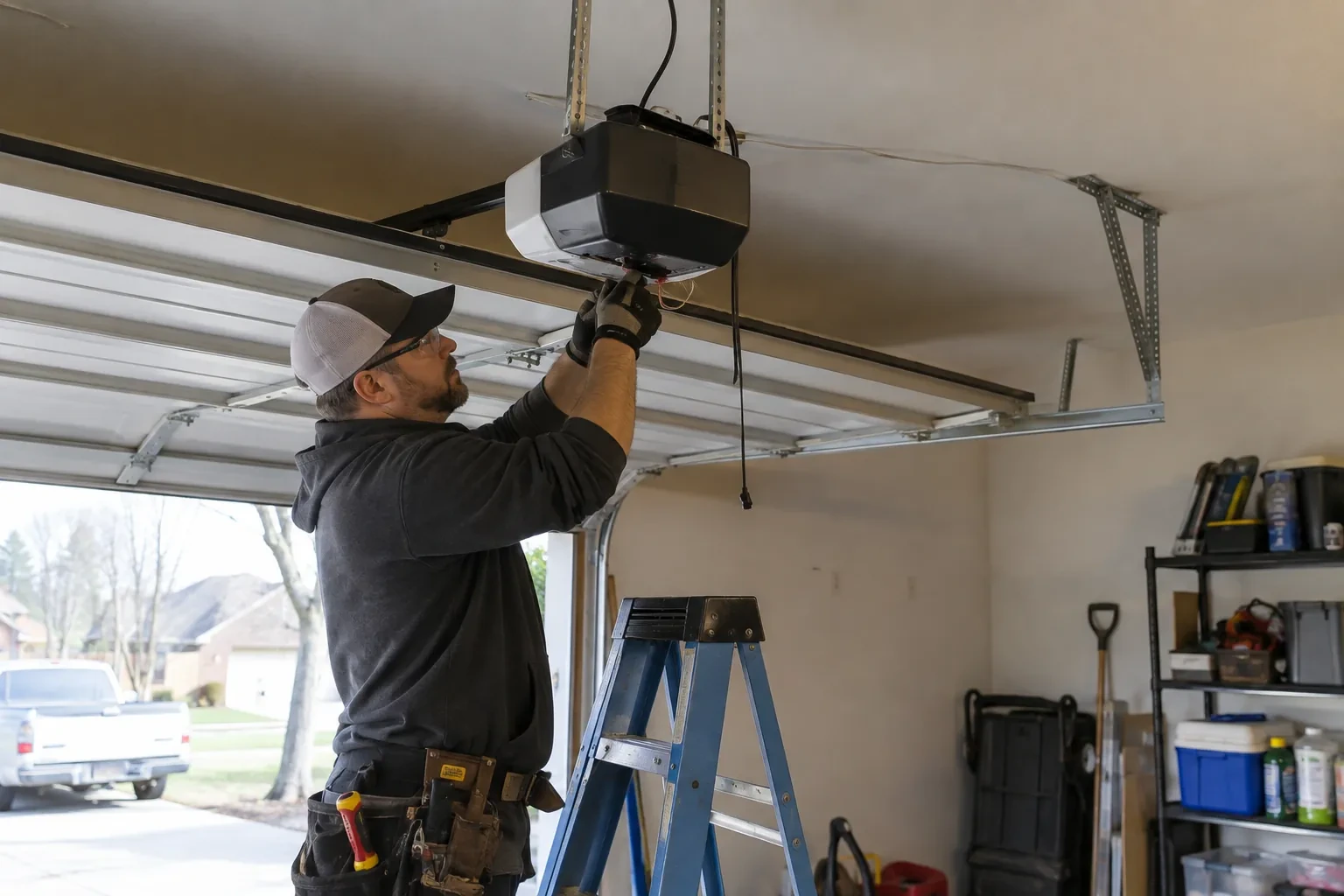
The opener is inspected as part of the door system, not as a separate appliance. The technician checks that the rail is firmly attached at the header and the ceiling hangers, that the chain or belt has the right sag, that the trolley and door arm are not worn or bent, and that the arm sits at the angle the manufacturer intends when the door is closed. Photo-eyes are located and their height measured, since the beam belongs no higher than about 15 centimetres off the floor. Indicator lights are read: steady means aligned, blinking means the pair are not seeing each other. The wall control and the red manual release are confirmed present and reachable.
Small adjustments with a big effect
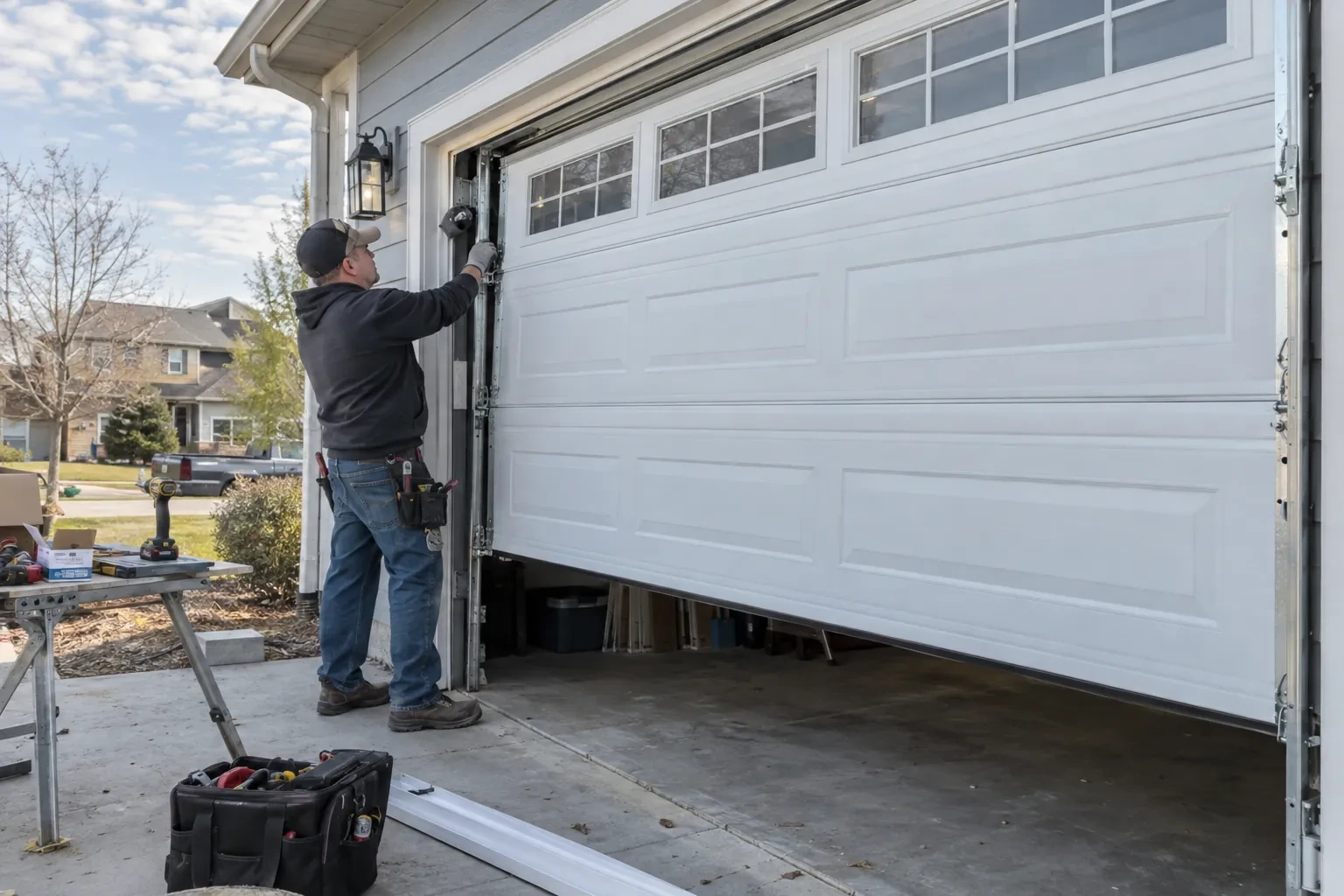
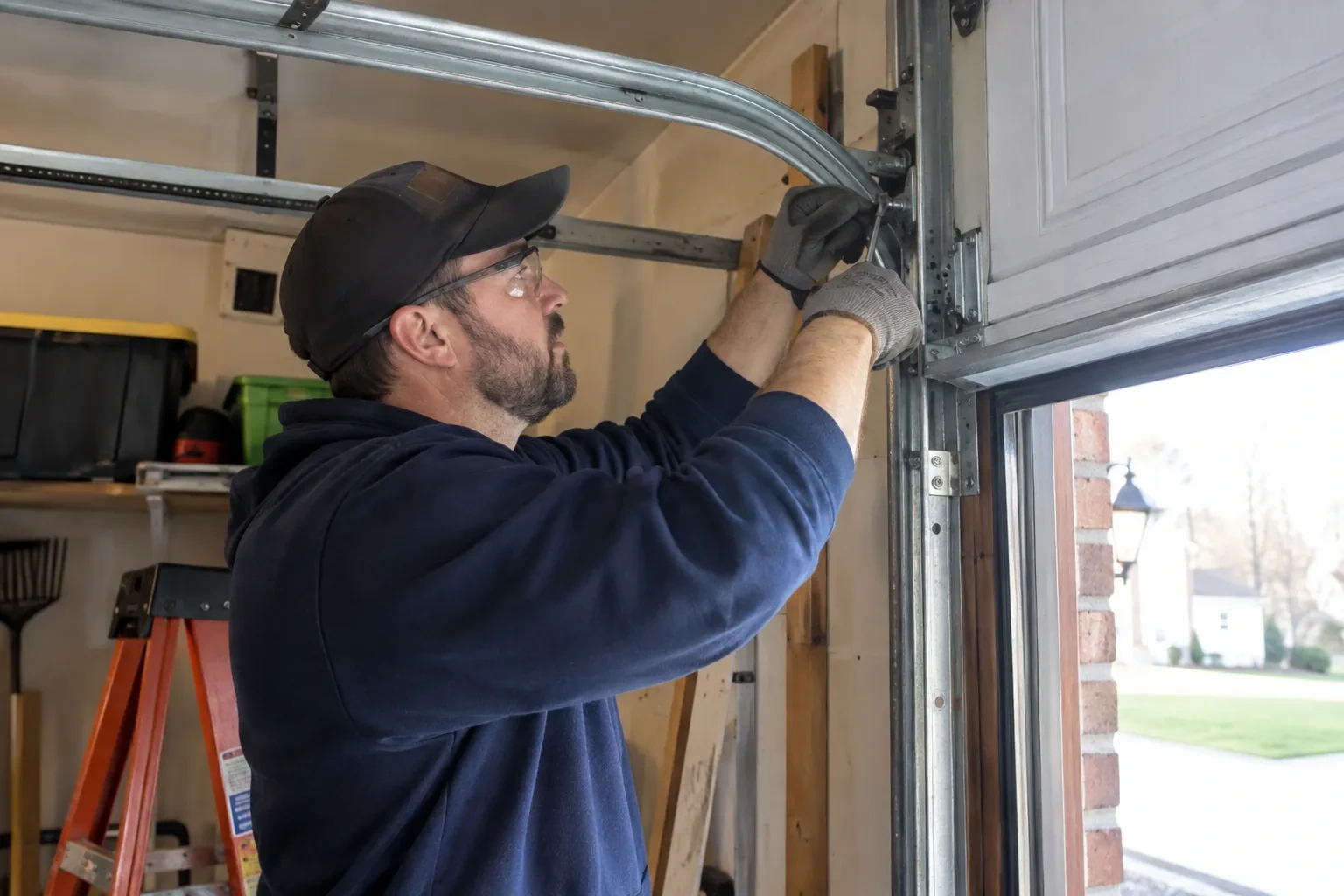
A few minutes of fine adjustment often change the character of a door. A vertical track that has crept inward is eased back so the rollers run in the centre of the channel. A horizontal track that has sagged on its hanger is brought level so the door does not drop into the curve. A strut on a wide top section is checked and tightened so the panel stops flexing when the opener pulls on it. The lock bar is aligned with its slot, or disabled on an opener-driven door so it can never be engaged against the motor. None of these are repairs; they are corrections that let the existing parts work as designed.
Care between visits
A tuned door stays tuned longer with a little attention from you. Every few months, put a small amount of the same silicone- or lithium-based garage door lubricant on the hinge pins and roller bearings and work the door a few times. Wipe the tracks clean and leave them dry. Keep the photo-eye lenses clear of dust and cobwebs, and keep bins and bicycles from leaning on their brackets. Rinse the door and the lower hardware after winter and treat the seals with silicone spray. Listen once a month as the door runs; a new sound is easier to address early. Anything to do with springs, cables or bottom brackets is left for the technician.
Garage Door Tune-Up
In the van
2x4 test block and tape measure
Silicone or lithium garage door lubricant
Silicone spray for seals
Bottom seal (astragal)
Hinge screws and track bolts
Garage Door Tune-Up
What affects the quote
Upgrades you choose on the day
Quieter nylon rollers, a new bottom seal profile, a keypad or a battery backup for the opener are options some customers add while the technician is there, each priced as a separate line.
Type of opener
Chain, belt, screw and wall-mounted jackshaft openers each have their own tension checks and lubrication points, and older units take longer to set for travel and force than newer ones.
Photo-eye and wiring work
Cleaning and realigning sensors is routine. A bent bracket, a chafed wire or a sensor that has failed means a part or a rewire, which is named separately.
What to have ready
- Are the remotes, wall button and keypad all working as expected?
- What have you noticed: noise, shaking, hesitation, slamming, or reversing on its own?
- Is the door worse in cold weather or after rain?
Garage Door Tune-Up: questions
QuestionsCan a tune-up make my noisy door quieter?
Usually, yes, and often dramatically. Most garage door noise comes from dry hinge pins, dry roller bearings and hardware that vibration has loosened, and those three are exactly what a tune-up addresses. Some noise comes from parts that have worn, such as a roller gone out of round or a chain that has stretched, and the technician tells you which sounds were settled by maintenance and which point to a part worth replacing, with a separate quote for that.
Will the tune-up include replacing worn parts?
Small wear items found on the day, such as a roller or a hinge on a middle section, a bottom seal or a few fasteners, can often be replaced during the visit if you agree and the part is on the truck. Larger items, including springs, cables, drums, bottom brackets, a bent track or an opener gear, are written up as separate repairs with their own quote so you can decide with the facts in hand rather than under a raised ladder.
How often should a garage door be tuned up?
Once a year suits most attached garages here, ideally in the fall before cold weather thickens lubricant and stiffens seals. Door and opener makers suggest lubrication every three to six months and a homeowner balance check and reversal test every month, so an annual professional visit sits on top of that light routine. A lightly used door in a detached garage may go longer; a heavily used one, or one exposed to salt spray, benefits from a spring check too.
Related services
- Off-Track Garage Door ResetOne side of the door hangs a hand's width lower than the other.
- Garage Door Panel ReplacementYears of slap shots have peppered the lower two sections with dents.
- Garage Door Bottom Seal ReplacementOne end of the bottom seal has slipped out of its channel and hangs down like a loose shoelace.