Springs · Mississauga
Extension Spring Replacement
It is the first hard frost of the year and the door on the old detached garage has stopped halfway, squealing at one pulley.
In plain words
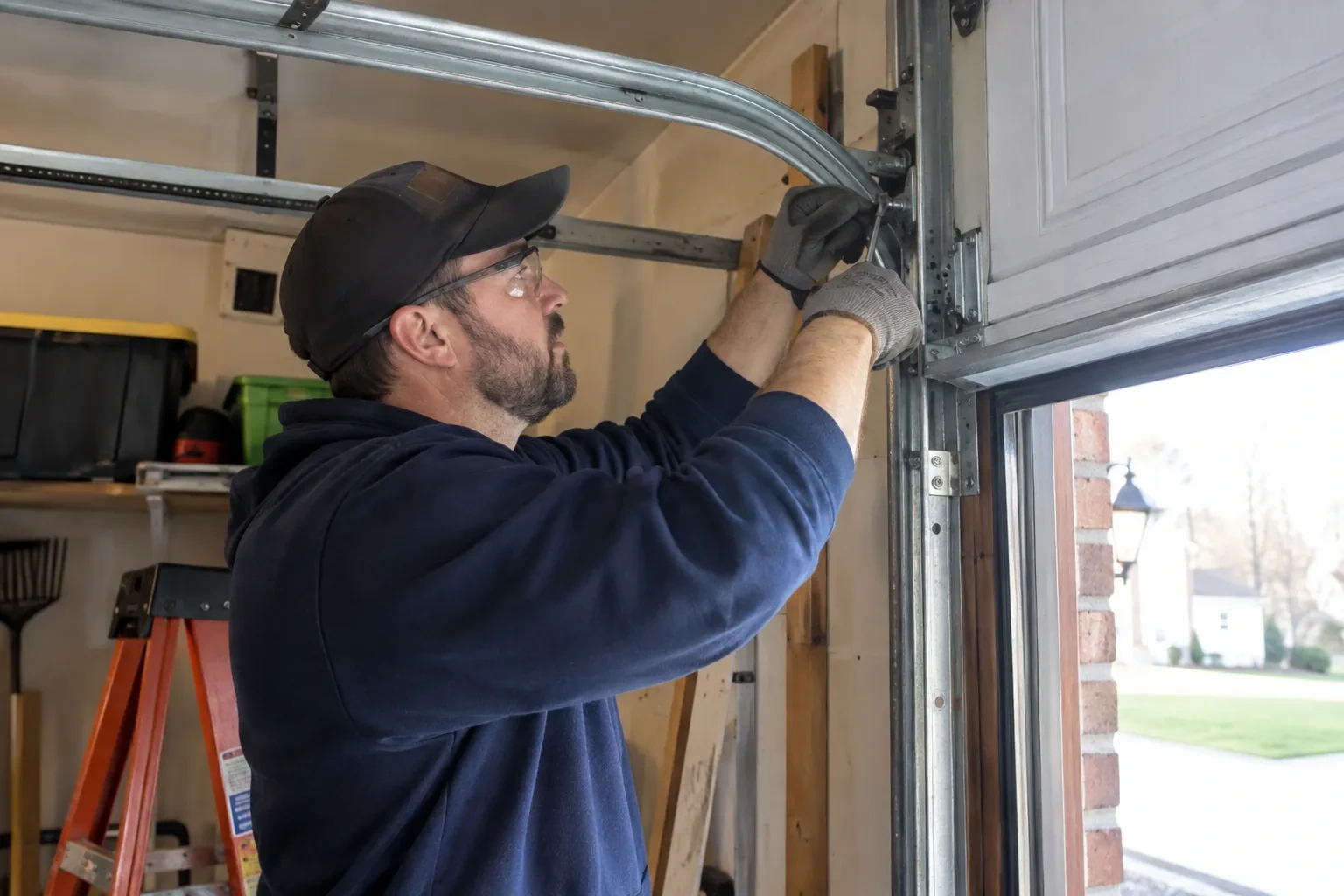
Every extension spring should carry a containment cable, and replacement is the moment to make sure yours do. A containment cable runs through the centre of the spring and is anchored at both ends, to the rear hanger and to the bracket at the front of the track. It does no lifting; its purpose is to hold a spring that breaks so the pieces stay on the cable. Many older doors predate this practice, which a home inspection checklist checks for. When springs are replaced, new containment cables are fitted with them, which keeps a broken spring's pieces contained, not the door's weight, balance or safety.
How the visit goesThe home inspector's report on the house you are buying flags the garage door: extension springs with no safety cable running through them, coils showing rust, and a door that sank when he lifted it partway. The seller has never had it looked at.
Extension Spring Replacement
How the visit goes
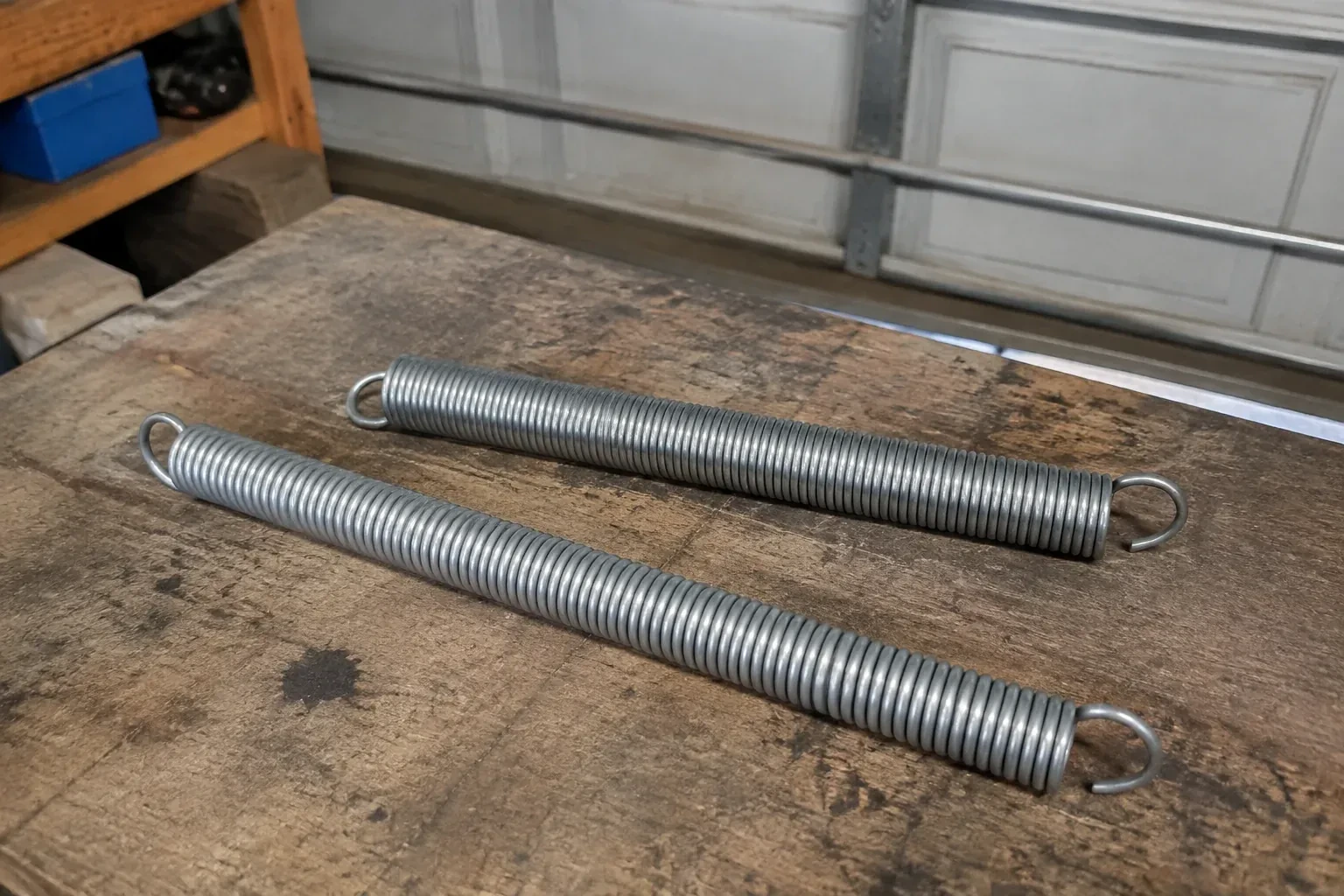
Both springs, side by side
Even when only one spring has snapped, both are read closely. The technician looks for gaps opening between coils with the door up, which means the wire has stretched and lost its pull; rust pitting and scale, especially where the spring sits nearest the back wall; a spring hanging visibly longer or lower than its partner; and end loops that have opened or cracked. The two are compared for length, coil diameter and wire size, because springs of different ratings are sometimes found on the same door after a past repair. Whatever is found, the outcome is the same, a new matched pair, but the reading tells the technician what rating the door really needs.
Setting both sides to the same hole
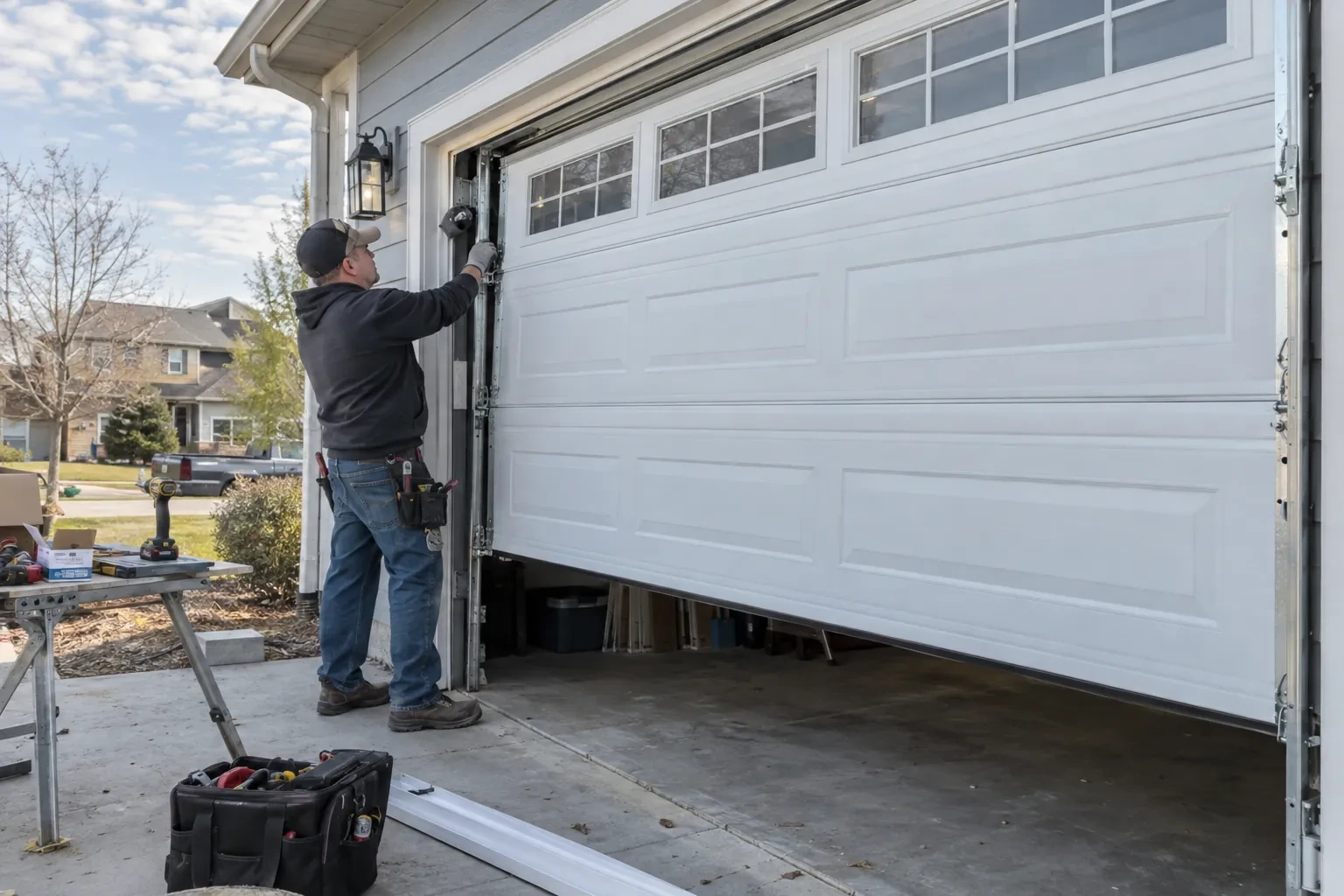
The initial tension is set with the door open and clamped, so the technician is adjusting slack springs rather than loaded ones. Each cable's S-hook is placed in a hole on the hanger, or its clip set to a mark, and the two sides are put at the same position. The cables are drawn to the same snugness so that neither corner of the door is being pulled ahead of the other. A level across the top section confirms the door is square in its tracks. Only when both sides read the same do the clamps come off and the door come down for its first balance check.
Lubrication that keeps the new set turning
Twice a year, in spring and before winter, a can of garage-door lubricant does most of the maintenance the springs need. Spray a light coat along each extension spring, working from the hanger to the pulley; it slows rust in a damp garage and quiets the coils. Put a drop on each pulley axle and on the bolts through the pulley forks, then on the hinge pins and roller stems. Leave the tracks dry and wipe them clean, since grease there collects grit and stops rollers rolling. Heavy grease and general-purpose oil are avoided on the springs because they hold moisture against the wire. Run the door a few times afterwards to spread the film.
Extension Spring Replacement
In the van
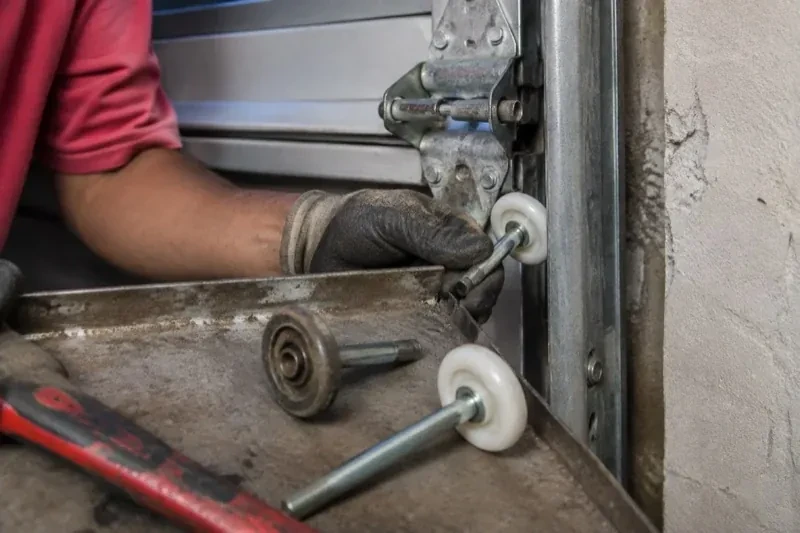
Replacement rollers and hinges
Pulleys (sheaves) and forks
Garage-door spray lubricant
Extension springs, matched pair
Bottom brackets and clevis pins
Extension Spring Replacement
What affects the quote
Opener adjustment and testing
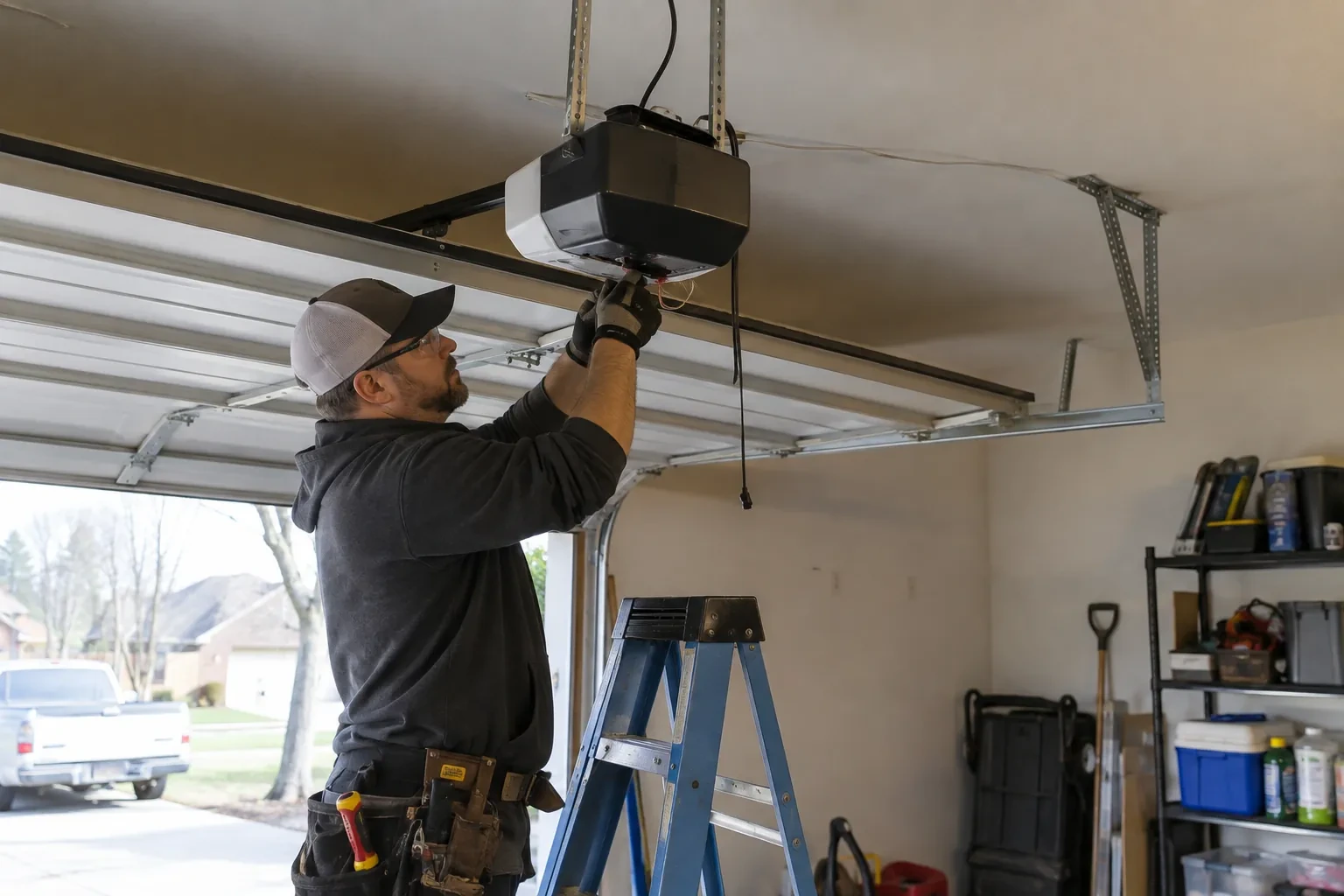
Resetting the opener's force and travel to the newly balanced door and running the reversal tests is a short task that the quote names when it applies.
Rollers, hinges and bottom brackets found worn
Cracked roller wheels, split hinges or a bottom bracket rusted at the cable pin are pointed out during the inspection and offered as optional items, since the door is already open and secured.
How the door is sitting
A door resting closed with one spring gone is straightforward. A door stuck partway, twisted in its tracks or with a cable wrapped around a pulley has to be supported and straightened first.
What to have ready
- Is there a thin cable running through the middle of each spring?
- Do the springs run along the tracks beside the door, or is there one spring above the opening?
- Is a car parked inside that will need to come out first?
Extension Spring Replacement: questions
QuestionsIs it all right to keep shelves and storage near the springs?
Keep a clear zone around them. The springs, pulleys and cables move on every cycle, and anything leaning into their path, such as a ladder, a hockey bag or a shelf edge, can catch a cable or knock a pulley. Storage that crowds the rear hangers also slows any future service. A hand's width of clear air around each spring's full travel, and nothing hung from the springs or their cables, is the rule of thumb.
How long do extension springs last?
Springs are rated in cycles, one cycle being a full open and close, and a standard set is built for a number in the ten-thousand range. A door used four times a day gets through that in several years; a door used a few times a week takes far longer. An unheated, damp garage shortens the figure through rust. Regular lubrication and a door kept in balance stretch it out.
Could I switch to torsion springs instead of replacing the extension ones?
Sometimes, and it is worth asking. A torsion system needs room above the door opening for its shaft and a header that can carry the spring bracket, which many older garages with a low ceiling simply lack; extension springs are there for that reason. Where the headroom exists, a conversion is a separate job with its own hardware and quote. The technician can tell you on the spot which route suits your garage.
Related services
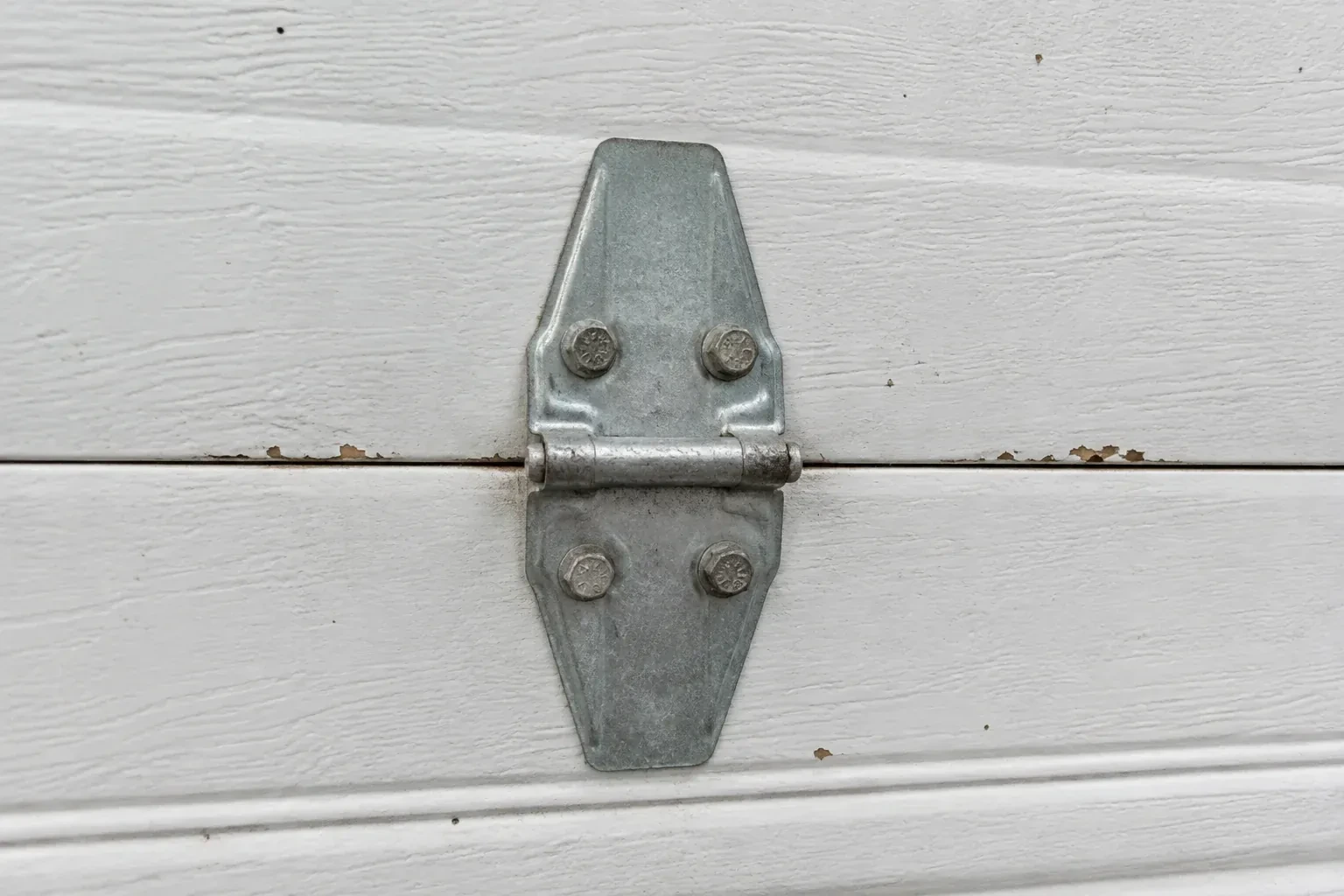
- Garage Door Hinge ReplacementWatching from inside as the door opens, you can see the gap between the second and third panels open up on one side as they turn the corner into the ceiling, then close again.
- Garage Door Track Repair or ReplacementThe garage floor has settled at one corner, and the door now scrapes the concrete on that side while daylight shows at the other.
- Garage Door Cable ReplacementSomeone left the snow shovel leaning in the opening and the door came down on it.