Garage Doors in Mississauga, OntarioA frayed cableis a warning.
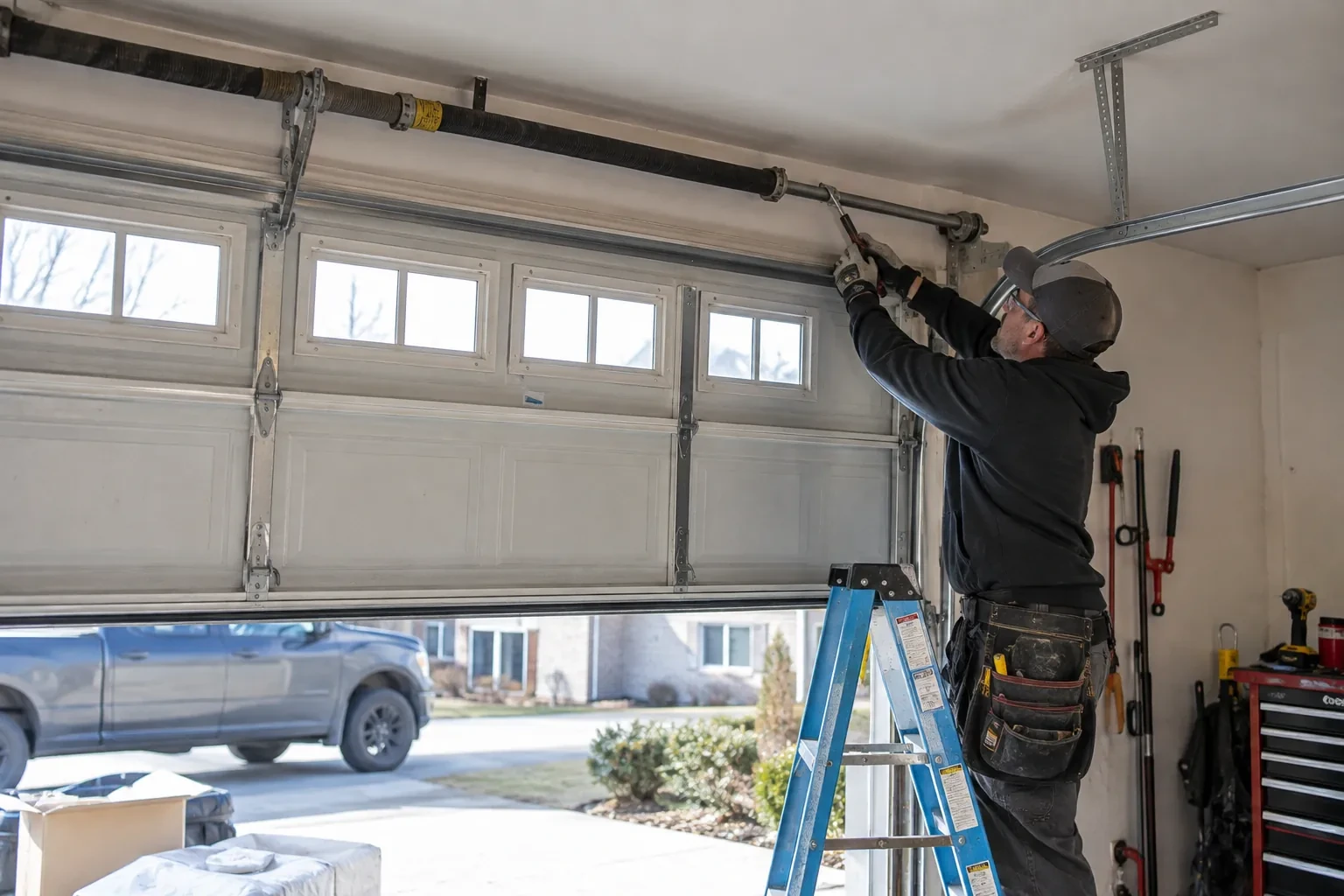
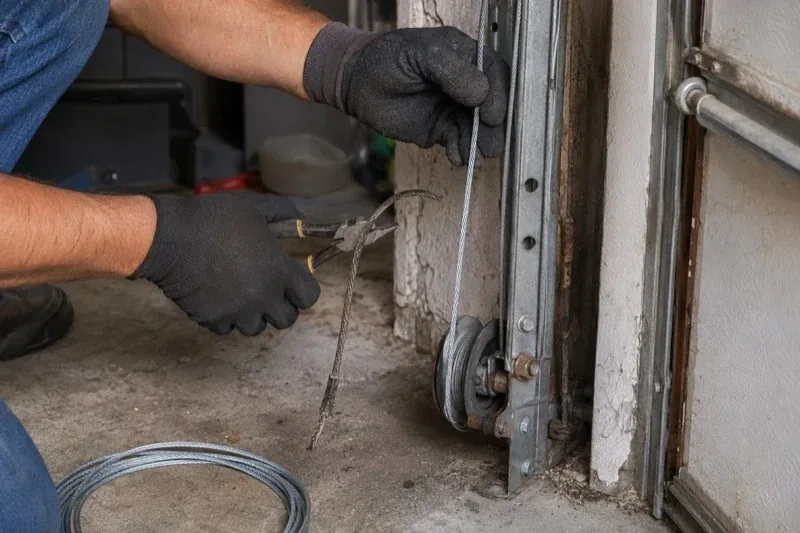
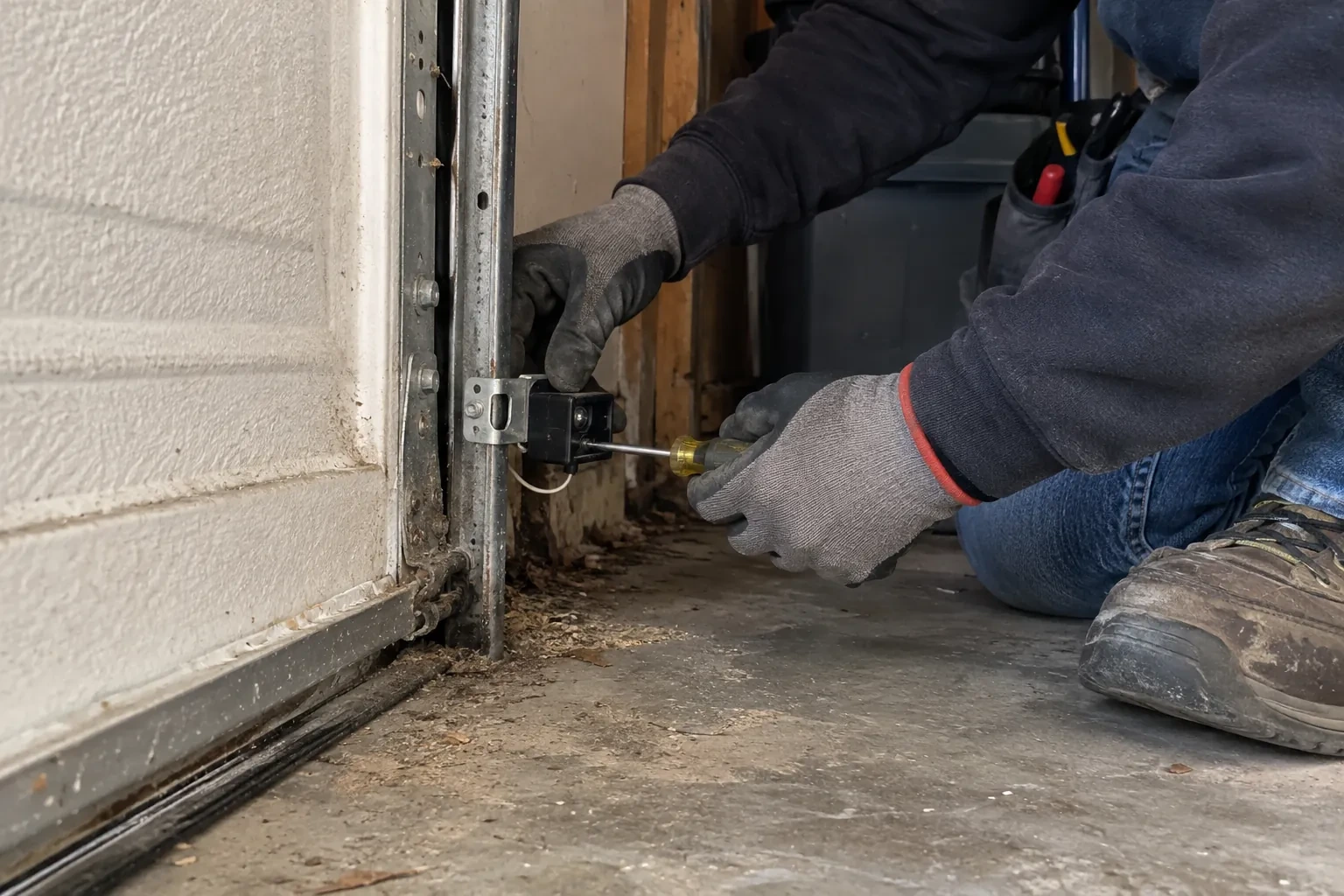
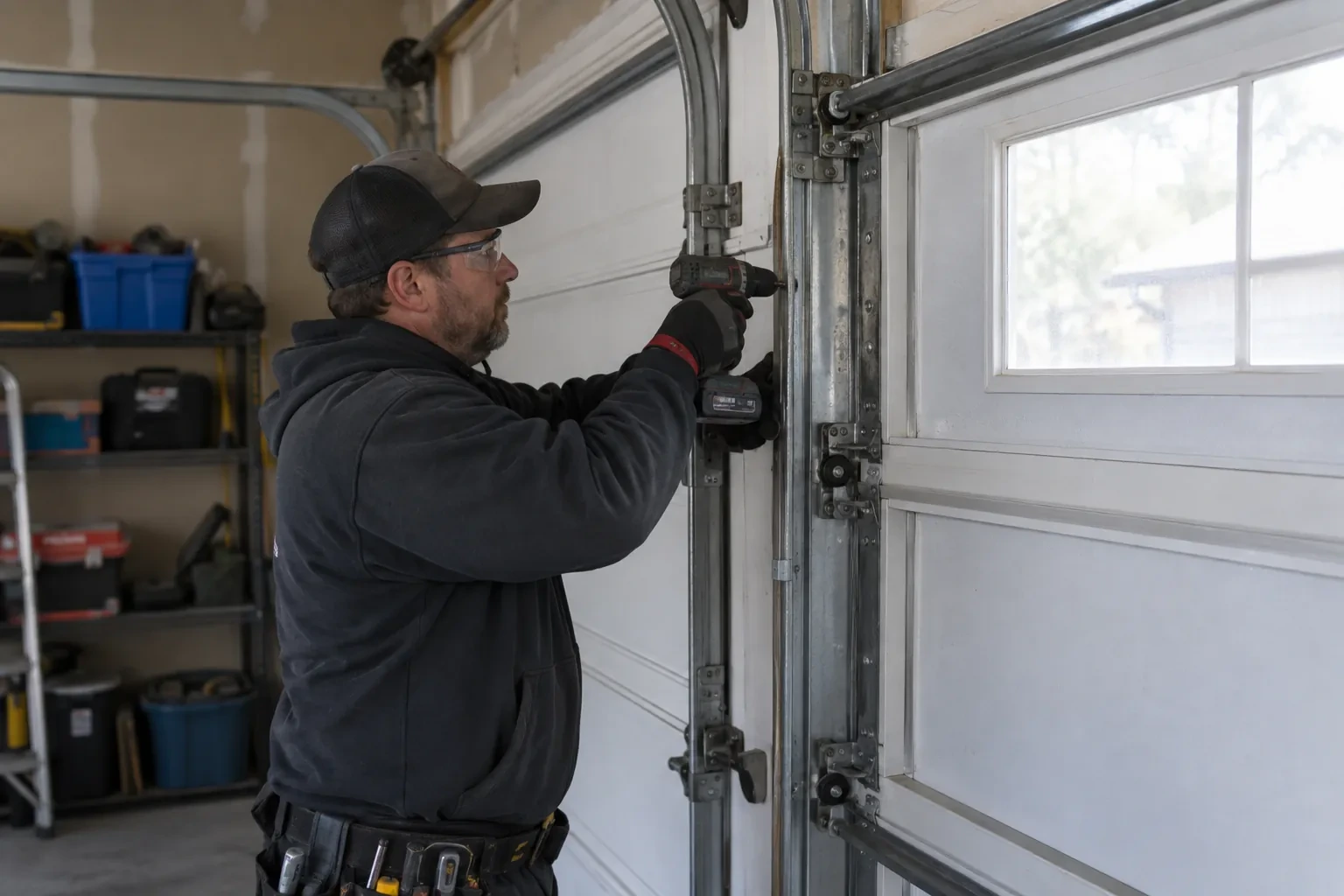
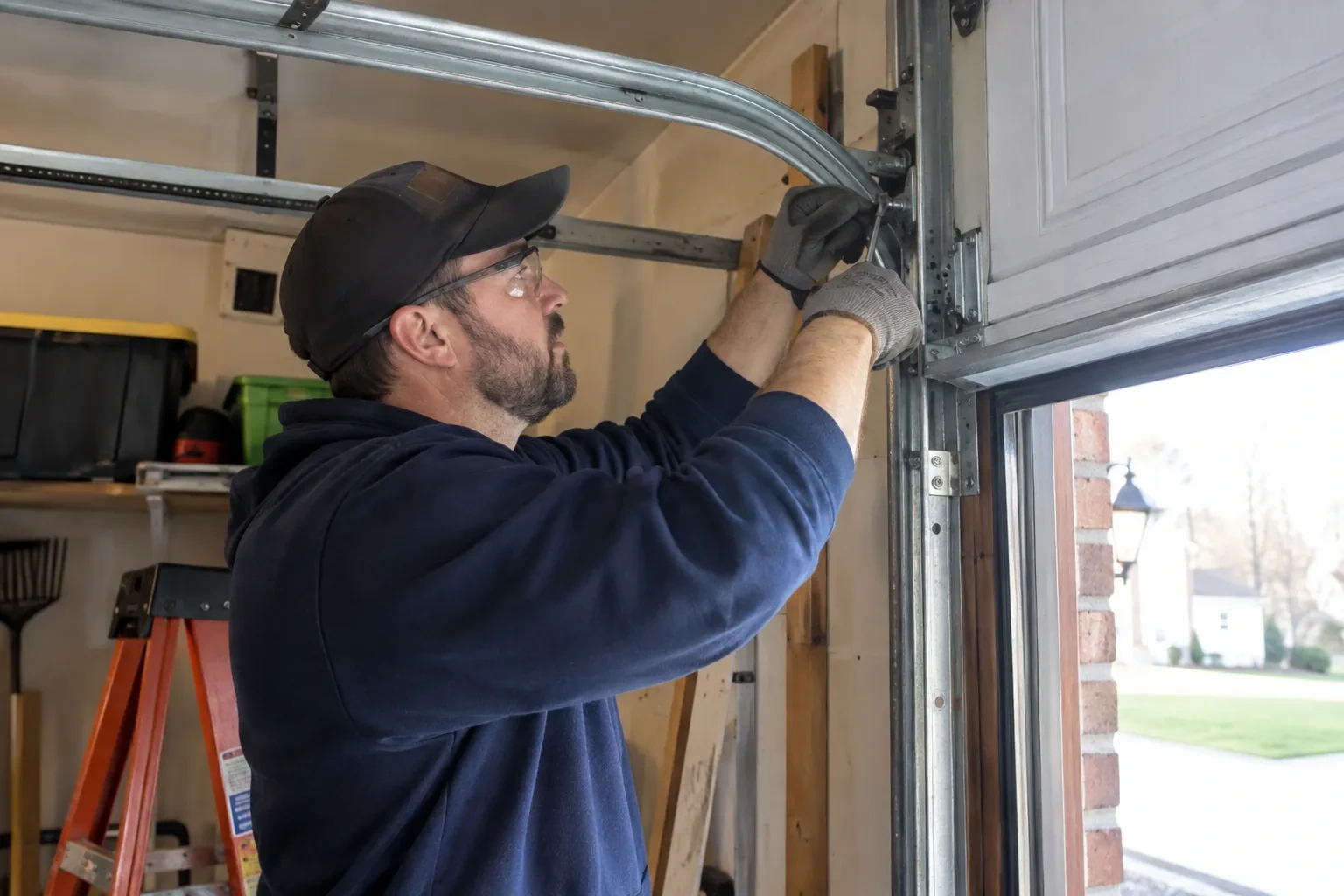
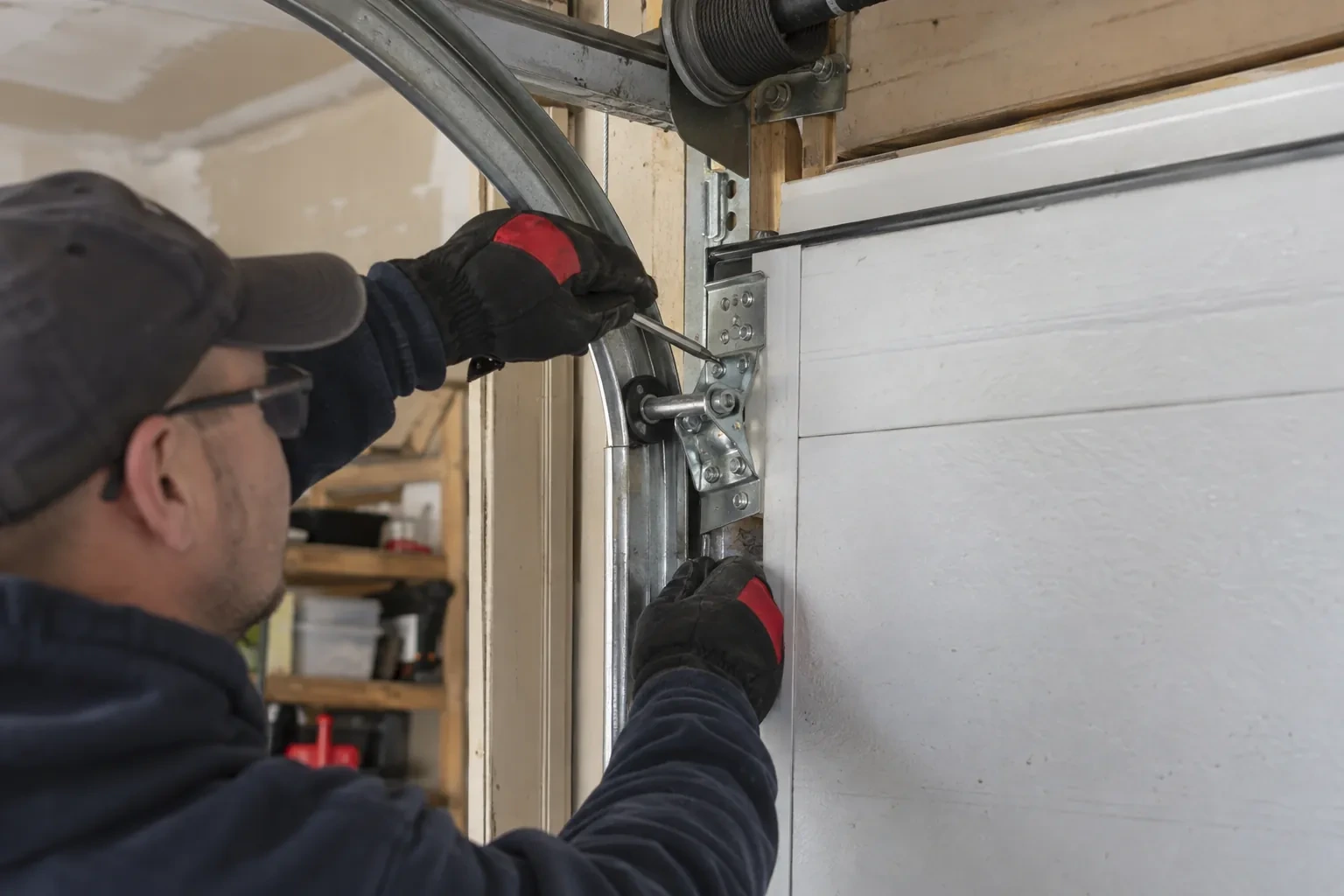
Lifting cables on a door in Mississauga show their age as a few broken strands near the bottom bracket, long before they snap. We inspect them on every visit, replace both cables together with new bottom fixtures, and check the drums and bearings that wear alongside them so the door lifts evenly. We also come out to Hanlan.
Lifting cables on a door in Mississauga show their age as a few broken strands near the bottom bracket, long before they snap. We inspect them on every visit, replace both cables together with new bottom fixtures, and check the drums and bearings that wear alongside them so the door lifts evenly. We also come out to Hanlan.
Open, close, repeat, for years.
We are careful about what we recommend in Mississauga. If a tune-up will do, that is what we suggest. If a spring is the problem, we replace the spring and check its partner. If the door is beyond repair, we say so plainly. Every recommendation is one you can watch us justify at the door.
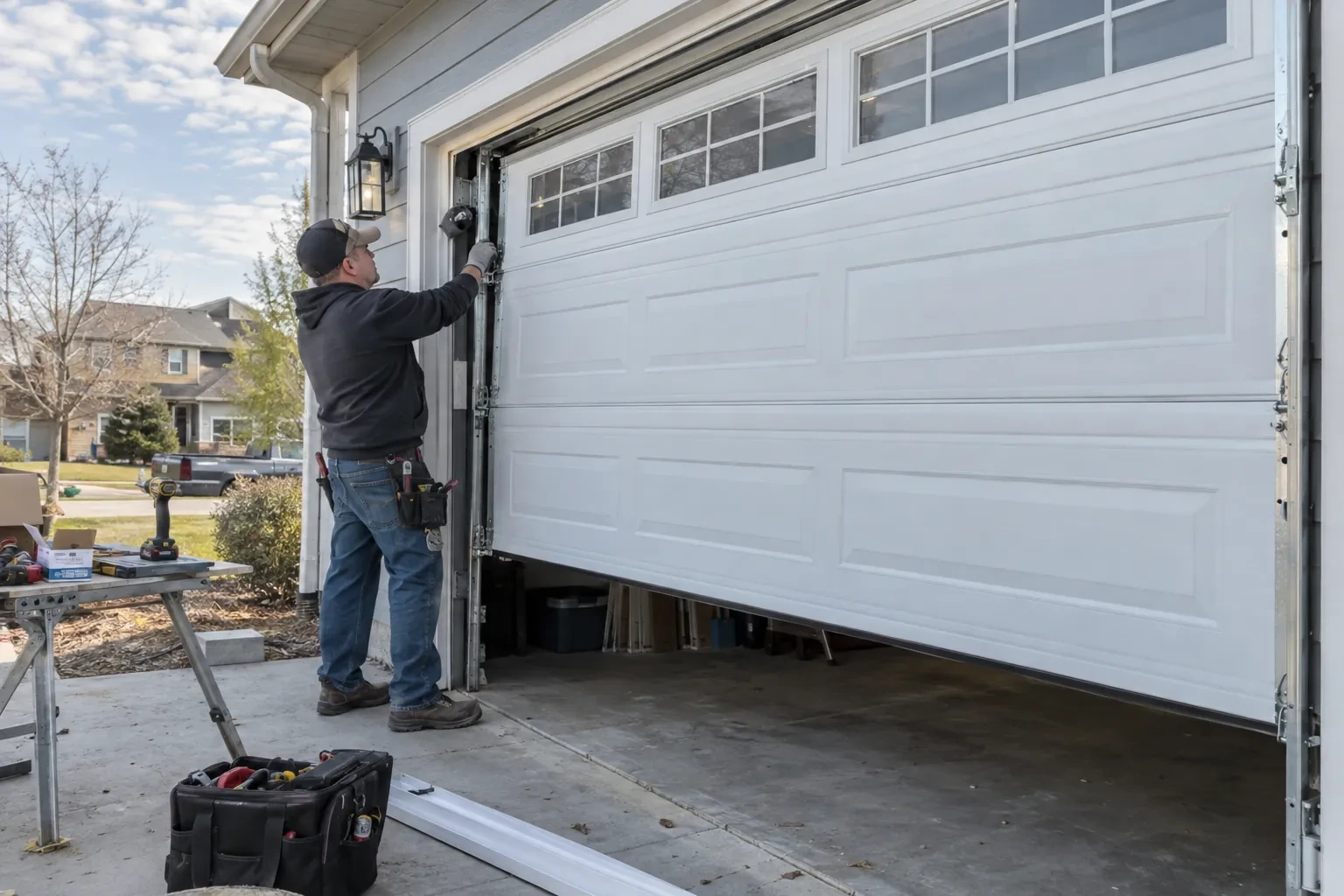
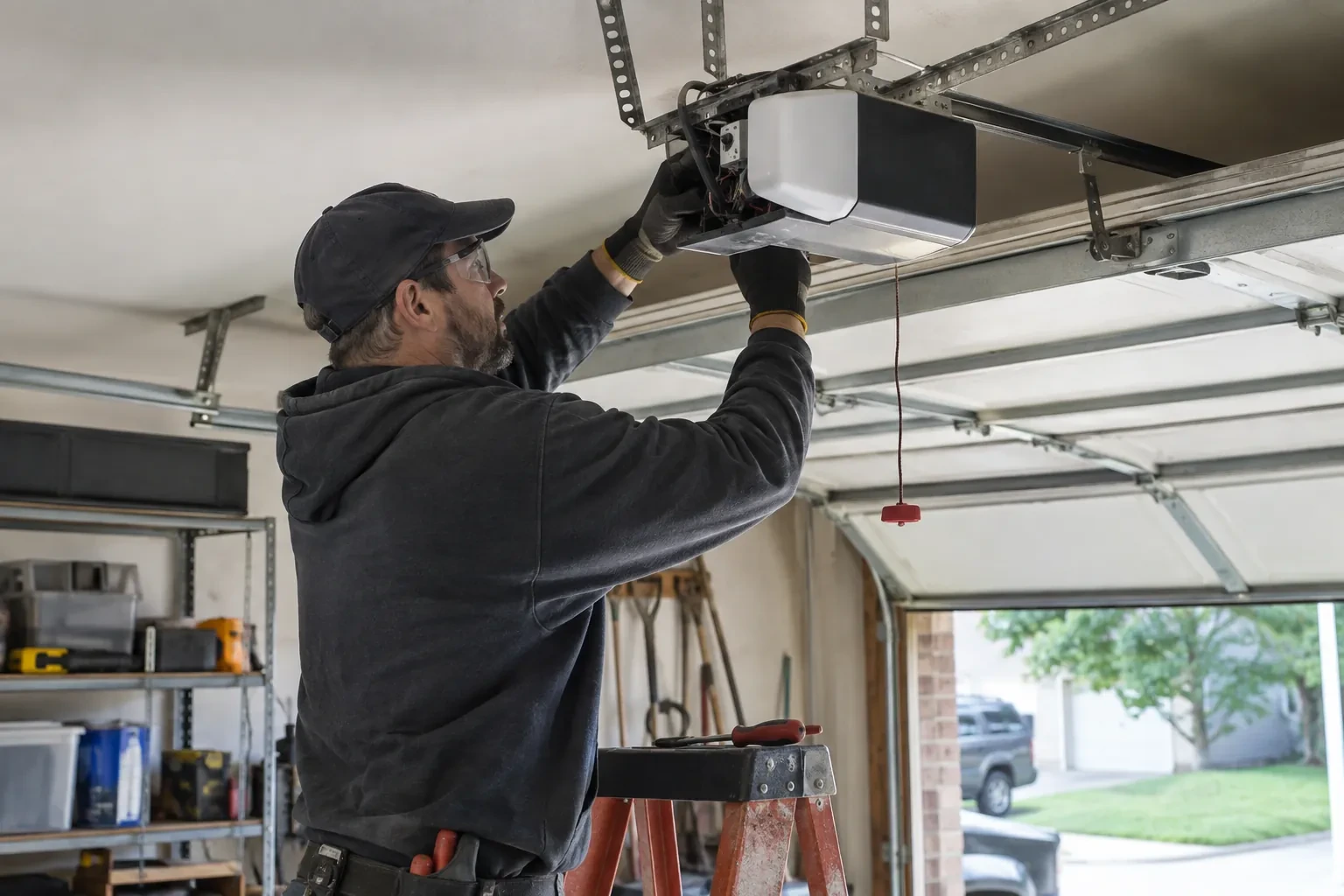
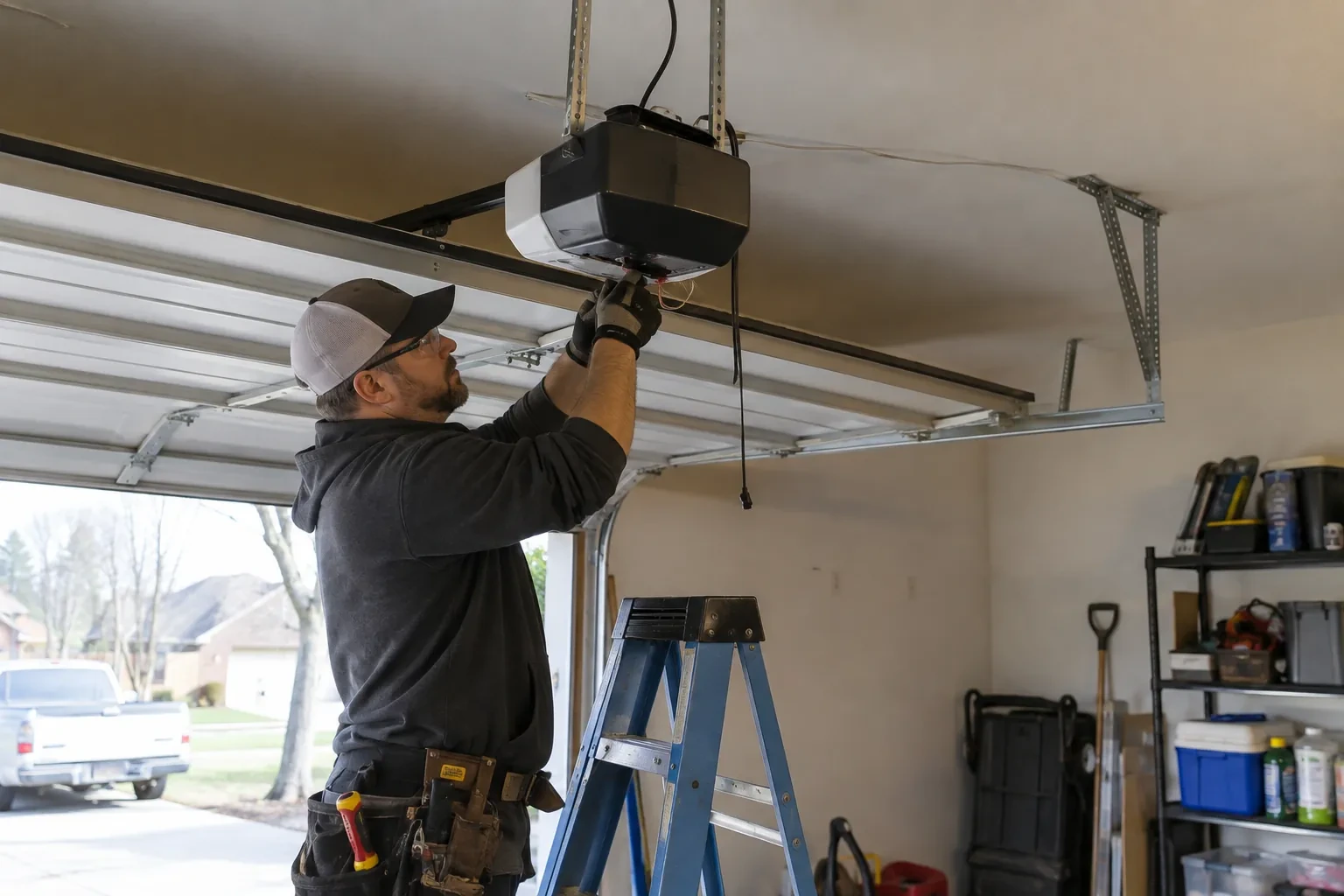
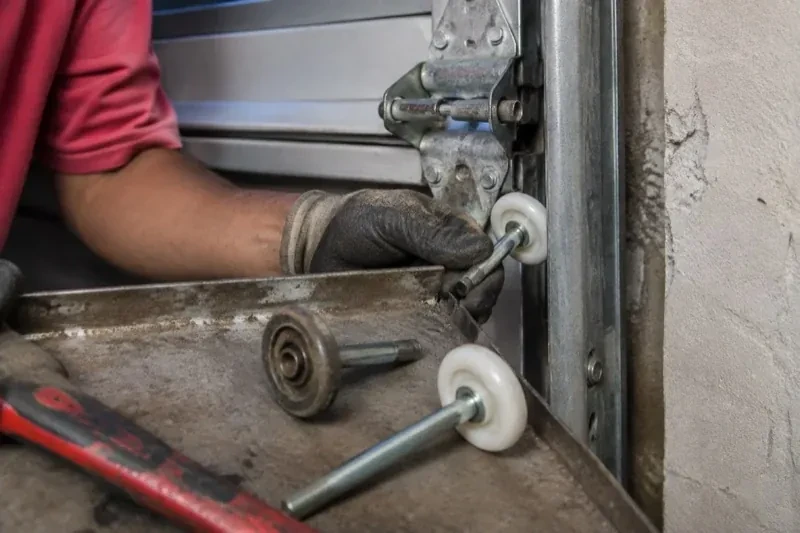
We keep Mississauga on our regular route, which means a technician who knows the neighbourhood and a van that is stocked for the repairs we see there most often. Broken springs, loose cables, worn rollers, opener faults and failed sensors are all handled with care and explained in plain words. New doors and openers are installed with the same attention to detail.
29years in business
24/7open every day
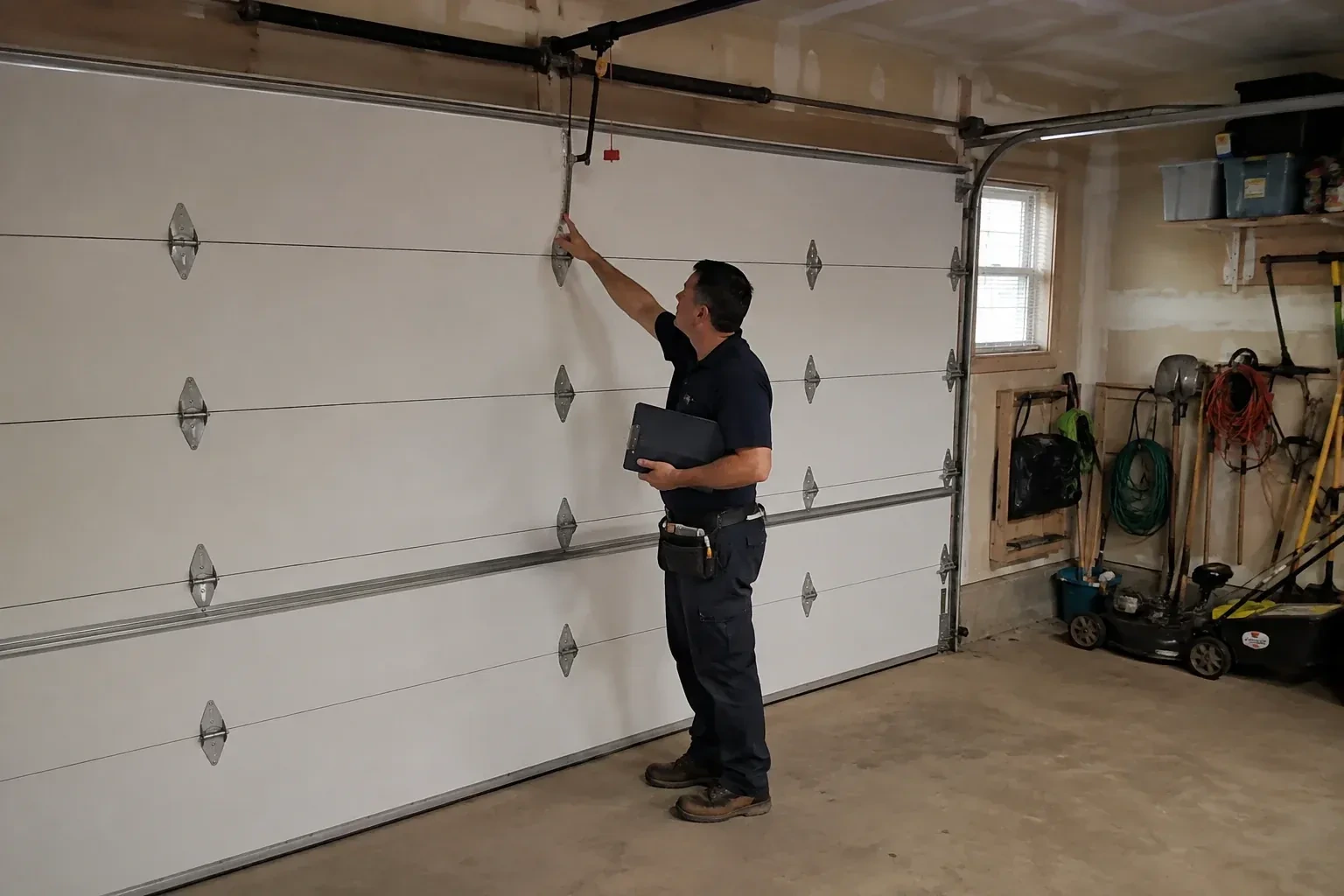
You understand what we found. We point to the worn part, show what it should look like and explain what happens if it stays as it is.
Tools and parts kept tidy. Our kit stays in one spot, cables and springs are bagged as they come out, and nothing gets left behind.
More than one way forward. Repair the part, refresh the whole system, or start over with a new door: we explain each so you can choose confidently.
Have your Mississauga garage door assessed at the house.
The garage door services we provide in Mississauga range from a single adjustment to a complete new installation. In between sit spring and cable replacement, opener repair, roller and hinge work, weather sealing and safety checks, each one done carefully and explained before it begins.
About 38% of homes in Mississauga were built in 1980 or earlier, according to the 2021 Census.
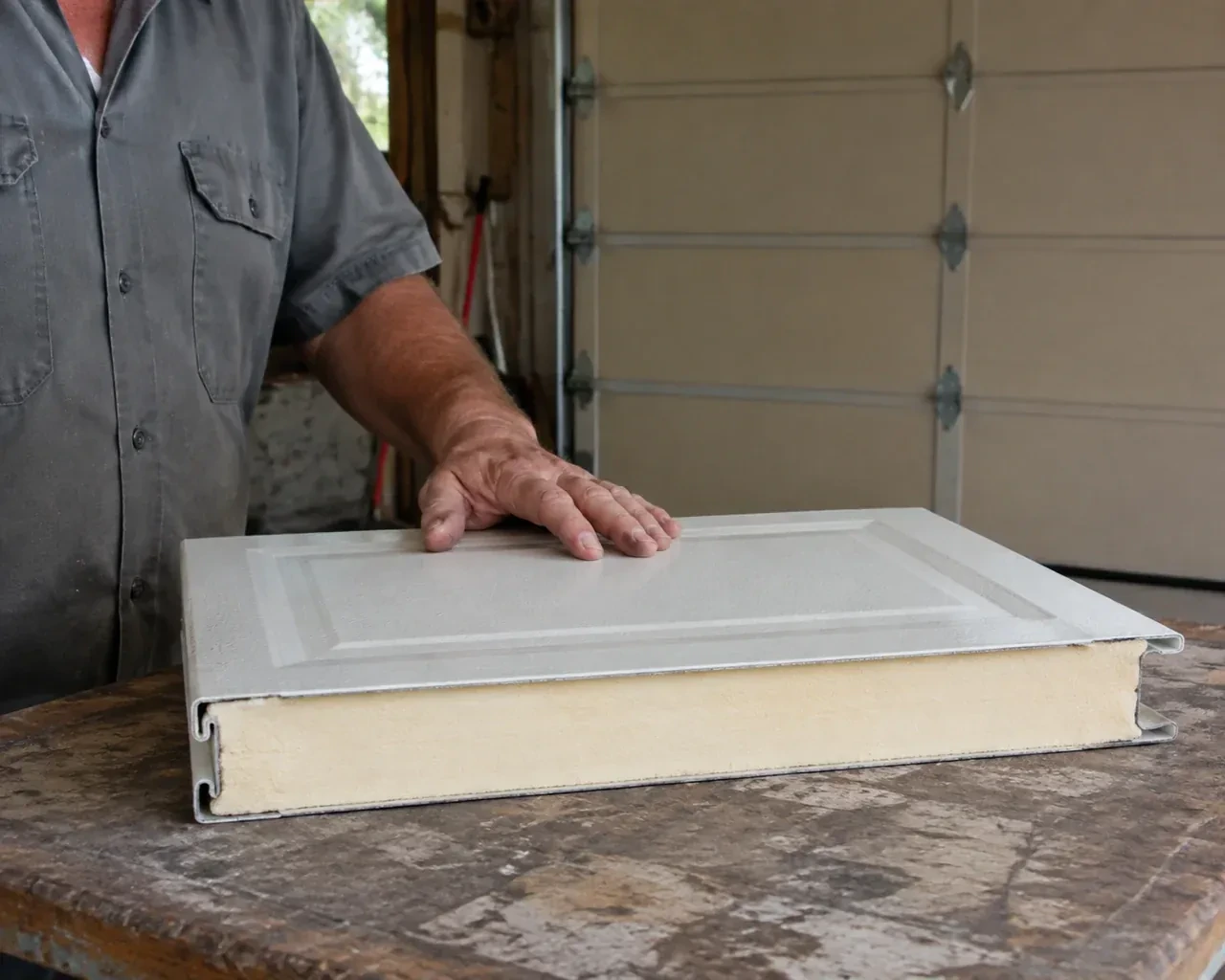
A mixed-age neighbourhood is where retrofits are most common: safety cables added to extension springs, a torsion conversion on an older door, insulated panels replacing a hollow door, or a quieter belt opener under a newly finished room above the garage. Each is a routine job for us.
Single-detached houses make up about 37% of homes in Mississauga (2021 Census).
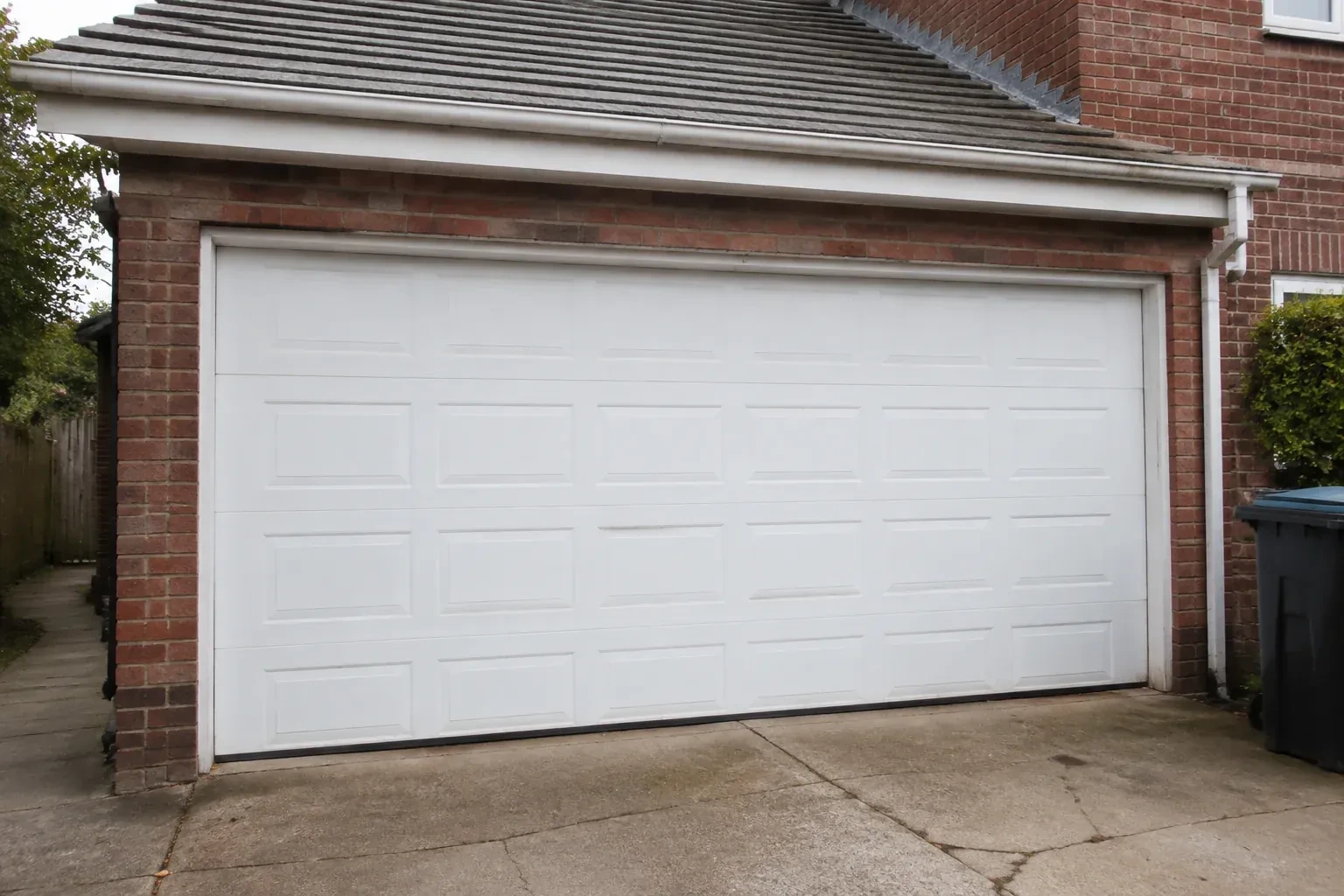
In condominium communities the outward appearance of a garage door is often set by the corporation's rules, down to colour and panel style. We check what the board expects before ordering a replacement door, so the new one is approved and matches the row without a second conversation.
The door lands with a thud you can feel through the kitchen floor, and sometimes it bounces back up a few centimetres before settling. The bottom section has a small dent where it keeps slamming the concrete.
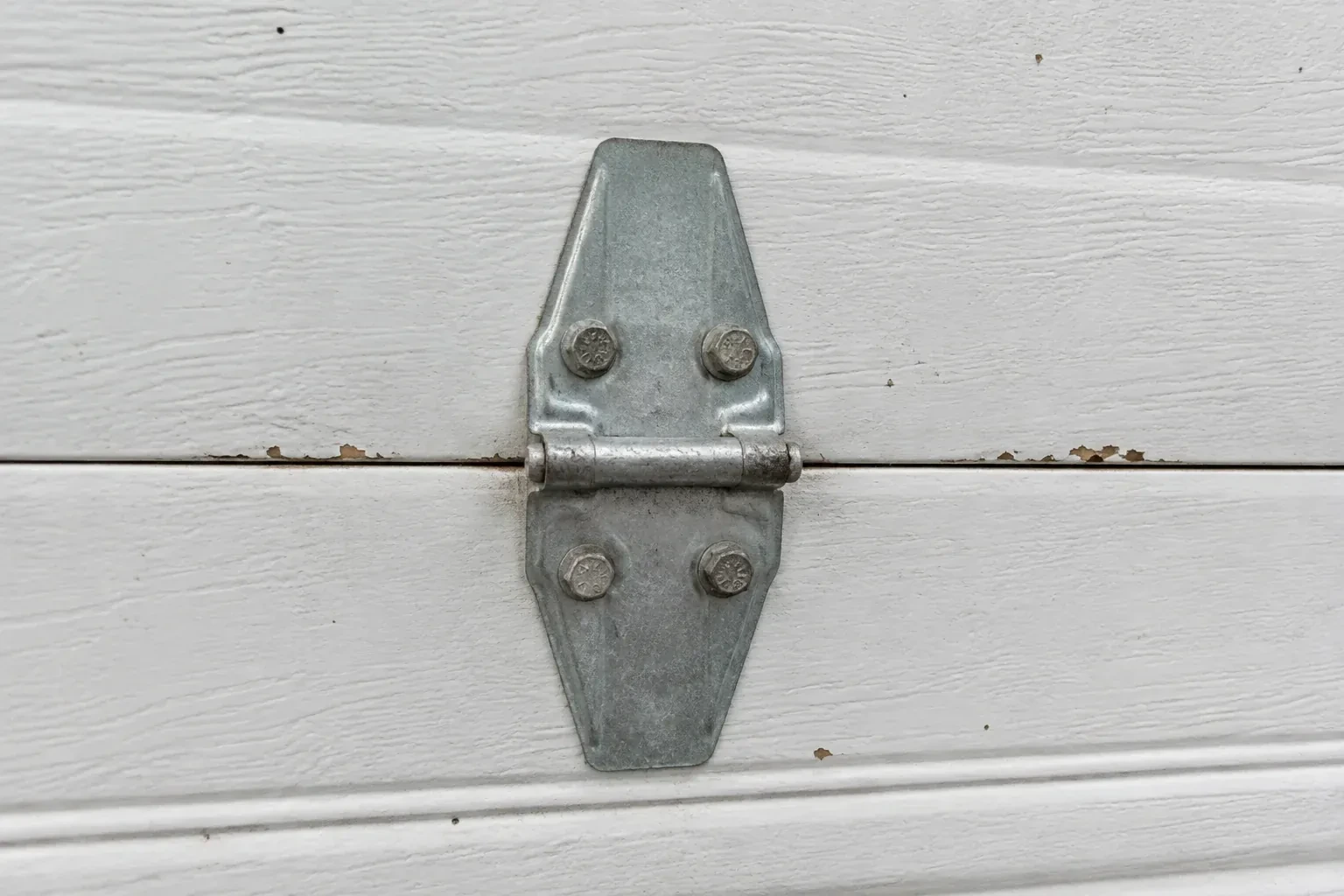
After a cold night the bottom seal had frozen to the slab. The opener strained, something gave, and now one of the upper hinges sits with its leaf bent outward and the panel below it flexes when the door moves.
Standing inside with the door closed, you notice the cable on the right side near the floor has gone fuzzy. A handful of broken wires stick out like a bottle brush and the steel underneath is brown.
The door drops the last stretch to the floor rather than settling, and when you stop it halfway by hand it slides down instead of staying put. Balance has drifted, and the spring is no longer holding its share of the weight.
After the power came back you pulled the red cord to get the car out. Since reconnecting, the door stops short of the floor, and no amount of turning the limit adjustment brings it the rest of the way down.
The small light on one of the sensors near the floor has gone dark, or it flickers when someone walks past the track. The other one glows steadily. The door refuses to close from the car.
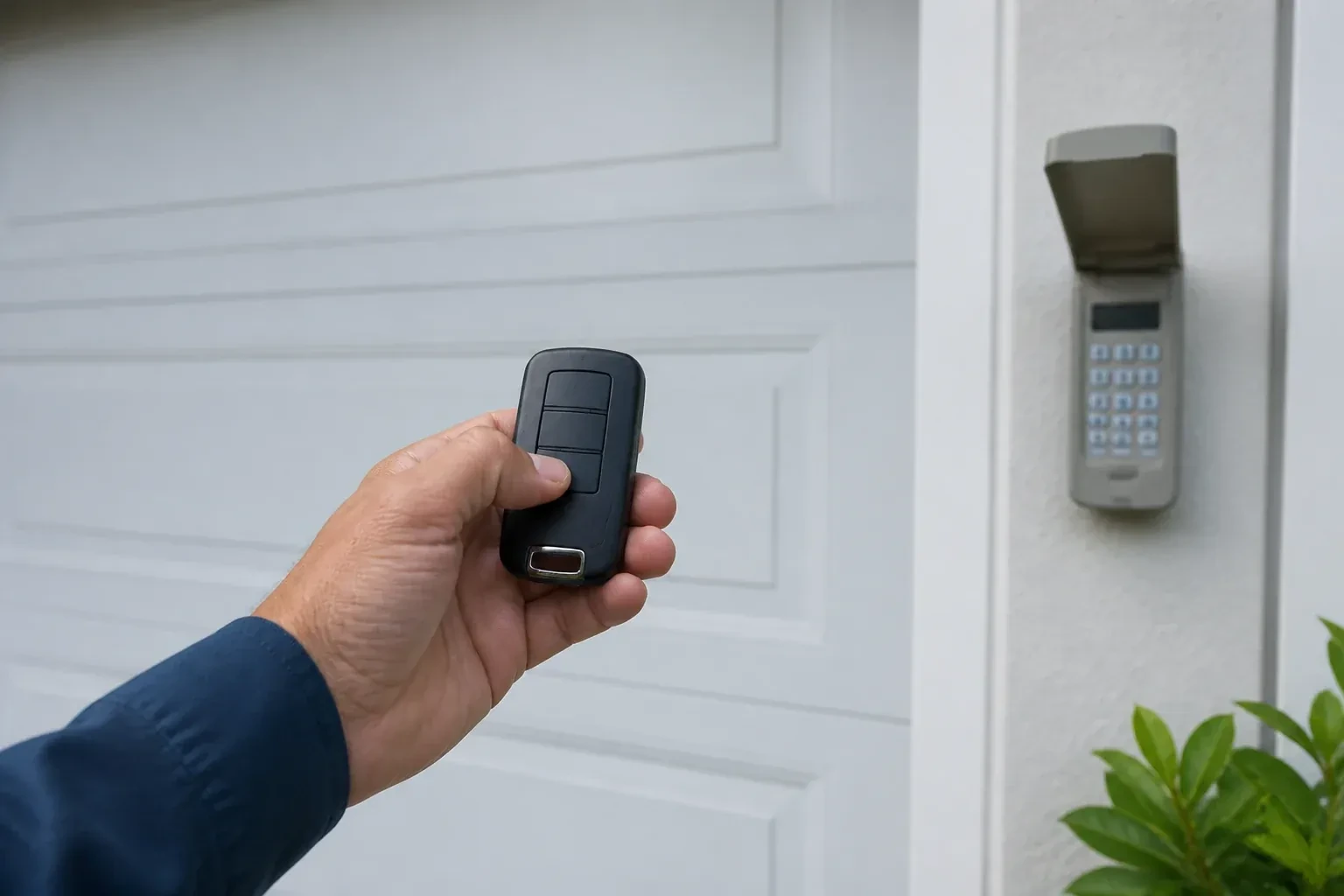
The outdoor keypad worked all summer. Now that the mornings are below freezing it lights up faintly, takes the code, and the door does nothing. Back inside, the remote works on the first press.
The existing door has reached the point where panels, rollers and finish all look tired. Rather than reproduce the same appearance, you want the replacement to become a considered architectural feature.
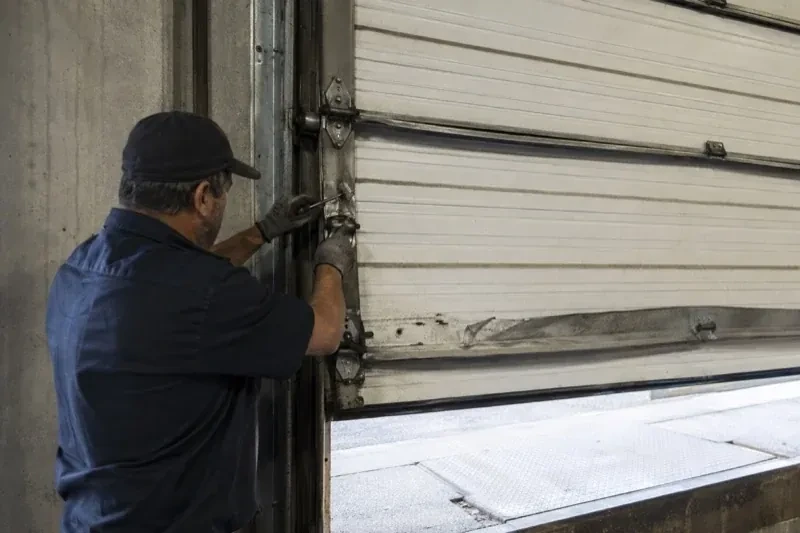
The loading-bay door rises with one side several centimetres lower than the other. A lift cable looks slack, the bottom section sits crooked, and staff have stopped using the opening until the door can travel level again.
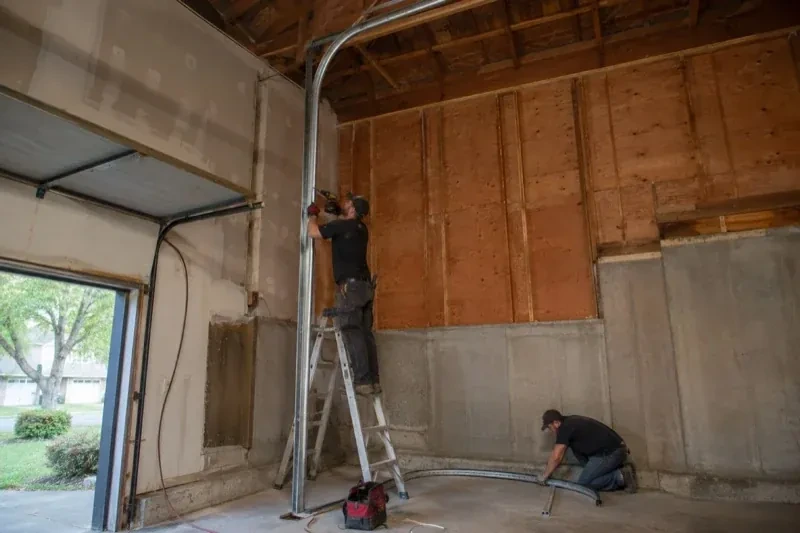
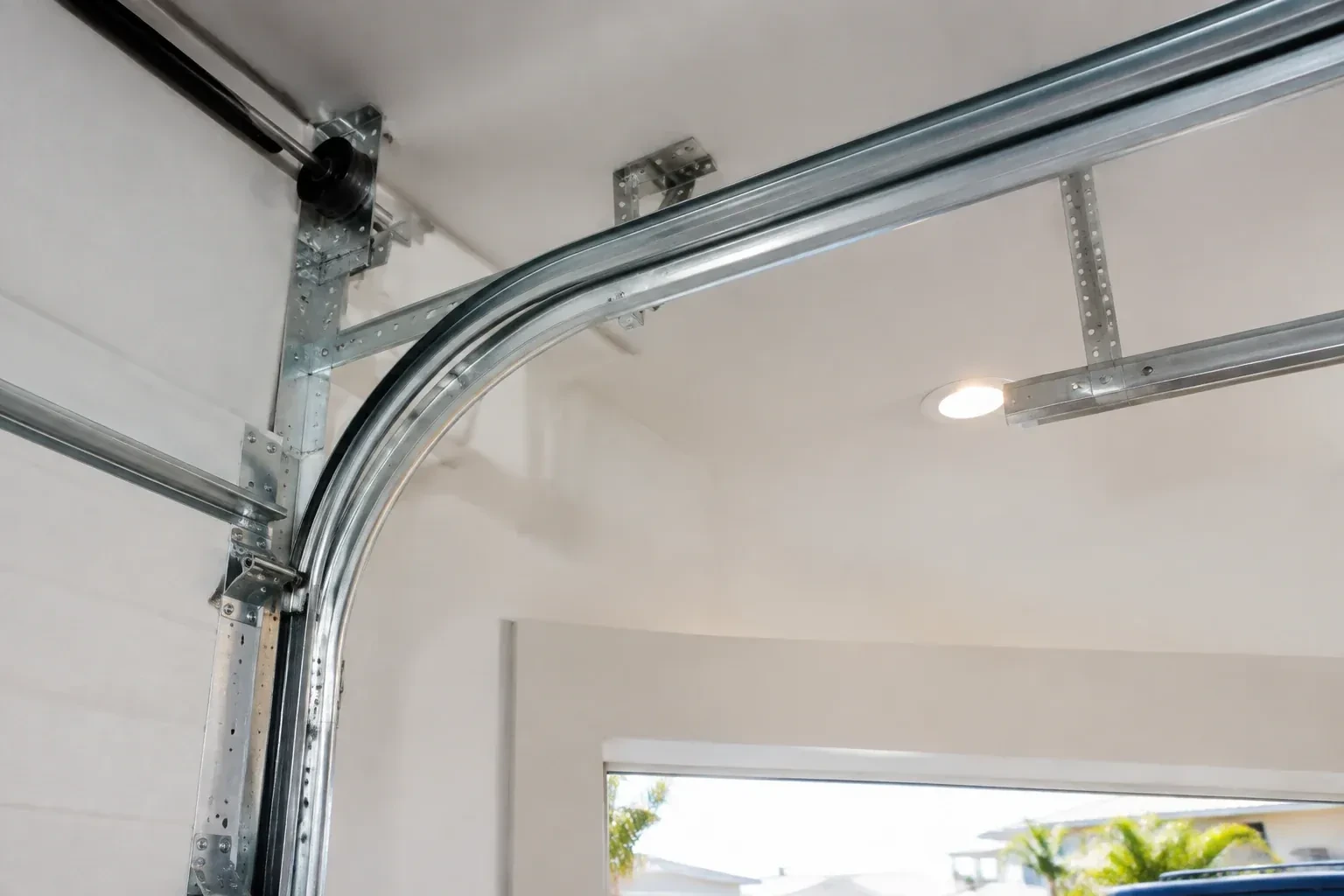
The garage has a tall ceiling, yet the horizontal tracks sit much lower than the lights and joists. That unused wall height makes the open door feel like a low shelf across an otherwise generous room.
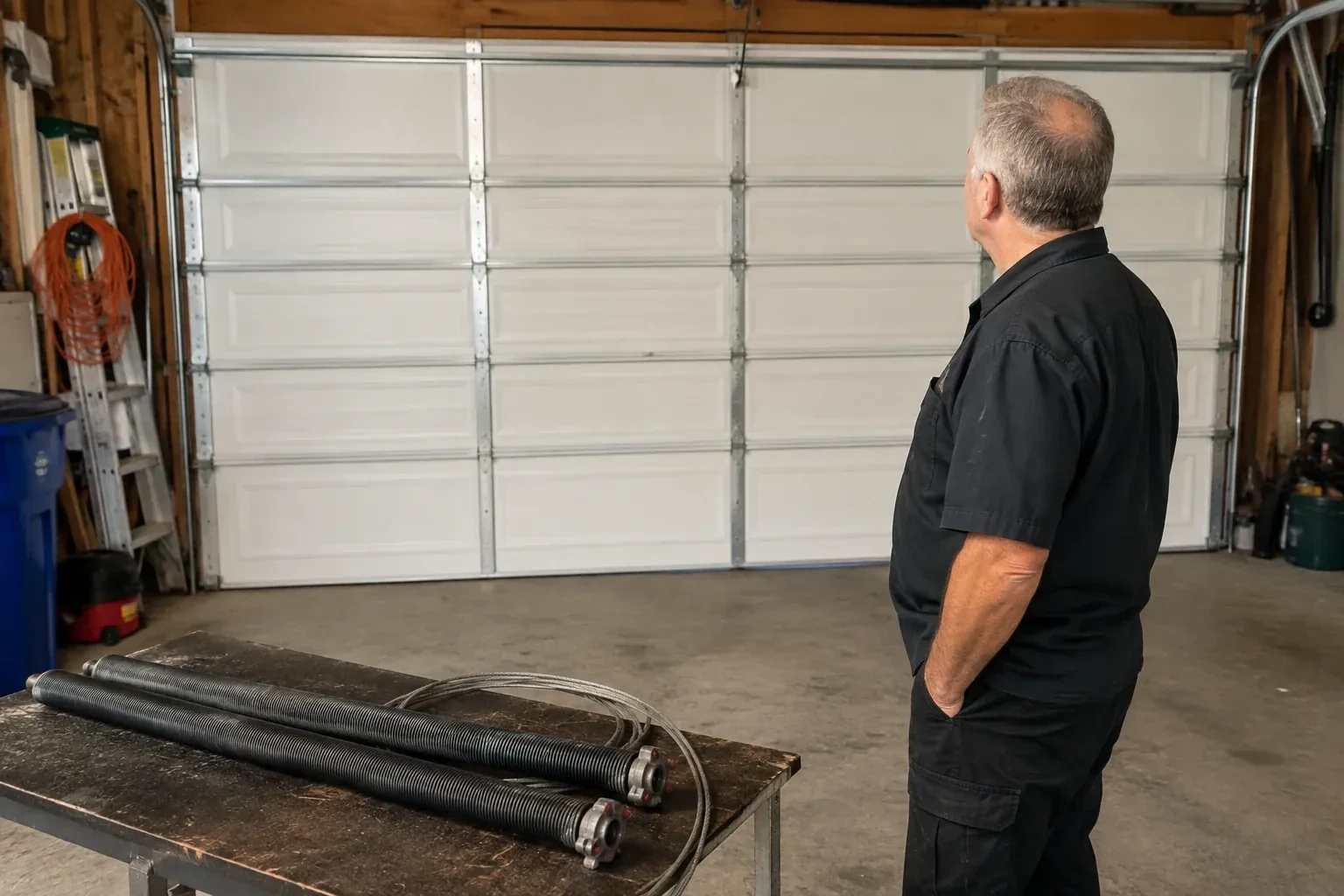
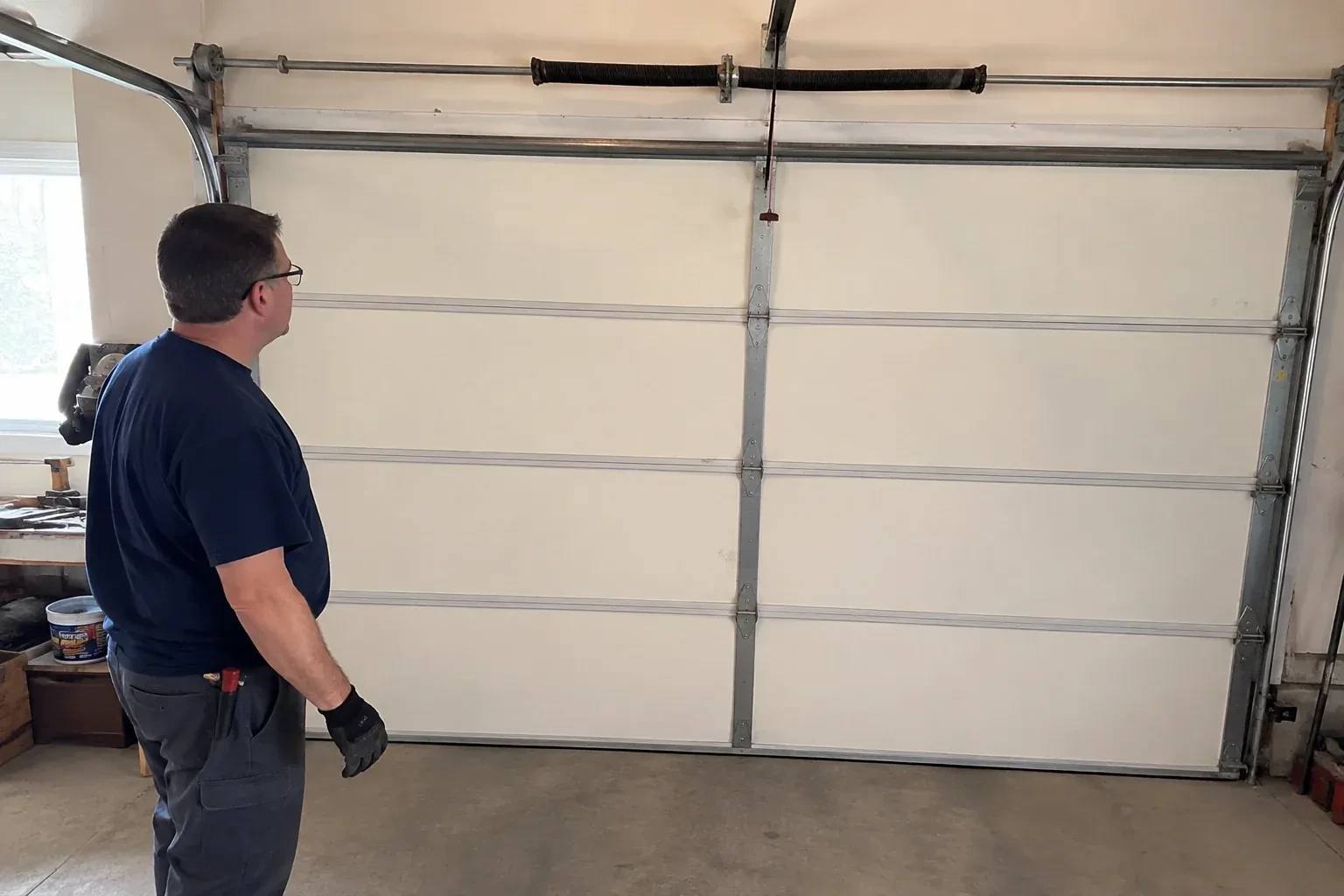
Winding a torsion spring is not a job for a ladder and a screwdriver. It takes proper bars, a secured door and a technician who knows how many turns the door wants. That is the work described in this group.
A sectional door replacement can also be the moment to change the opener, move to a wall-mounted unit, add a keypad or fit windows. We plan the whole upgrade together so nothing has to be done twice.
WhyA heavier decorative door may need a different spring specification, stronger section reinforcement or another opener arrangement than the former door.
The loading-bay door rises with one side several centimetres lower than the other.
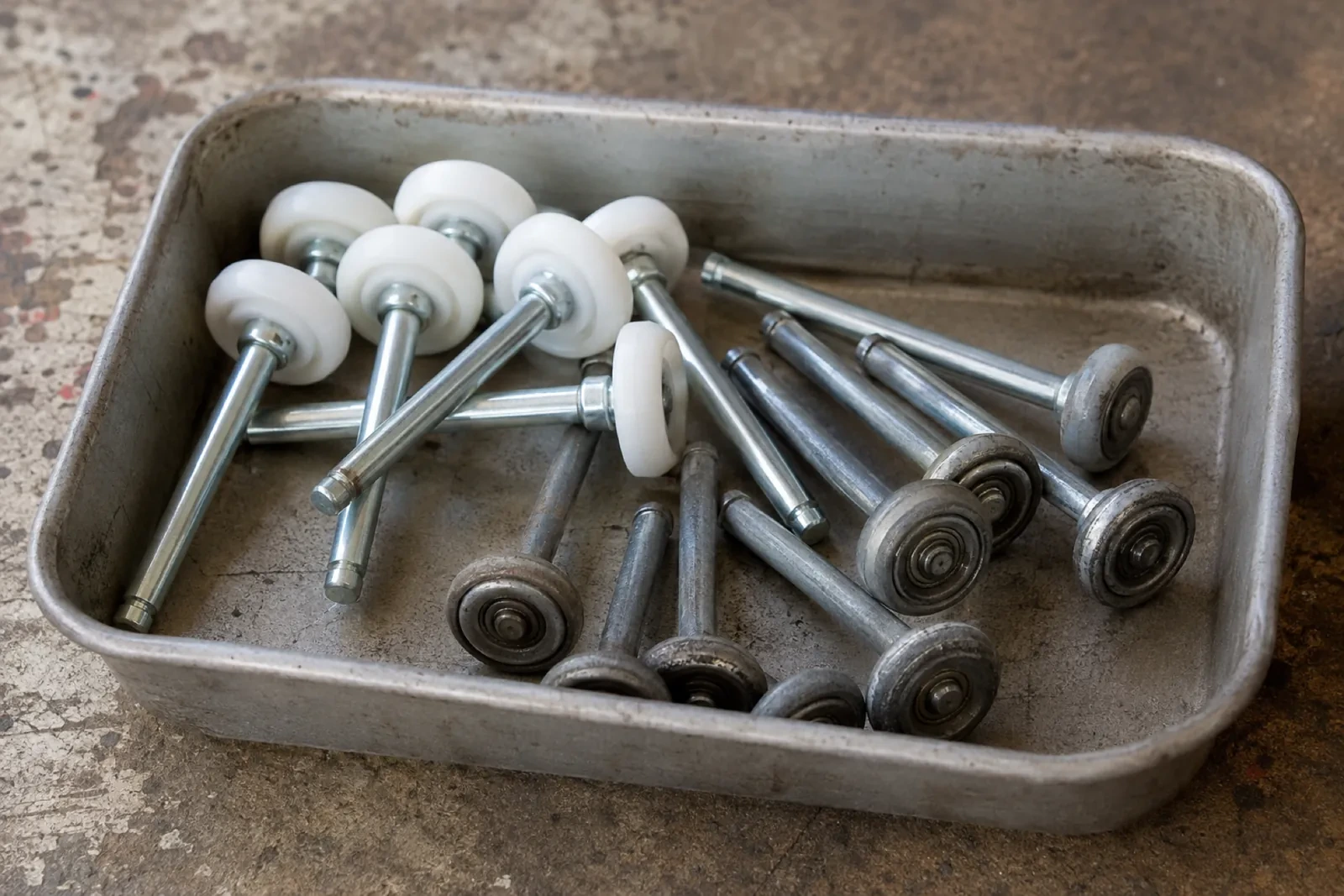
Small wear items found on the day, such as a roller or a hinge on a middle section, a bottom seal or a few fasteners, can often be replaced during the visit if you agree and the part is on the truck. Larger items, including springs, cables, drums, bottom brackets, a bent track or an opener gear, are written up as separate repairs with their own quote so you can decide with the facts in hand rather than under a raised ladder.
How many hinges does a typical door have?
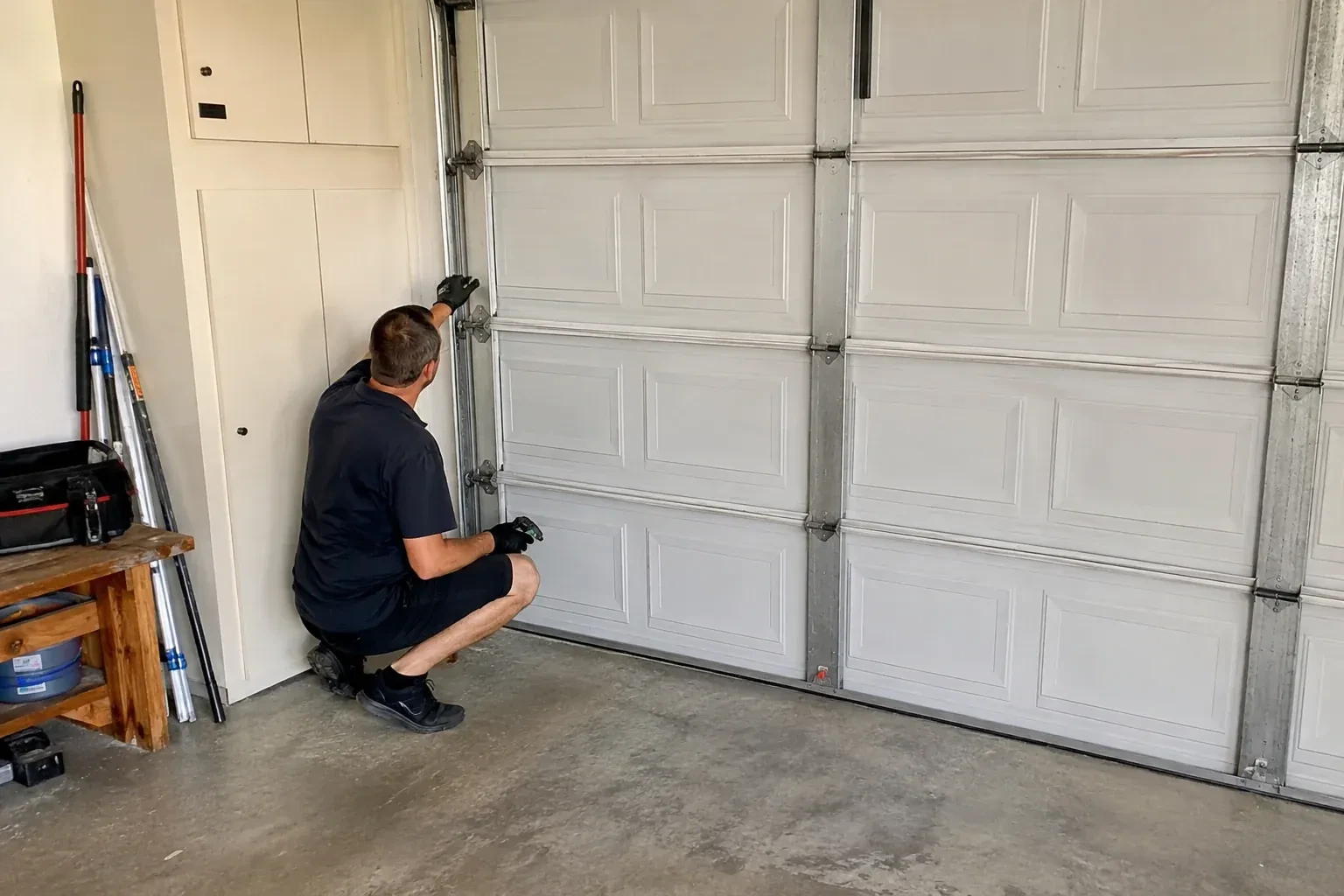
Count the joints between panels and multiply. A single door usually carries two edge hinges and one centre hinge per joint, so a four-panel door has three joints and nine hinges. A double door adds one or two more centre hinges per joint to keep the wider panels flat. The top panel uses adjustable top fixtures rather than hinges, and the bottom corners use bottom brackets, which are different parts.
What information helps when I call?
Whether the door is sitting crooked, jammed partway or on the floor; whether you can see a cable hanging loose, frayed or wrapped around the shaft; whether there is a spring above the door or springs along the tracks; the door's rough height and whether it is a single or double; and what happened just before, such as the door coming down on something. A photo of the drum end and the bottom corner is useful.
Can extension springs be converted to a torsion system?
In many garages, yes. A conversion adds a shaft, centre and end bearings, drums and torsion springs above the opening and removes the extension springs and pulleys from beside the tracks. It needs enough headroom above the door for the shaft and solid framing for the centre bracket. The technician measures the space and the door before recommending it, and the result is smoother, more even lifting with hardware kept clear of the sides.
What does out of phase mean, and why does my door stop short?
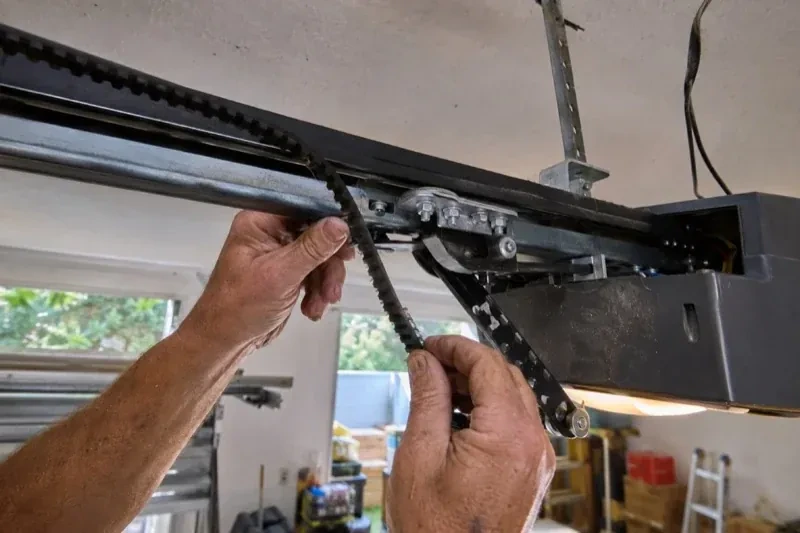
When the belt has been off the sprocket, or the motor has run without it, the motor's idea of where the door is no longer matches where the trolley sits. The door then stops short at one end however the limits are turned. The technician lifts the belt off, runs the sprocket to its closed position, refits the belt with the trolley at the closed end and relearns the limits.
How high off the floor should the sensors sit?
Low. The industry checklist expects the beam no more than roughly 15 cm (6 in) up from the floor, so that a small child, a pet or a bicycle wheel breaks it. Both sensors are set at the same measured height and level with each other, since a difference of a couple of centimetres is enough to lose the beam. Within that rule the technician can raise them a little to keep them out of the strip where slush collects.
Where should the keypad and wall control be mounted?
Out of children's reach and in sight of the door. The door industry's checklist puts wall-mounted push buttons at least about one and a half metres above the floor, in clear view of the door and away from moving parts, and outdoor keypads follow the same idea beside the door. Keypads are programmed before mounting, then fixed with the screws and anchors suited to the wall.
Are the decorative handles and strap hinges functional?
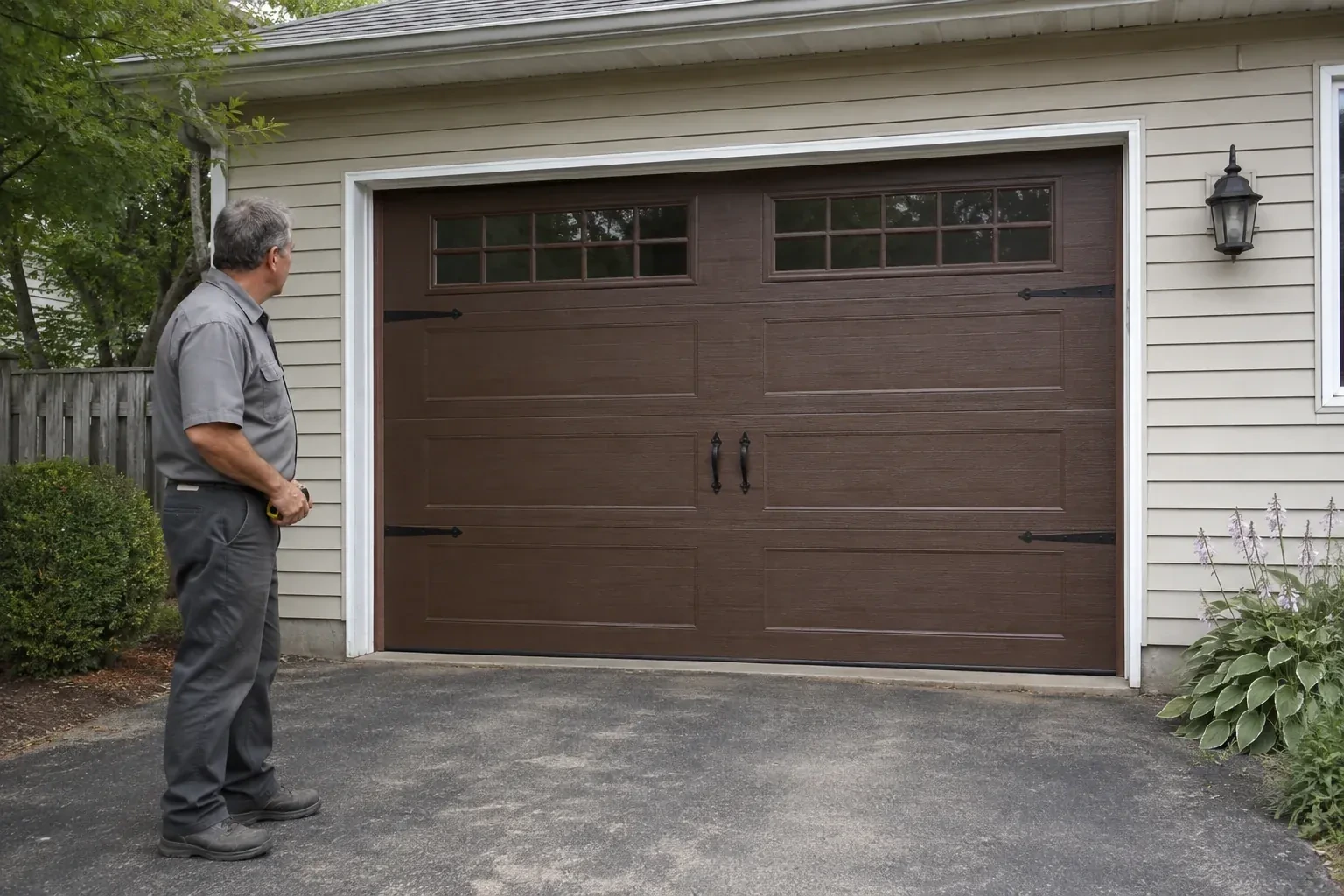
On most sectional carriage designs, they are visual accents rather than working swing-door hinges. Their placement still requires care. They must attach where the section construction permits, align evenly across the face and clear trim and joints throughout travel. Some handles can also provide a suitable gripping point for manual movement when their product instructions identify that use.
What causes a commercial sectional door to become noisy?
Common sources include roller-bearing wear, loose hinges, dry pivots, a rubbing panel, track movement, shaft-bearing wear and operator-chain vibration. The point in the cycle where the sound occurs helps isolate it. A technician watches and listens during controlled travel, looks for play or contact marks, and services the component creating the repeatable noise.
Can high-lift track follow a sloped ceiling?
Some layouts can use track that rises or follows an appropriate roof contour, but the answer comes from site geometry and available system options. The door still needs a compatible transition, counterbalance design, stable supports and a clear path through its entire movement. Accurate roof-line and obstruction measurements allow the technician to evaluate a practical arrangement for the specific bay.
Request a visit
We are careful about what we recommend in Mississauga. If a tune-up will do, that is what we suggest. If a spring is the problem, we replace the spring and check its partner. If the door is beyond repair, we say so plainly. Every recommendation is one you can watch us justify at the door.