Repairs · Mississauga
Garage Door Bottom Seal Replacement
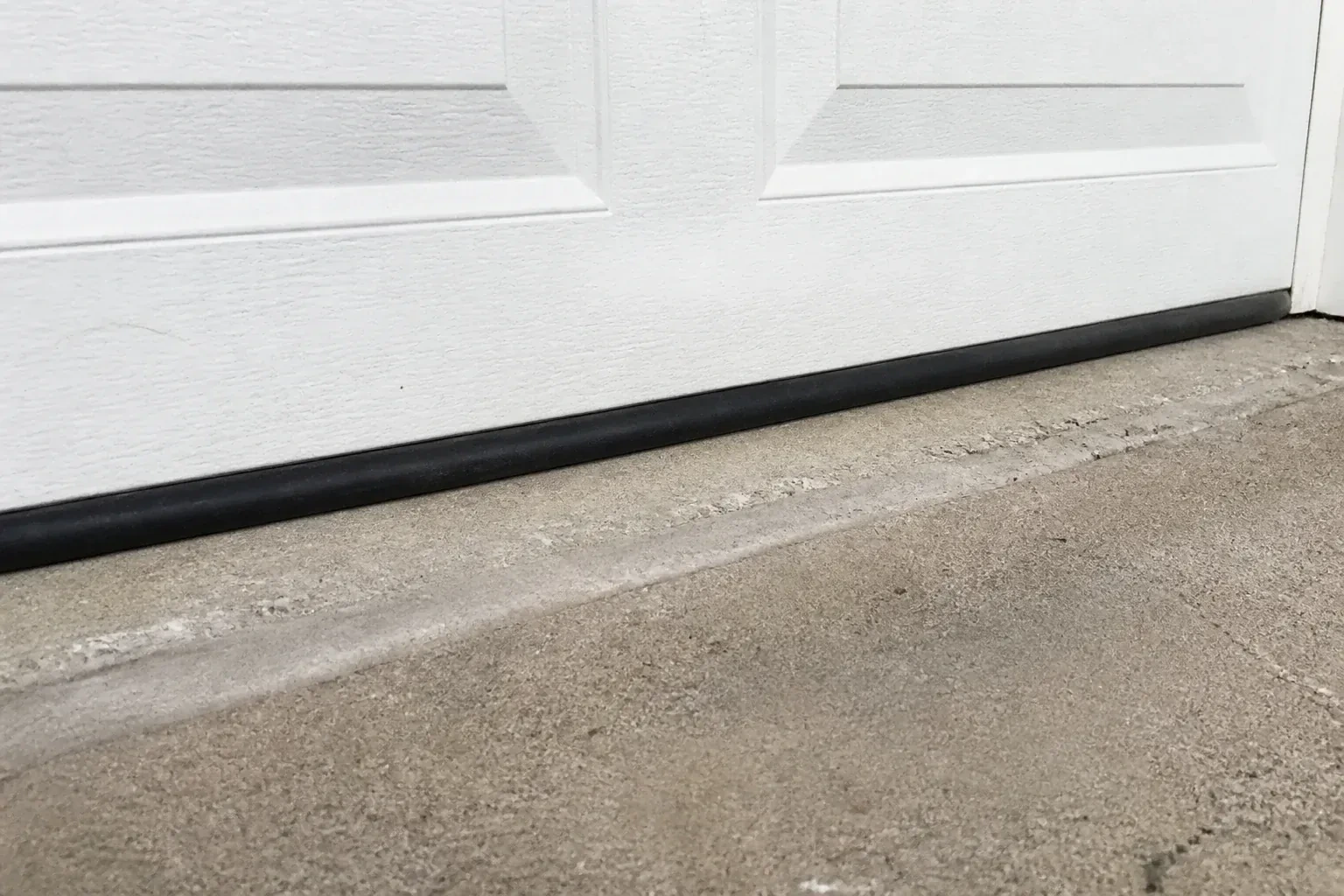
One end of the bottom seal has slipped out of its channel and hangs down like a loose shoelace.
In plain words
The bottom seal, called an astragal in the trade, is the flexible strip along the underside of the lowest door section that squashes against the floor when the door closes. On most steel doors it is a U-shaped vinyl or rubber profile whose two edges slide into the channels of a retainer fixed to the bottom rail; on wood doors it is often a flat angled strip nailed in place. Replacing it means matching that retainer and profile, fitting a fresh seal the full width of the door, and confirming it meets the floor in one continuous line so light, drafts, water and pests lose their route in.
How the visit goesThere are mouse droppings along the wall behind the recycling bins, and at one bottom corner of the door the vinyl has a neat chewed notch the width of a thumb. Something has found its way in for the winter.
Garage Door Bottom Seal Replacement
How the visit goes
Reading the gap with the door closed
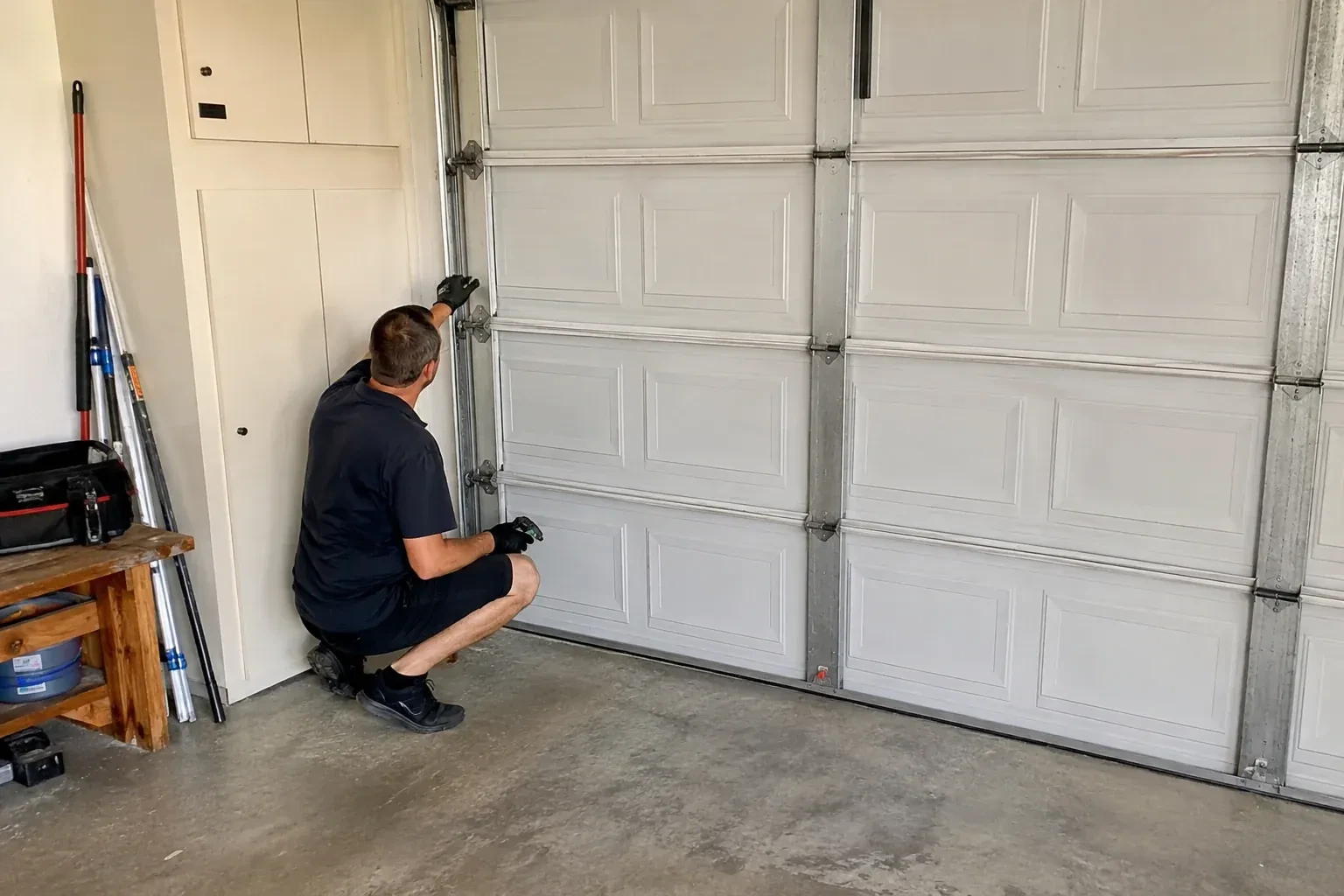
The assessment starts with the lights off and the door down. From inside, the technician looks along the floor line for daylight and notes where it shows: a thin line the full width, a wedge at one corner, or a patch in the middle. A straightedge laid across the threshold shows whether the slab is flat or dished, and a hand run along the seal feels where it touches and where it hovers. Photographs of the worst spots are taken so you can see what is being fixed. This map of the gap tells the technician how tall the new seal needs to be and whether anything other than the seal is contributing.
Wood doors and nail-on strips
A wood garage door usually carries a flat or angled strip of vinyl or rubber nailed directly to the bottom rail rather than a channel seal. The technician removes the old strip and nails, checks the rail for soft spots and cupping, and treats or dries damp wood as needed. The new strip is positioned so its lip angles toward the outside and touches the floor along the full width, then fastened with galvanized nails or screws at close, even spacing so it cannot ripple. On a rail that follows an uneven floor, the strip's flexibility takes up the difference.
A record of the profile and size
Before leaving, the technician tells you what went on the door: the seal profile, whether T, bead or bulb, its width and height, the material, the door width it was cut for, and whether the retainer was renewed. Write this on a card by the opener or inside the manual. Bottom seals wear out on a schedule of years rather than decades, and knowing the profile means the next one can be ordered and fitted without measuring from scratch. If a threshold seal was added, its length and type belong on the same card.
Garage Door Bottom Seal Replacement
In the van
Nail-on vinyl strip for wood doors
Aluminum bottom seal retainer
Bulb or U-style bottom seal
Wire brush and scraper
Seal end caps
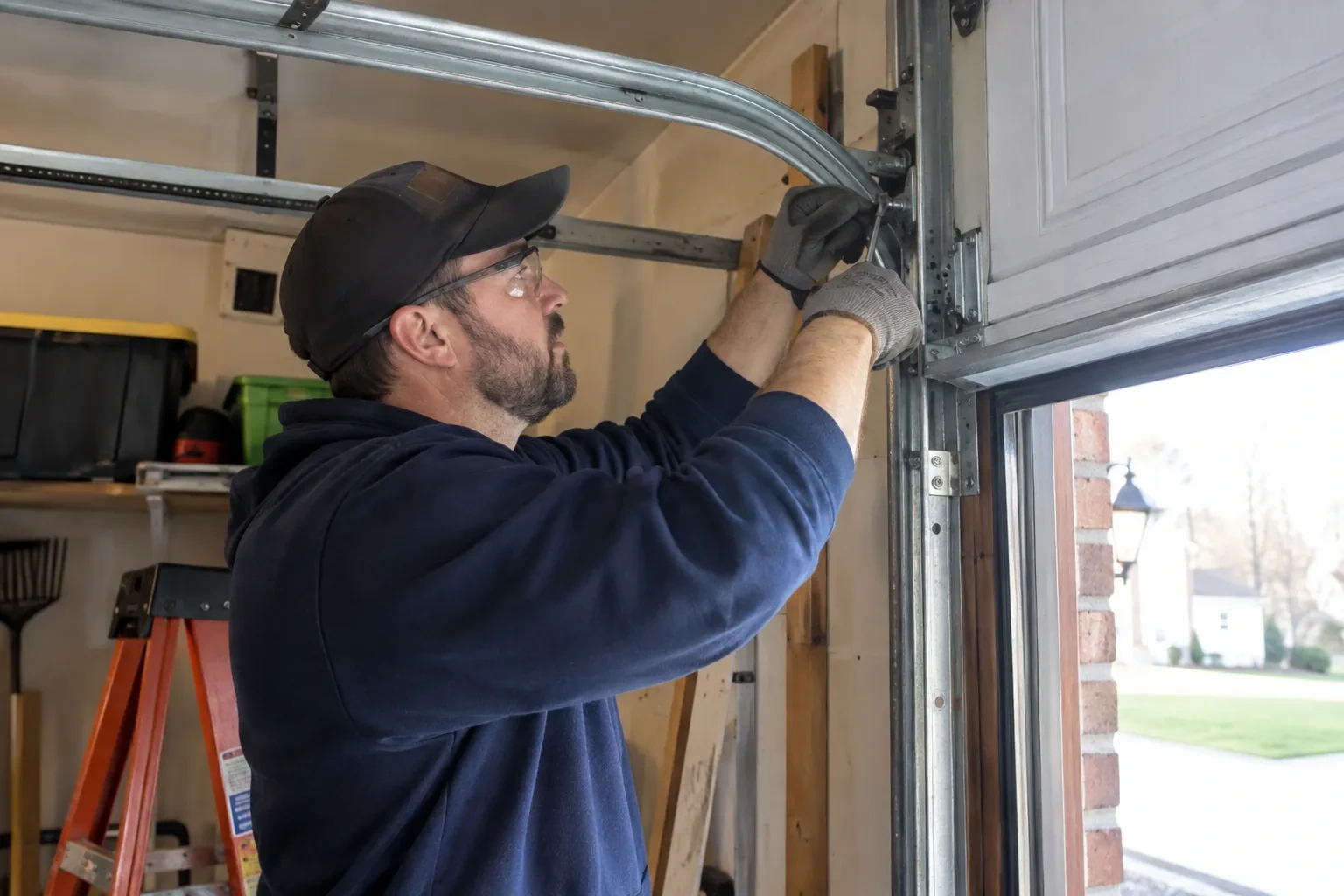
Garage Door Bottom Seal Replacement
What affects the quote
Retainer replacement
If the aluminum or plastic retainer is bent, spread open or corroded, a new extrusion, fasteners and the time to fit it straight along the rail are added as their own line.
Perimeter seals done together
Jamb and header weatherstripping renewed in the same visit is quoted per length of stop moulding, and doing it alongside the bottom seal saves a second call-out.
Material chosen
Standard vinyl, cold-flexible rubber and silicone are priced differently. Where the door faces the weather, the technician explains what the step up buys in flexibility and working life.
What to have ready
- Is the door steel, wood, or insulated with a plastic bottom cap?
- Does the driveway slope toward the garage, or does water pool at the door?
- Is the old seal hard and cracked, torn, hanging loose, or missing?
Garage Door Bottom Seal Replacement: questions
QuestionsMy garage floor is uneven. What are the options?
Three, and they can be combined. A taller bulb-style seal compresses more and follows a modest dip or crown. A threshold seal fixed to the floor follows the slab's existing contour and gives the door a raised, consistent line to land on where it is dished or sloped. And where the floor has heaved or broken up badly, grinding or patching the concrete is a separate job that makes any seal perform better. The gap map from the first look shows which applies.
Why does the seal freeze to the floor, and what should I do when it does?
Snow melts off the car, runs to the low point at the door and refreezes overnight around the seal. When that happens, leave the remote alone, since the opener will tear the strip or pull the door out of level. Free the seal by hand with gentle warmth along the line or by working a plastic scraper under it, then run the door. A film of silicone on the seal each autumn largely prevents it.
Is this something I can do myself?
Many homeowners do, and a technician's value lies in the parts that go wrong: identifying the exact profile so the seal seats, freeing a strip that has fused into its channel, spotting a retainer or door-level problem behind the gap, and resetting the opener's limit and force so the door lands gently and still reverses on an obstruction. If you would rather have it measured, fitted and tested in one go, that is what the visit is for.
Related services
- Garage Door Tune-UpThe door lands with a thud you can feel through the kitchen floor, and sometimes it bounces back up a few centimetres before settling.
- Off-Track Garage Door ResetOne side of the door hangs a hand's width lower than the other.
- Garage Door Panel ReplacementYears of slap shots have peppered the lower two sections with dents.