Garage Doors in Meadowvale South, OntarioSmall adjustments.Long life.
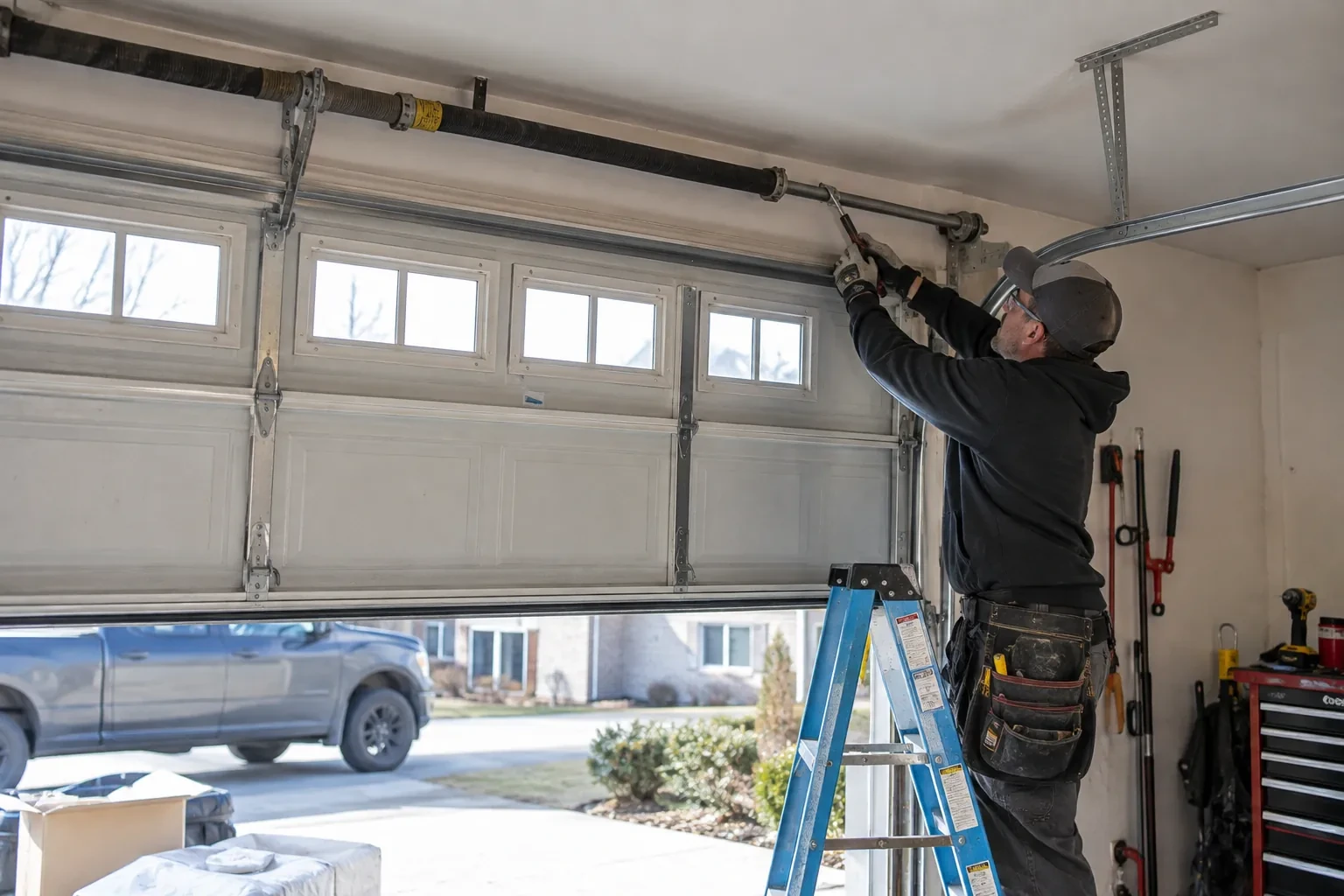
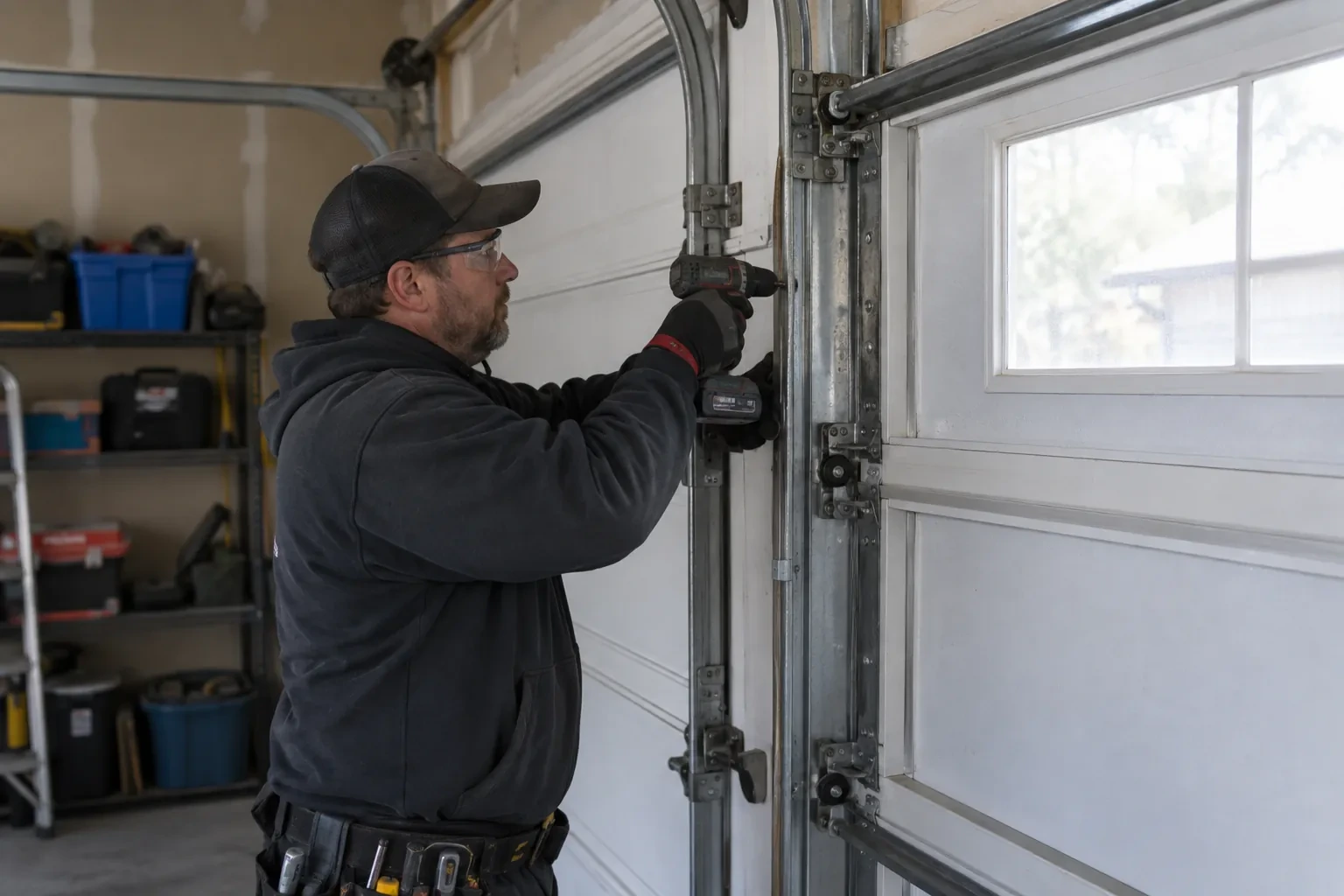
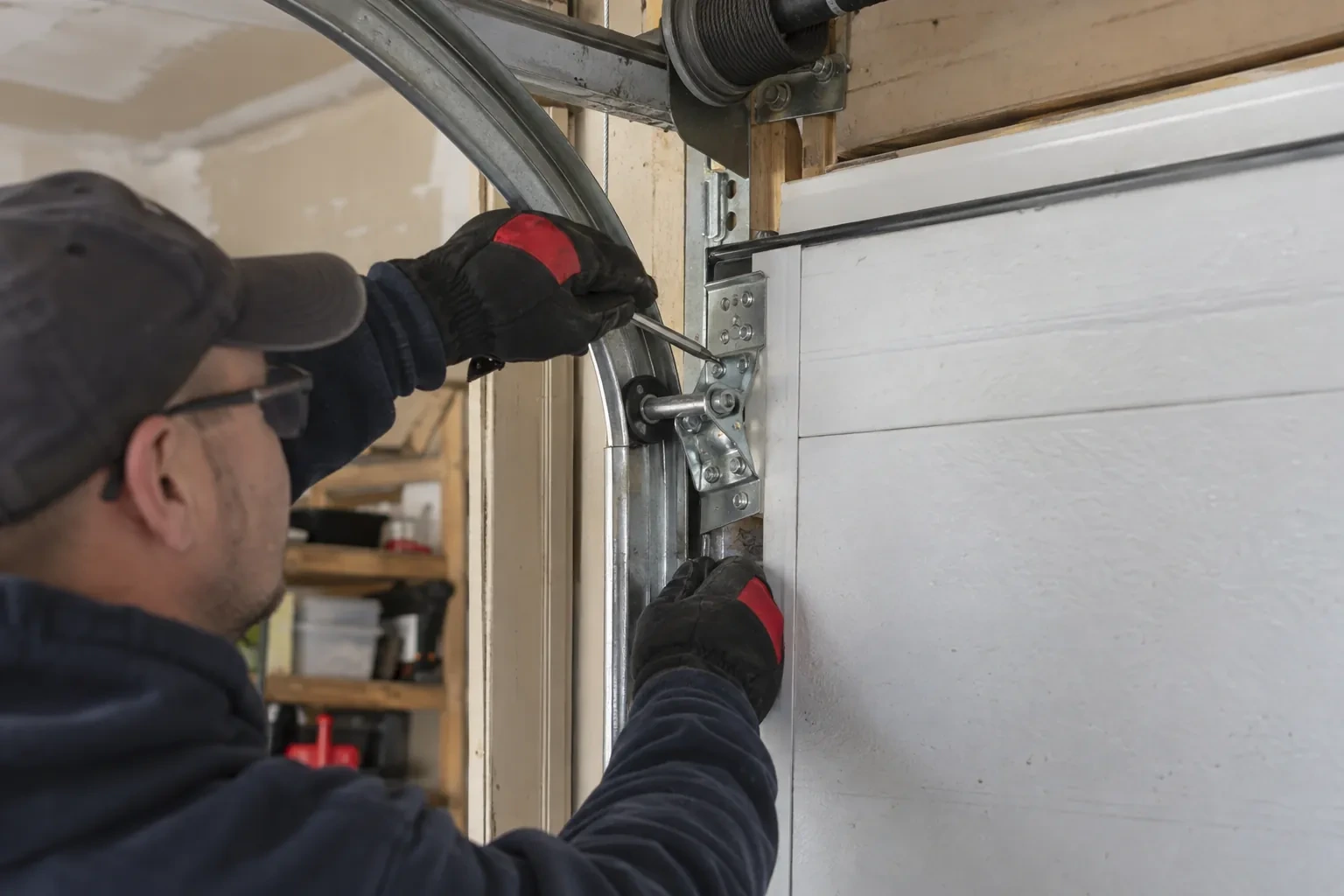
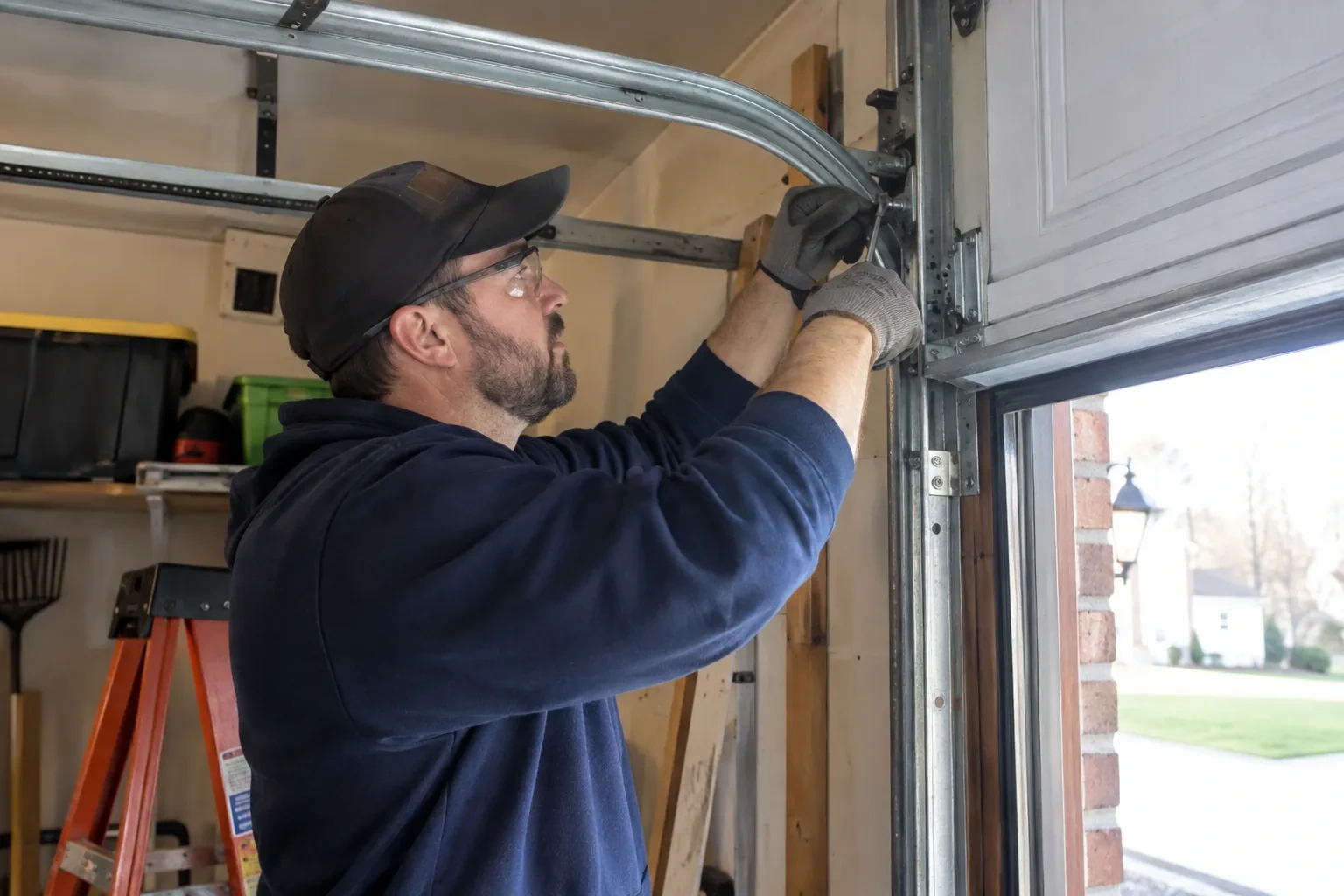
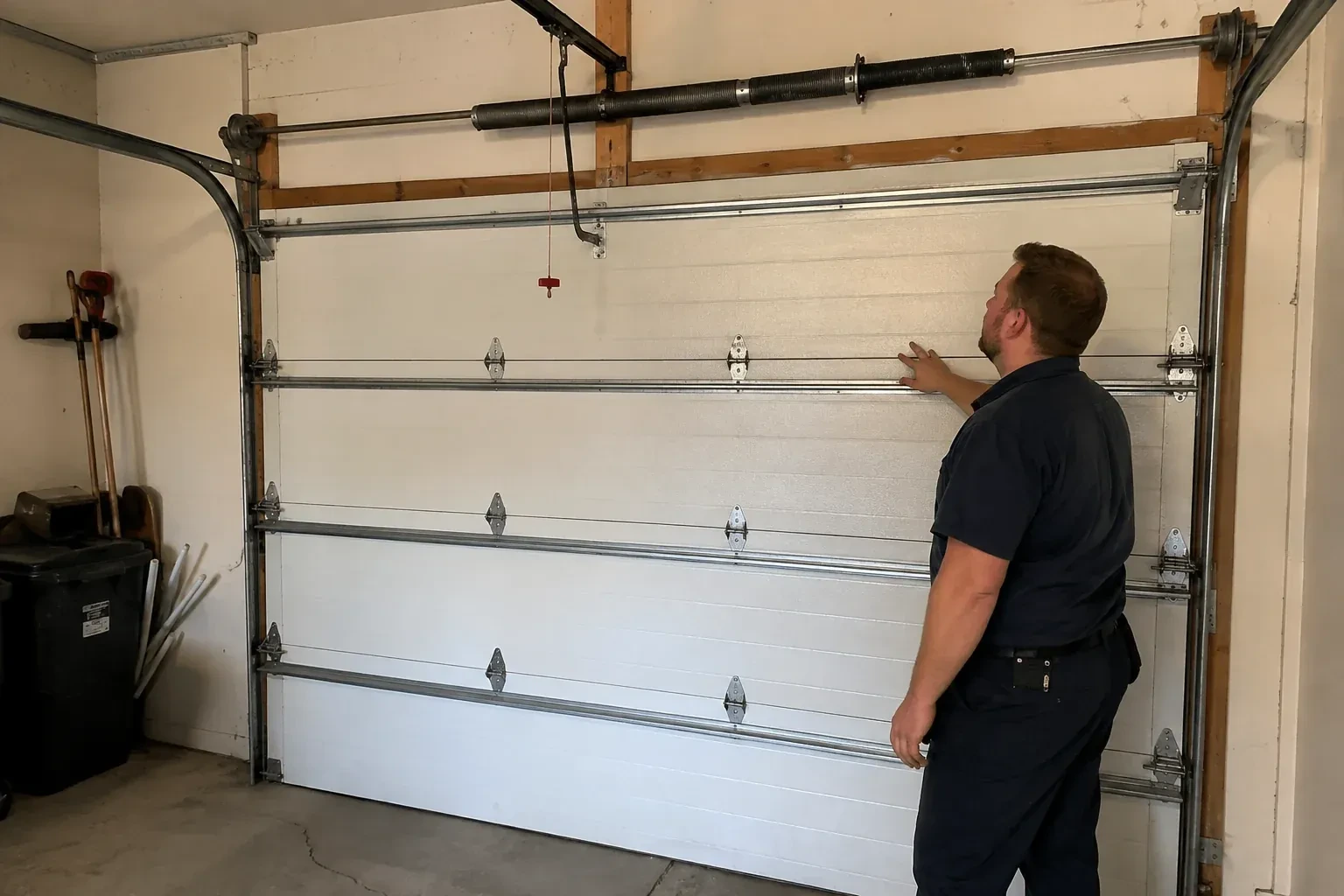
A tune-up is not glamorous: tightening hinges and brackets, lubricating rollers and bearings, resetting spring tension, checking the opener force and travel. Together those steps keep a garage door in Meadowvale South running for years and catch the one part that would have failed on the coldest morning of the winter.
A tune-up is not glamorous: tightening hinges and brackets, lubricating rollers and bearings, resetting spring tension, checking the opener force and travel. Together those steps keep a garage door in Meadowvale South running for years and catch the one part that would have failed on the coldest morning of the winter.
Open, close, repeat, for years.
Landlords and property managers in Meadowvale South get a written summary after every visit: the address, what was found, what was replaced, and what is likely to need attention next. Tenants get a door that works and remotes that behave. Everyone knows where things stand without a second phone call.
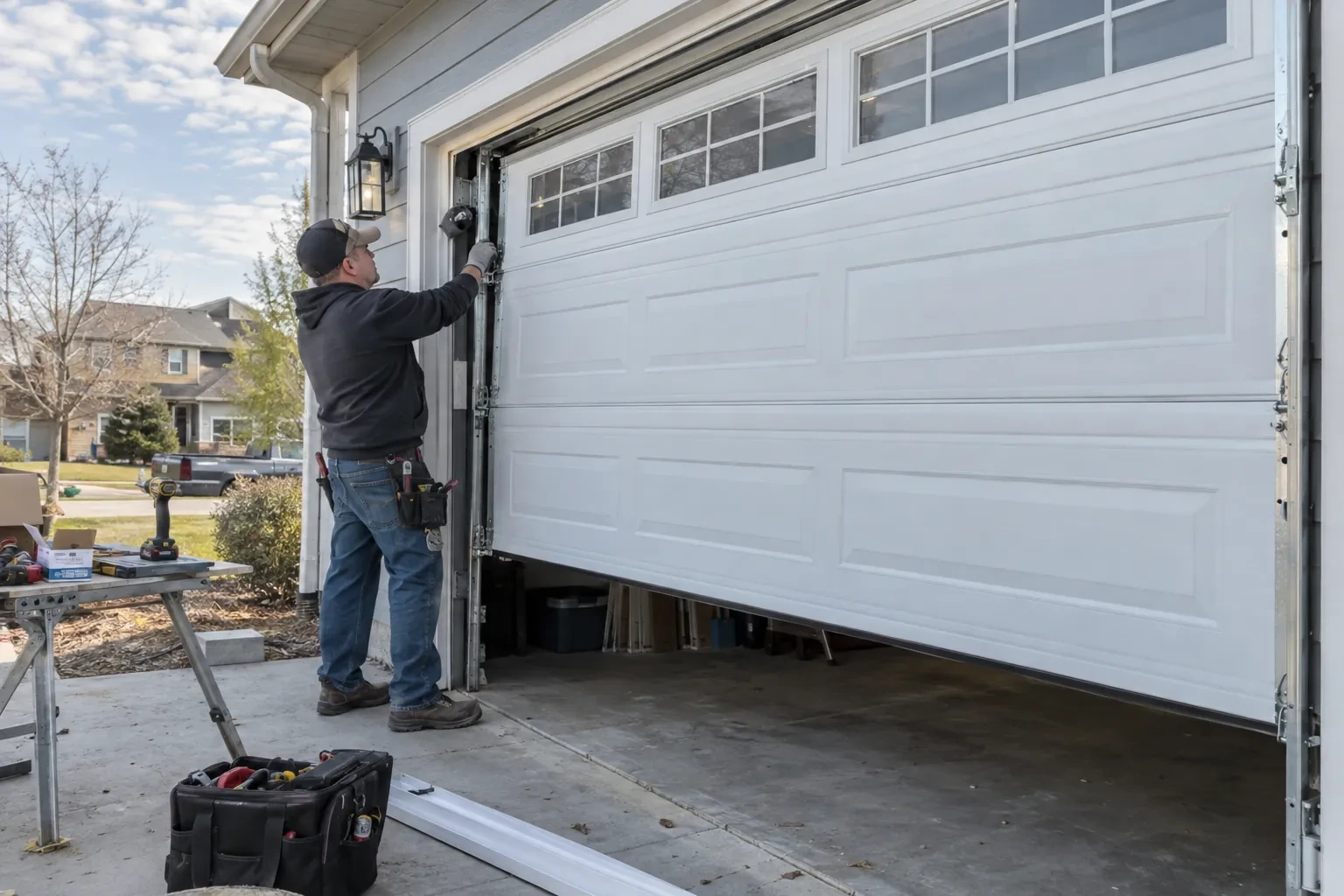
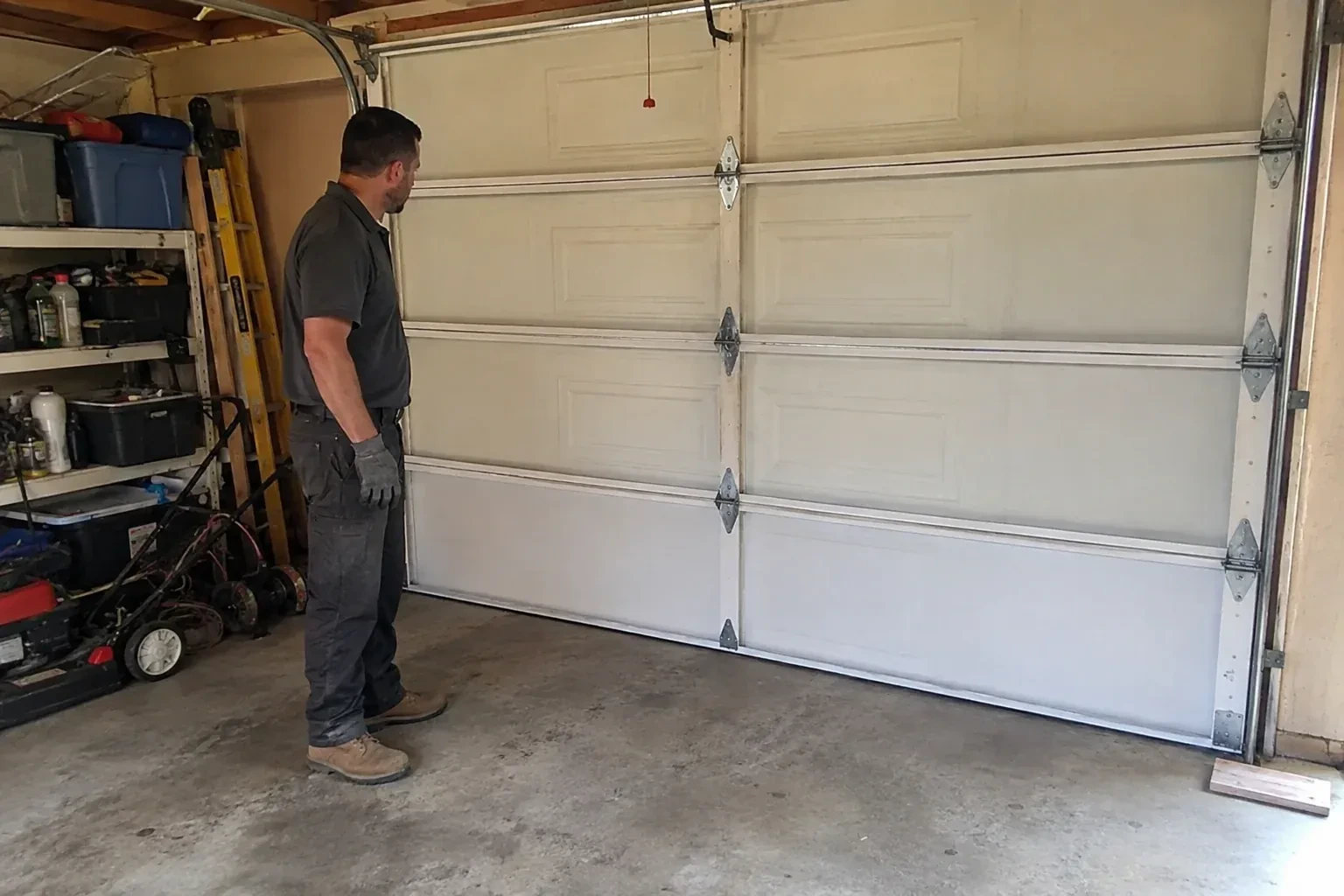
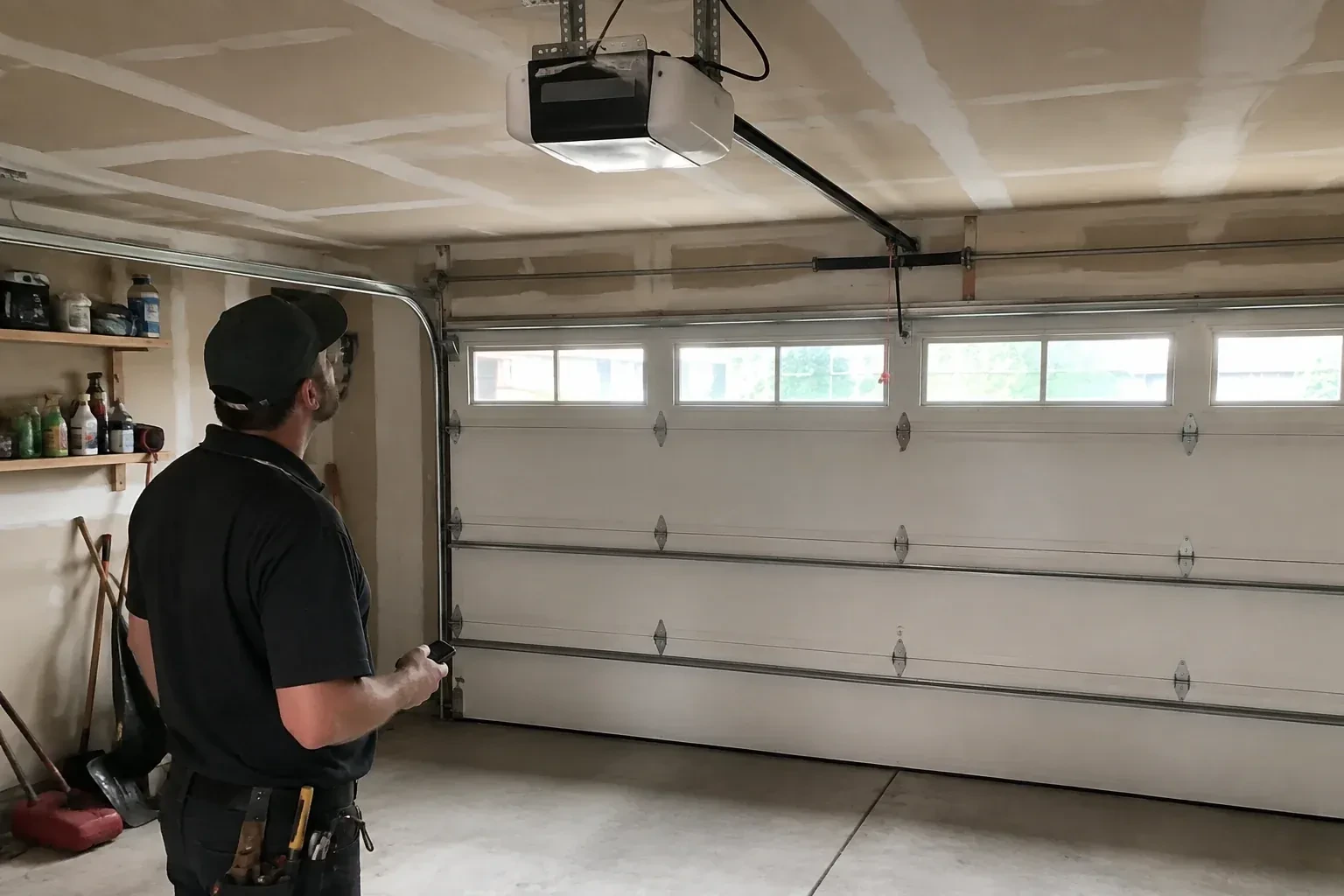
Garage doors in Meadowvale South see the same hard winters as the rest of the region, and our technicians visit the neighbourhood often enough to know what that does to springs, seals and rollers. Whether your door has stopped lifting, started making a new noise or is due for a replacement, we come out with a stocked van, look at the whole door, and explain what we find before any work begins.
29years in business
24/7open every day
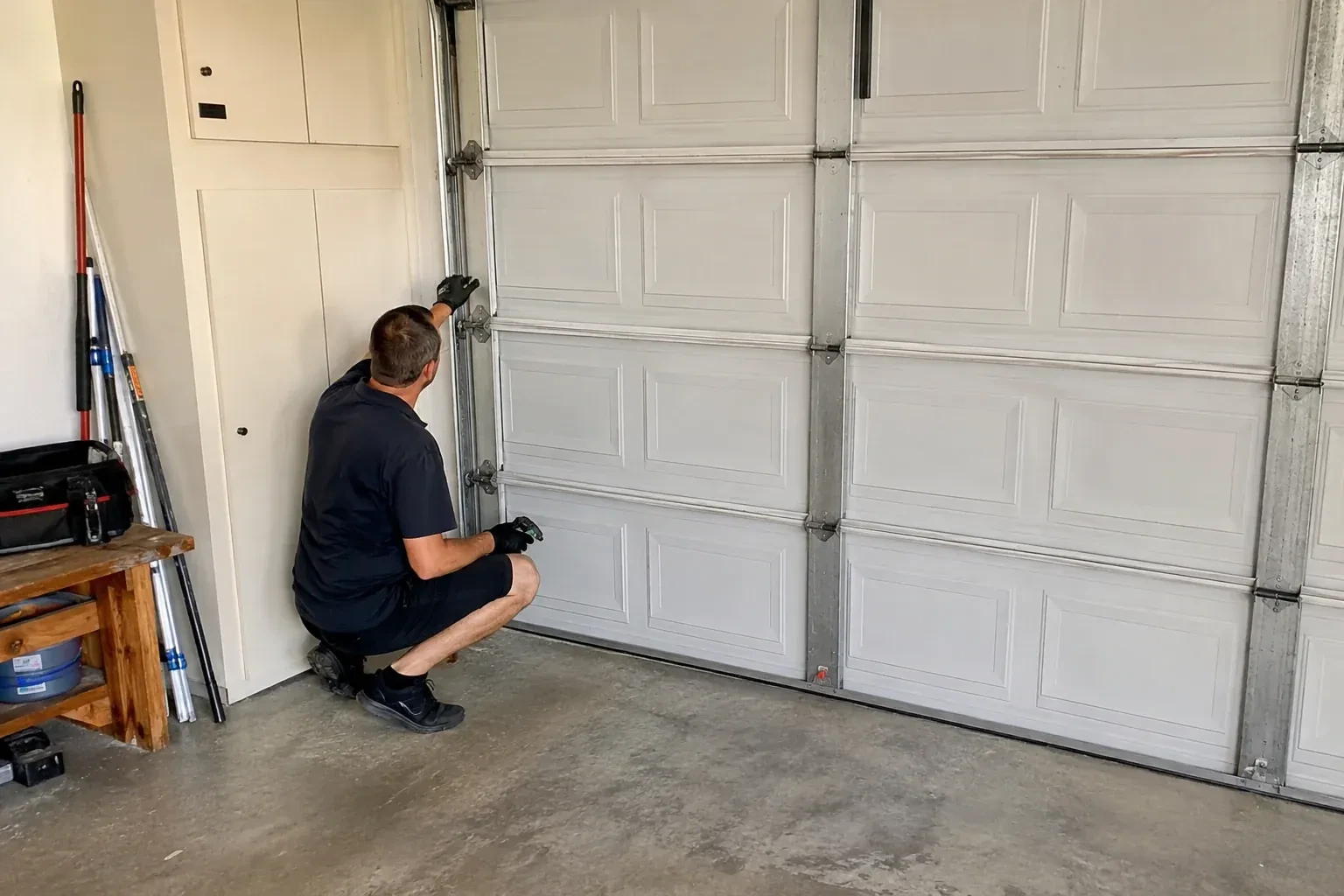
You understand what we found. We point to the worn part, show what it should look like and explain what happens if it stays as it is.
Tools and parts kept tidy. Our kit stays in one spot, cables and springs are bagged as they come out, and nothing gets left behind.
More than one way forward. Repair the part, refresh the whole system, or start over with a new door: we explain each so you can choose confidently.
Start with a visit to your garage in Meadowvale South.
Our garage door services for Meadowvale South are written up one by one so you can read exactly what happens during the visit. Spring and cable replacement, off-track repair, opener diagnosis, remote programming, weatherstripping, tune-ups, panel replacement and full door installation are all described in plain words.
About 38% of homes in Mississauga were built in 1980 or earlier, according to the 2021 Census.
In areas with a spread of building periods, garage doors fail for different reasons on the same street: worn pulleys and stretched cables on the older doors, cycle-limit springs and tired opener gears on the newer ones. Knowing which pattern applies shortens the diagnosis.
Single-detached houses make up about 37% of homes in Mississauga (2021 Census).
Attached housing frequently has tandem or tight garages with limited headroom and little side room, so replacement openers and tracks are chosen to fit those dimensions. A low-headroom track kit or a wall-mounted jackshaft opener often solves what a standard unit cannot.
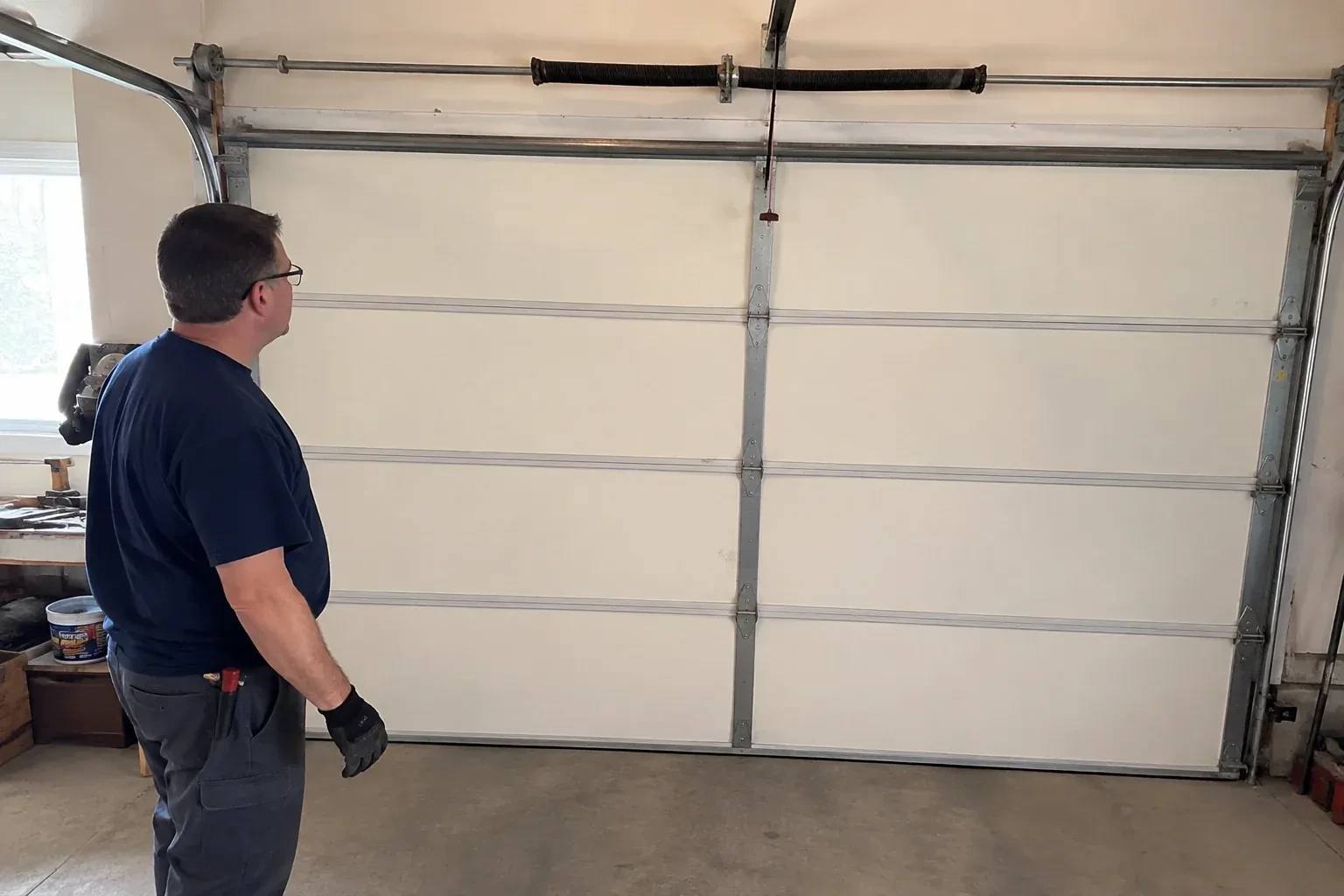
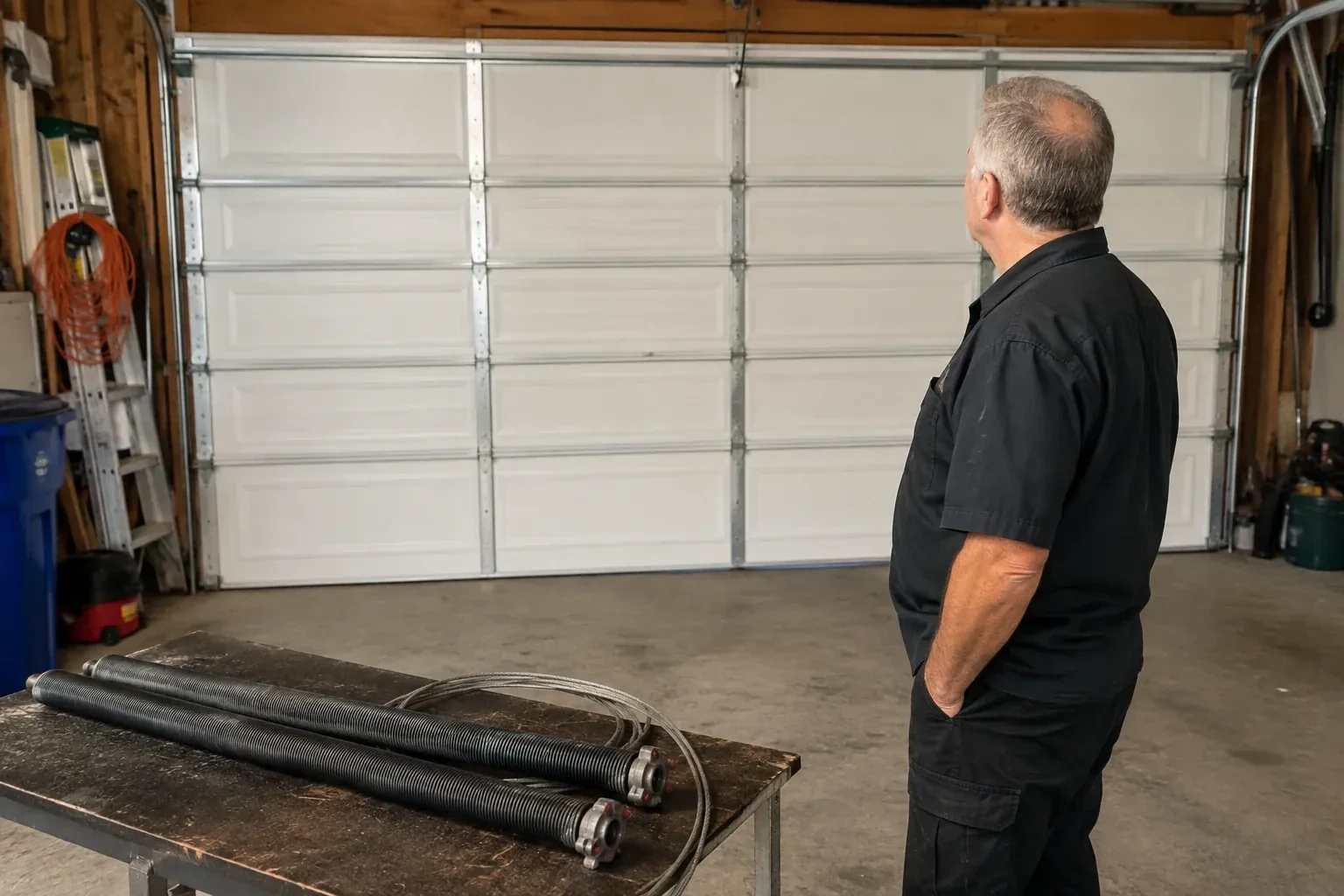
Winding a torsion spring is not a job for a ladder and a screwdriver. It takes proper bars, a secured door and a technician who knows how many turns the door wants. That is the work described in this group.
A sectional door replacement can also be the moment to change the opener, move to a wall-mounted unit, add a keypad or fit windows. We plan the whole upgrade together so nothing has to be done twice.
It is a January morning and the door lifts about a hand's width, groans, and settles back down. When you pull the release and try by hand the door feels far heavier than it used to, and the bottom seal is stuck hard to the slab.
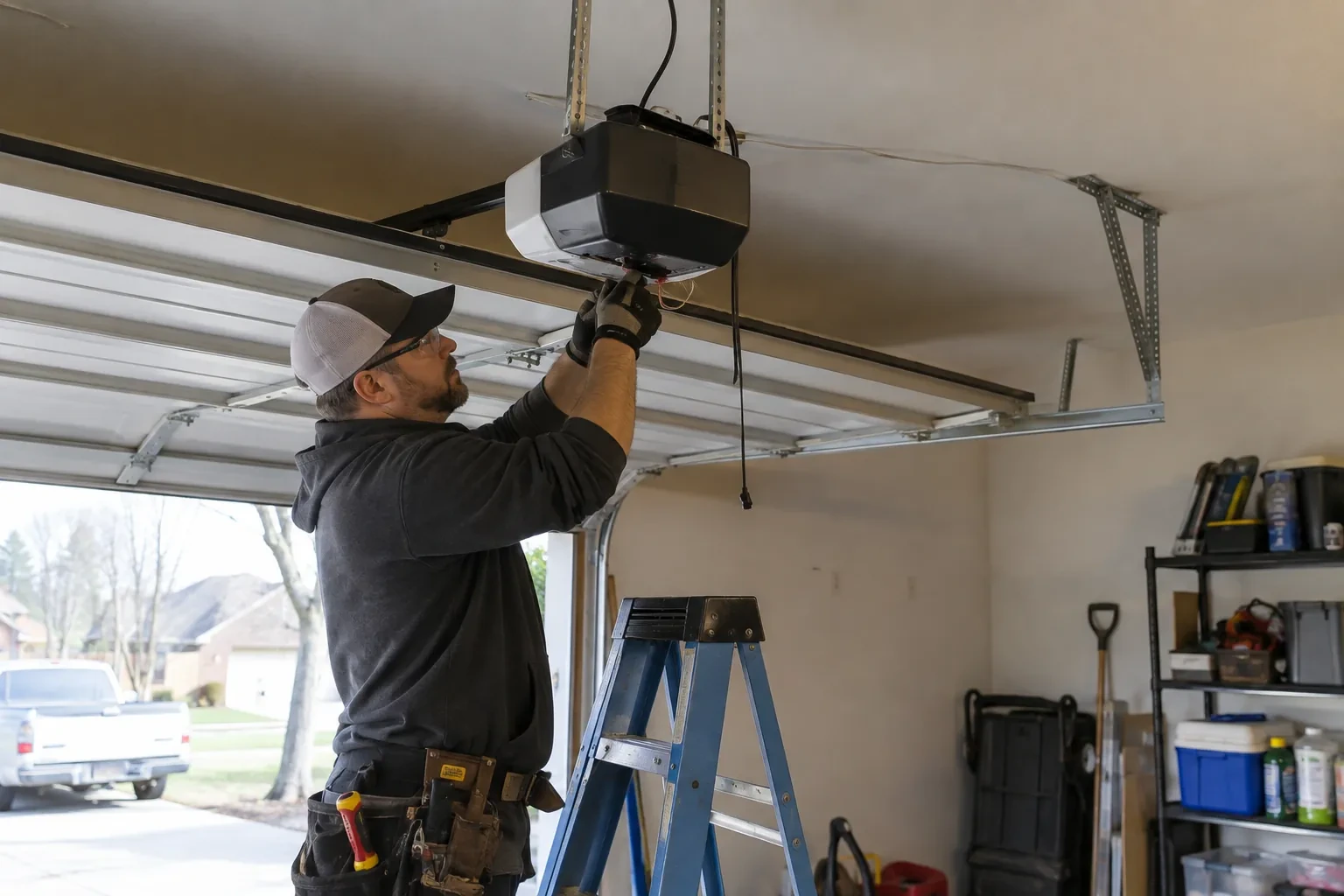
The rail shakes when the door runs. The steel straps holding it to the ceiling have worked loose, the chain rattles the length of the garage, and a bolt has already dropped onto the hood of the car.
There is a new squeal from the front of the rail, up near the header, on every cycle. The belt has started tracking to one side and its edge is fuzzy where it has been rubbing.
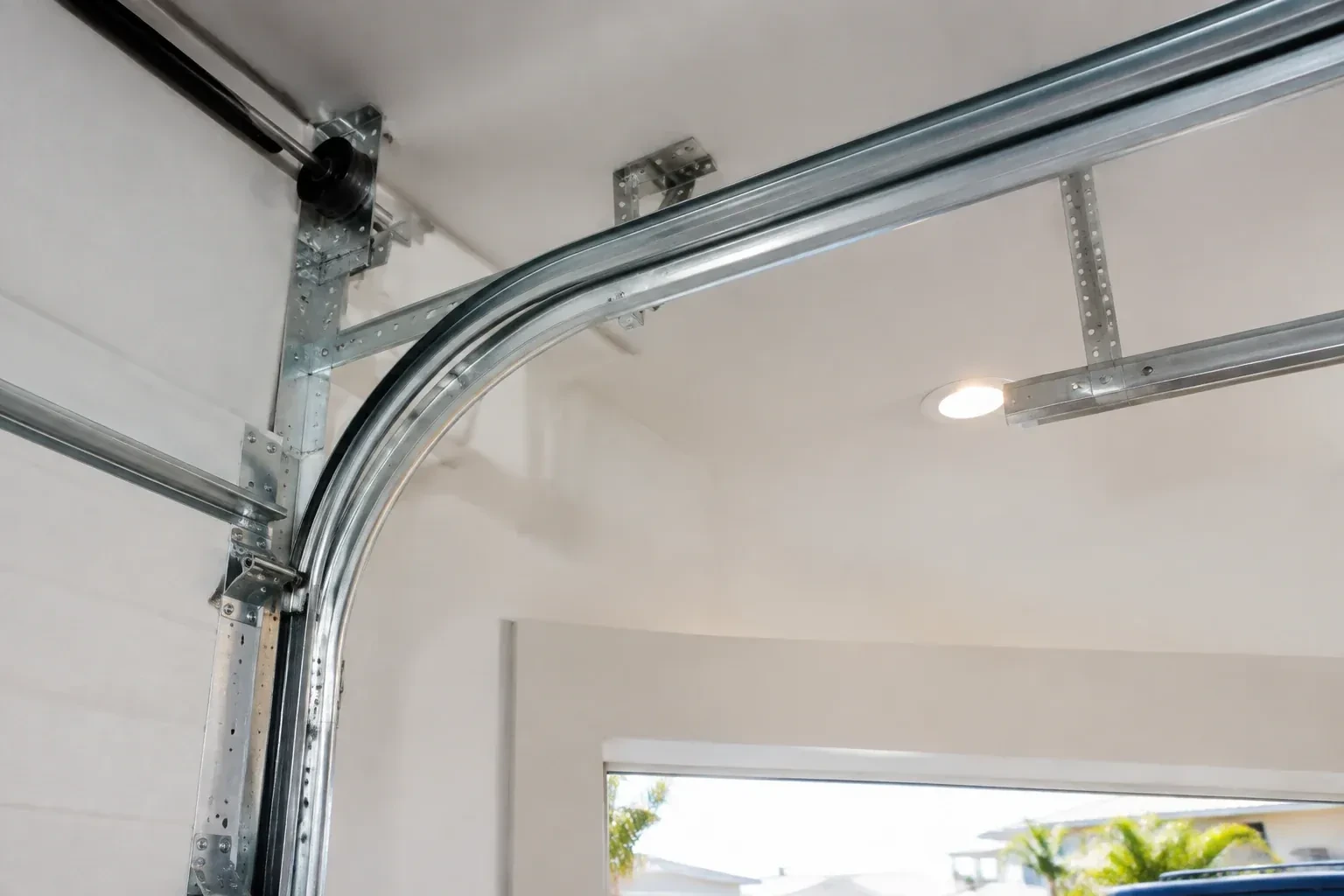
You want the ceiling back. A storage loft, a vehicle lift or kayak racks would fit if the long rail and motor box were not hanging in the middle of the garage, and the low ceiling of an older house leaves little room for the standard rail anyway.
Since shelving went up along the garage wall, the door will not close and both sensor lights are dead. A screw or staple may have gone through the thin wire that runs from the opener to the sensors.
After a week of lifting the door by hand you pressed the button, hoping it would catch. Instead the motor grinds, the trolley thumps against the end of the rail, and the little lever that should snap back stays stubbornly upright.
Which fix fits?
Backing out in a hurry, the bumper tapped the bottom section.
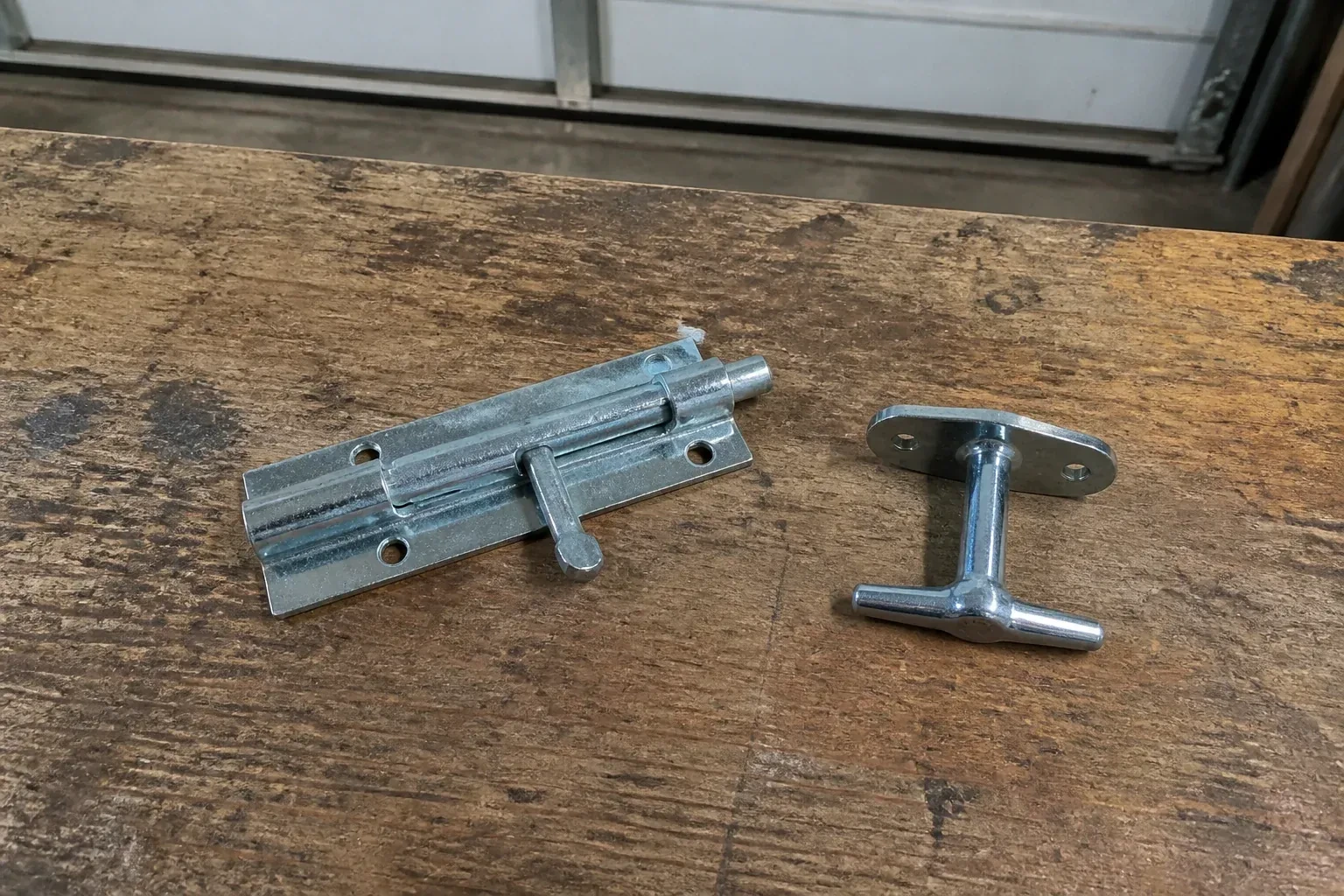
WhyA sectional garage door is usually locked in one of two ways.
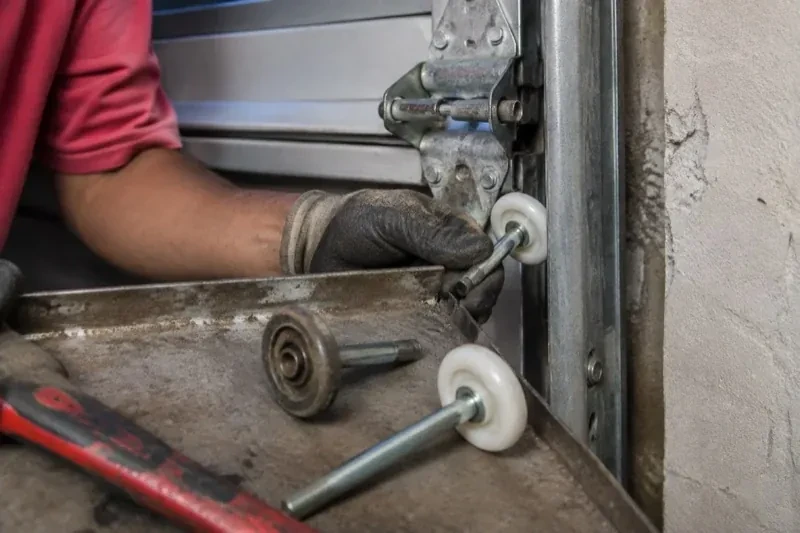
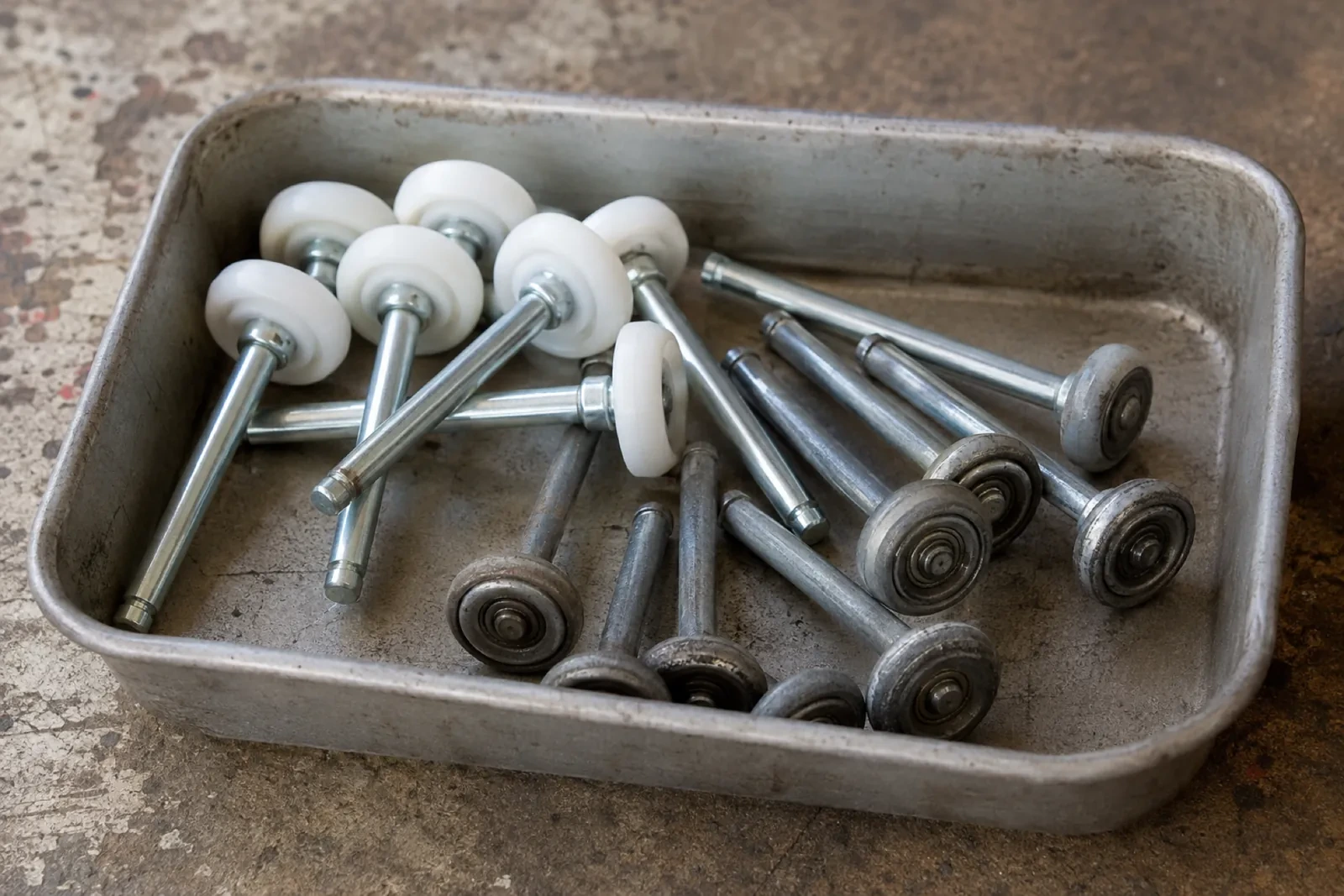
One of the little wheels along the edge of the door has a chunk missing, another sits crooked in its hinge, and there is a fine grey dust on the floor under the track where plastic has been wearing away.
WhyThe account is the part of the install that lives longest, so it is set up in your hands rather than the technician's.
An entrance. Not an afterthought.
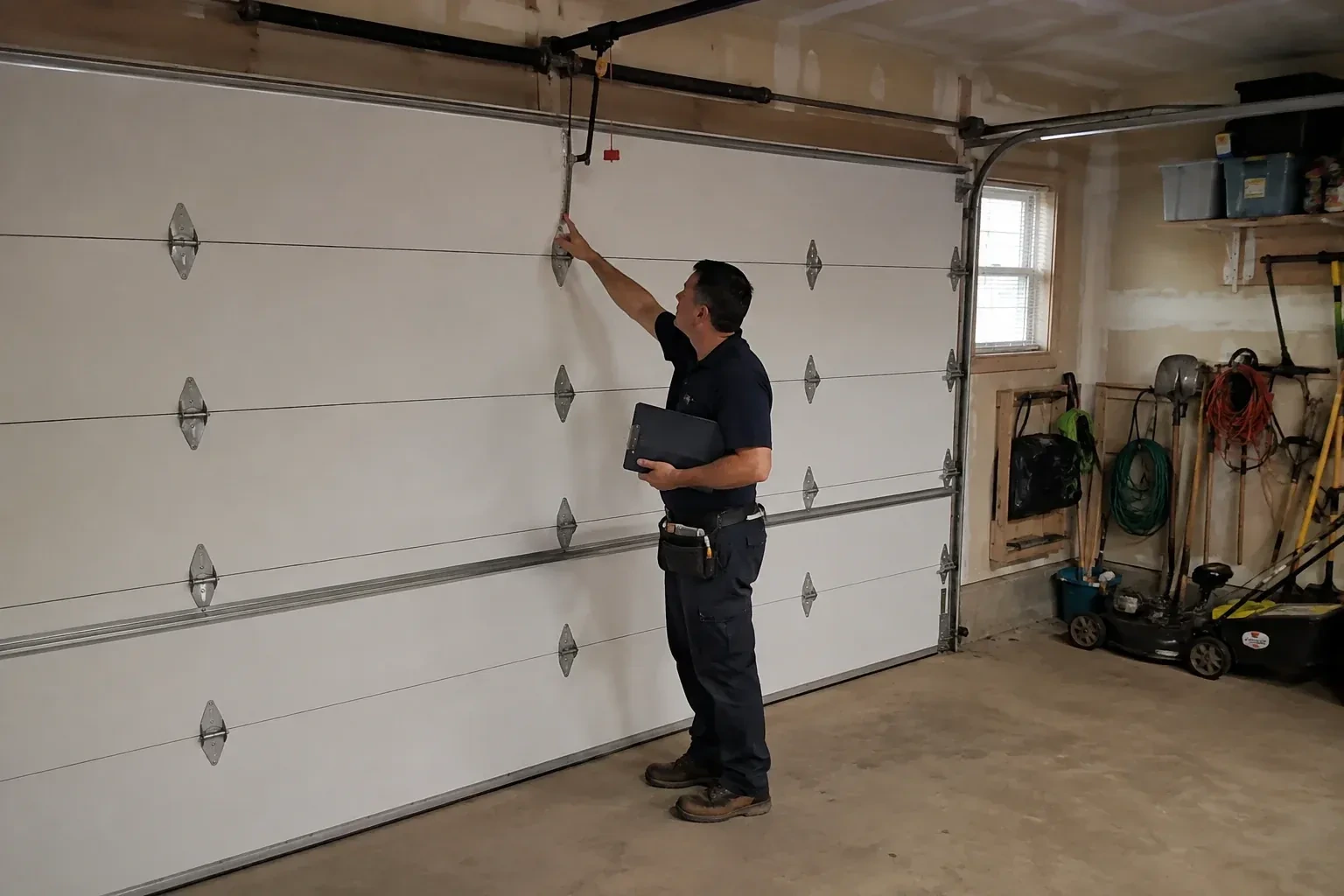
1/10Garage Door Safety Inspection
Backing out in a hurry, the bumper tapped the bottom section. The dent is small and the door still runs, but it seems to shudder now at the point where the panel meets the track.
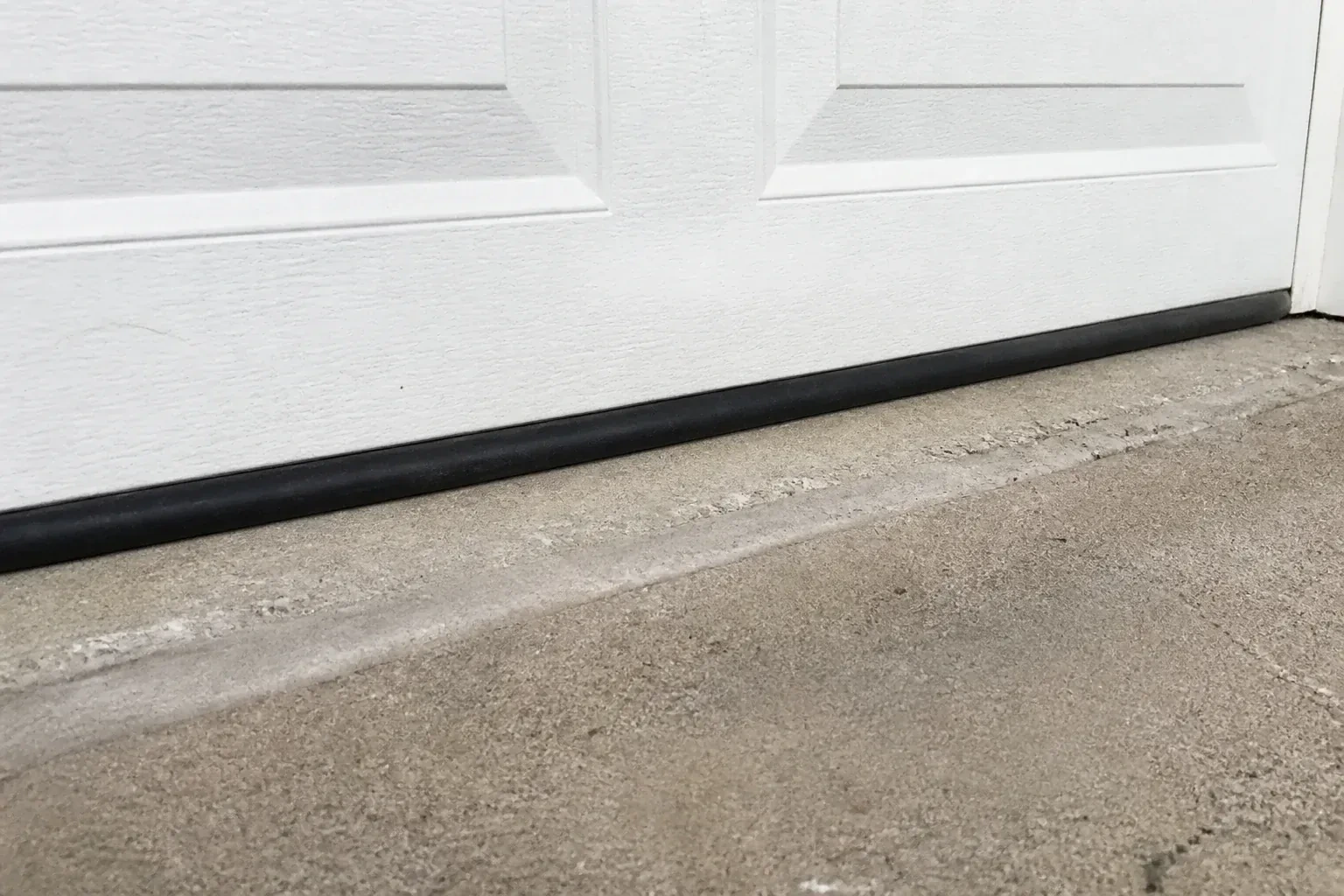
The strip under the door has gone as hard as a hose left out for ten summers. Press it and it does not give; bend it and it cracks. Where the door meets the floor it sits on the concrete without squashing at all.
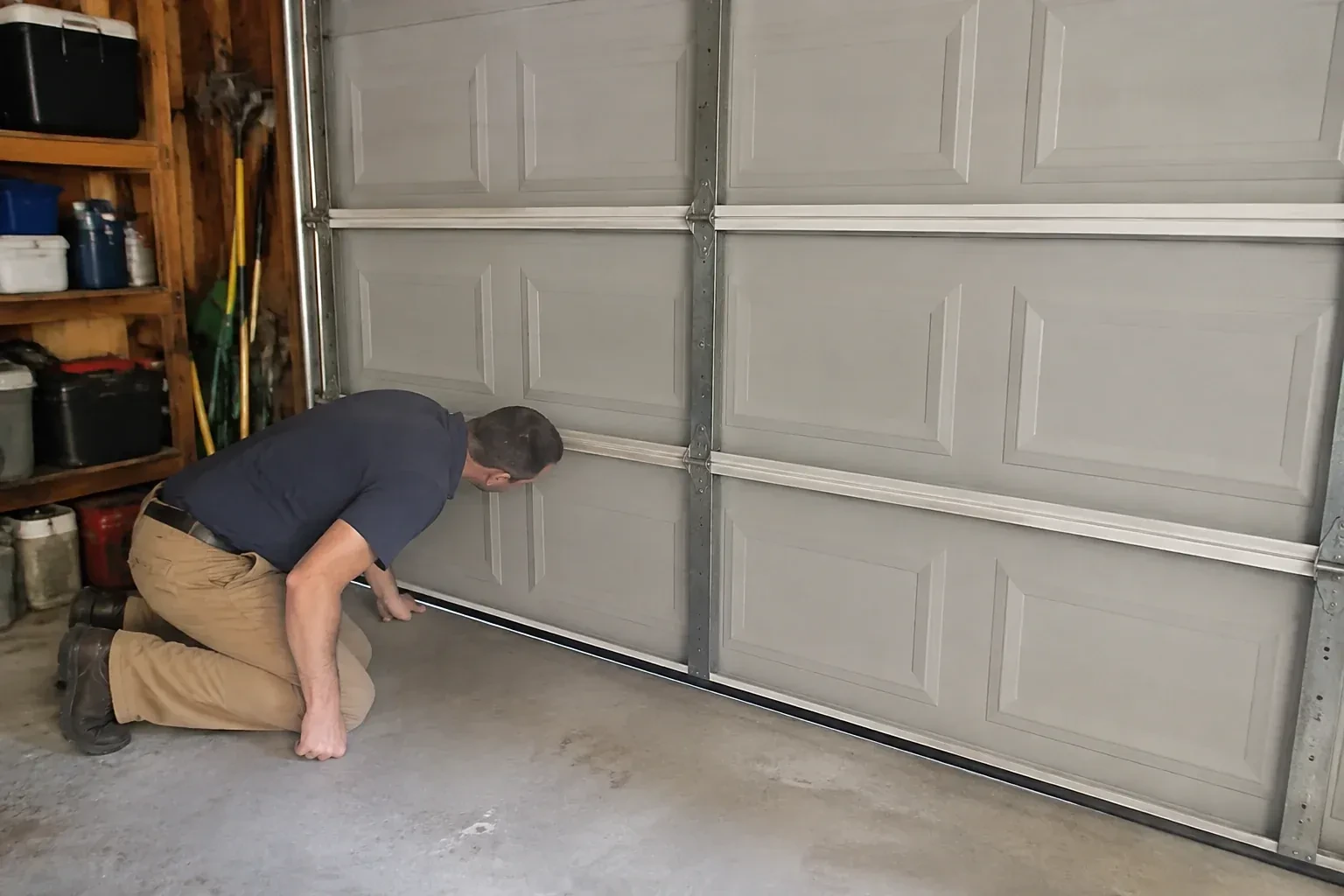
With the door closed and the garage lights off, a thin bright line runs down the whole left side of the opening. You can see the neighbour's fence through it. The strip that should close that gap has shrunk back from the door.
It is a February morning and the key goes only halfway into the garage handle. Yesterday's melt ran down the door face and into the keyway, and overnight it set like glass. The key flexes; the cylinder stays put.
One of the little wheels along the edge of the door has a chunk missing, another sits crooked in its hinge, and there is a fine grey dust on the floor under the track where plastic has been wearing away.
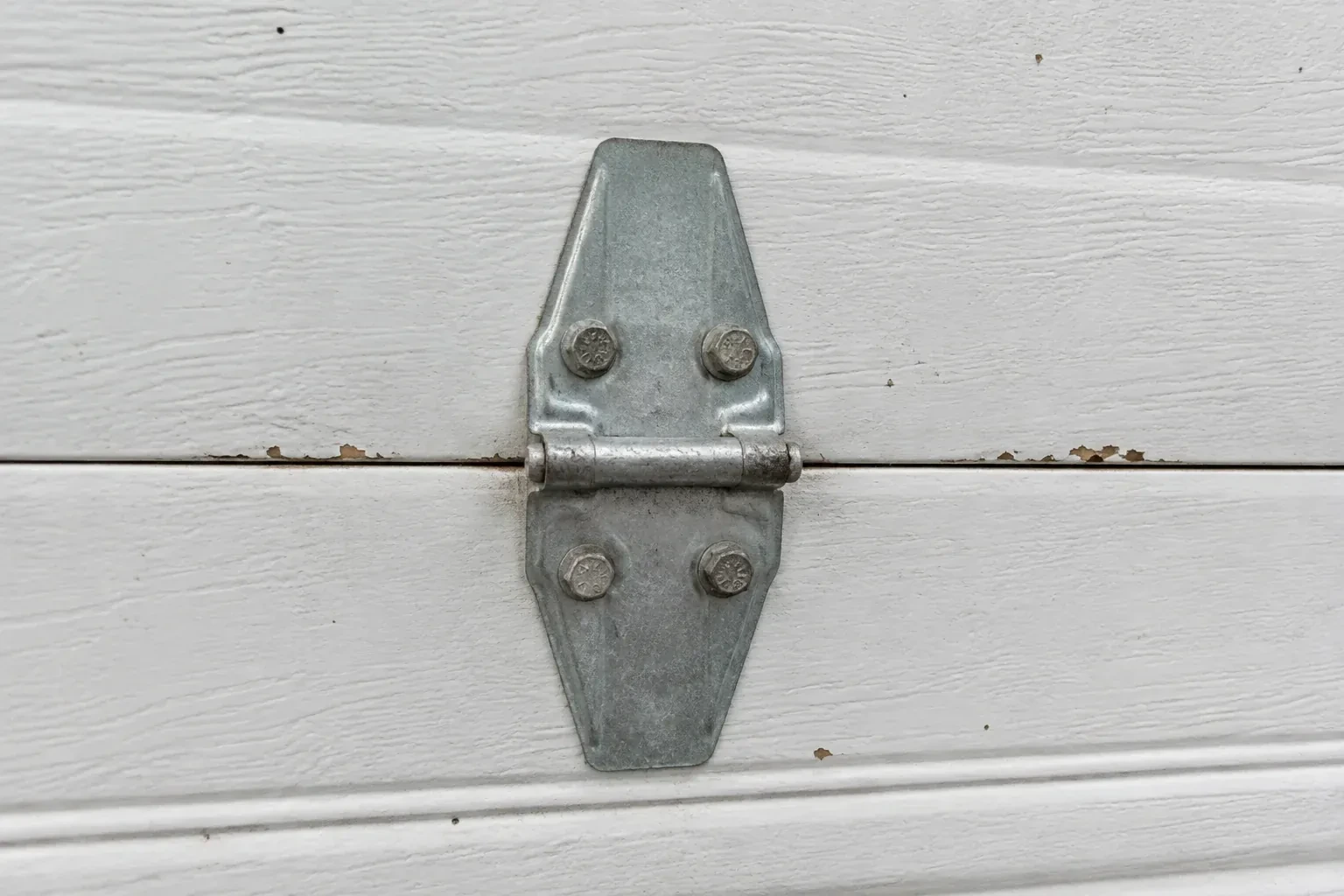
On the old wood door, one hinge has pulled away from the panel, dragging a screw and a chunk of soft timber with it. The panel sags slightly at that joint and the door bumps at the curve instead of gliding.
Backing out this morning, the mirror caught the track beside the door. Now there is a crease in the steel at about knee height, and the door stops with a bang every time a roller reaches it.
The rail shakes when the door runs. The steel straps holding it to the ceiling have worked loose, the chain rattles the length of the garage, and a bolt has already dropped onto the hood of the car.
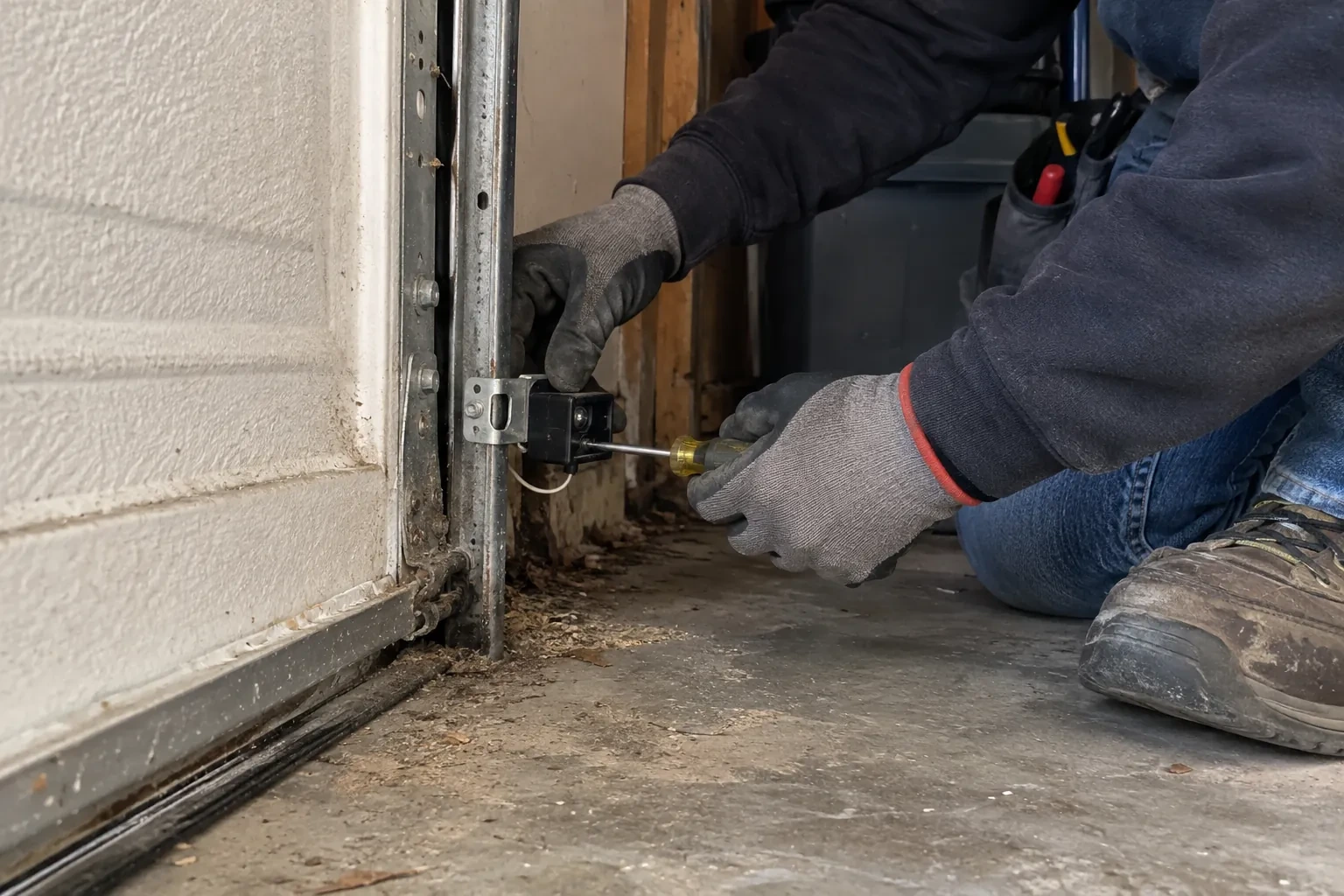
The small light on one of the sensors near the floor has gone dark, or it flickers when someone walks past the track. The other one glows steadily. The door refuses to close from the car.
You are twenty minutes down the highway when the thought lands: did the garage door close behind you? You cannot picture it. Turning back means being late, and not turning back means wondering about it all day.
The moving metal-on-metal points get a light coat: the spring coils, the hinge knuckles, the roller bearings and the pins at the bottom brackets. A silicone or lithium product made for doors is used, then the door cycles a few times to carry it in. The tracks are the exception; they are cleaned and left bare, since a slick track lets the wheels skid and holds grit against them.
Why does the seal freeze to the floor, and what should I do when it does?
Snow melts off the car, runs to the low point at the door and refreezes overnight around the seal. When that happens, leave the remote alone, since the opener will tear the strip or pull the door out of level. Free the seal by hand with gentle warmth along the line or by working a plastic scraper under it, then run the door. A film of silicone on the seal each autumn largely prevents it.
Do you adjust the door as part of the seal work?
Small corrections, yes. If a track bracket needs re-setting or the door needs to come plumb so the fin can meet it evenly, that is done so the new seal is fitted to a door that sits properly. Larger work, such as replacing rollers or a bowed section, is explained and offered as its own job so you can decide on it separately.
How long does a manual lock repair usually take?
An adjustment to a slide bolt or a guide is a short job, while a full T-handle replacement with new bars, a rekey and a door alignment fills a longer visit. Most calls sit somewhere between, and the technician gives you a realistic sense of the time once the door has been looked at, rather than guessing from the phone.
How often should the whole door be inspected?
Industry guidance suggests a monthly visual and listening check by the homeowner, with the door closed and then in motion, and a yearly visit from a trained door systems technician who goes over springs, cables, rollers, hinges, track, balance and the opener's safety functions. Rollers themselves are worth a look twice a year, and they belong on the list whenever springs or cables are being replaced. A door used many times a day earns more frequent attention.
How many hinges does a typical door have?
Count the joints between panels and multiply. A single door usually carries two edge hinges and one centre hinge per joint, so a four-panel door has three joints and nine hinges. A double door adds one or two more centre hinges per joint to keep the wider panels flat. The top panel uses adjustable top fixtures rather than hinges, and the bottom corners use bottom brackets, which are different parts.
Does a new piece of track have to match the rest of the set?
It does. Profile, gauge and radius all need to agree so a roller passes from old track to new without a step, and so both sides carry the door the same way. A two-inch track cannot mix with three-inch hardware, and a 12-inch curve beside a 15-inch one leaves the door meeting the horizontal run at two different heights. The technician measures the existing track and orders to it rather than to a general size.
Can my chain drive be made quieter without changing it to a belt?
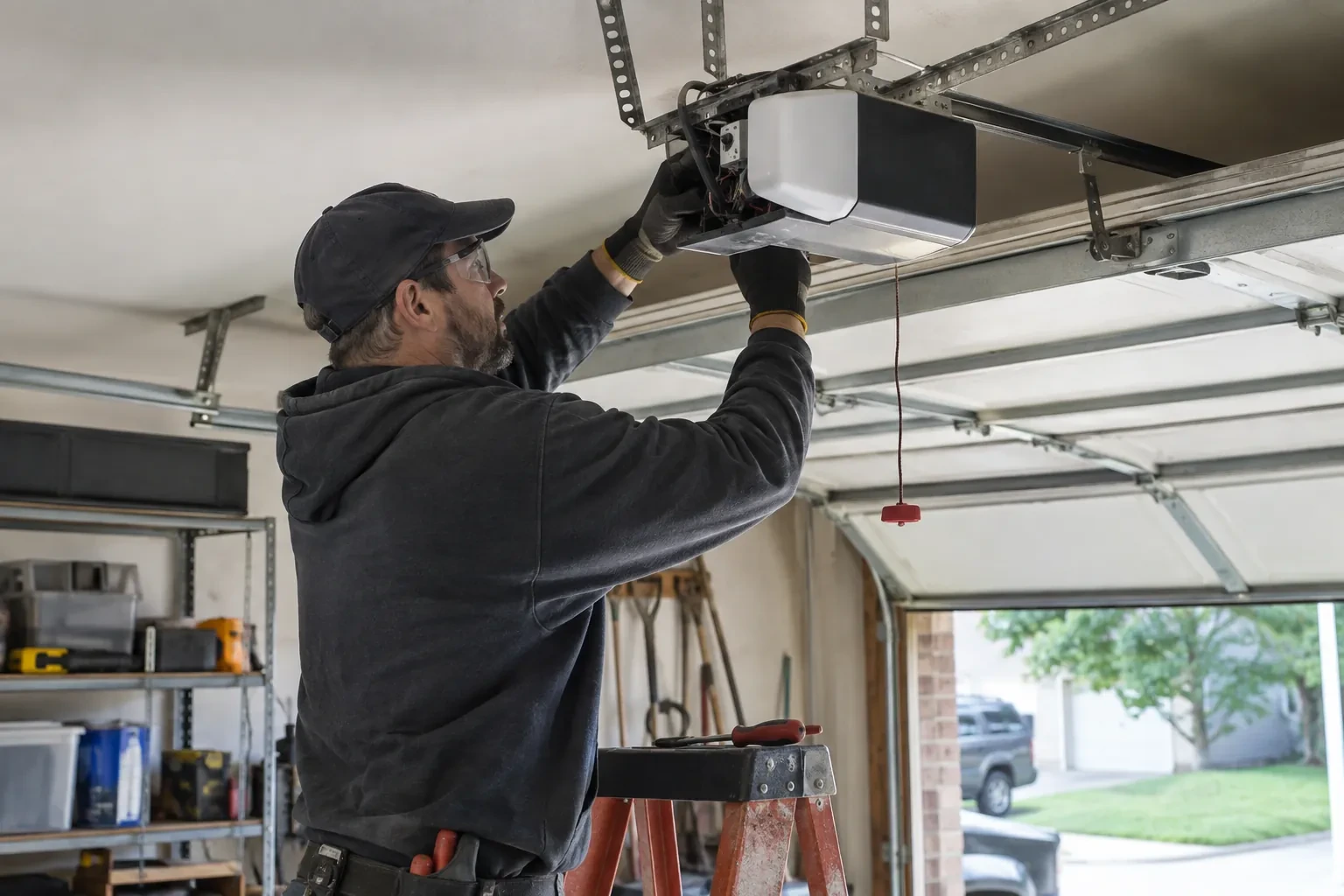
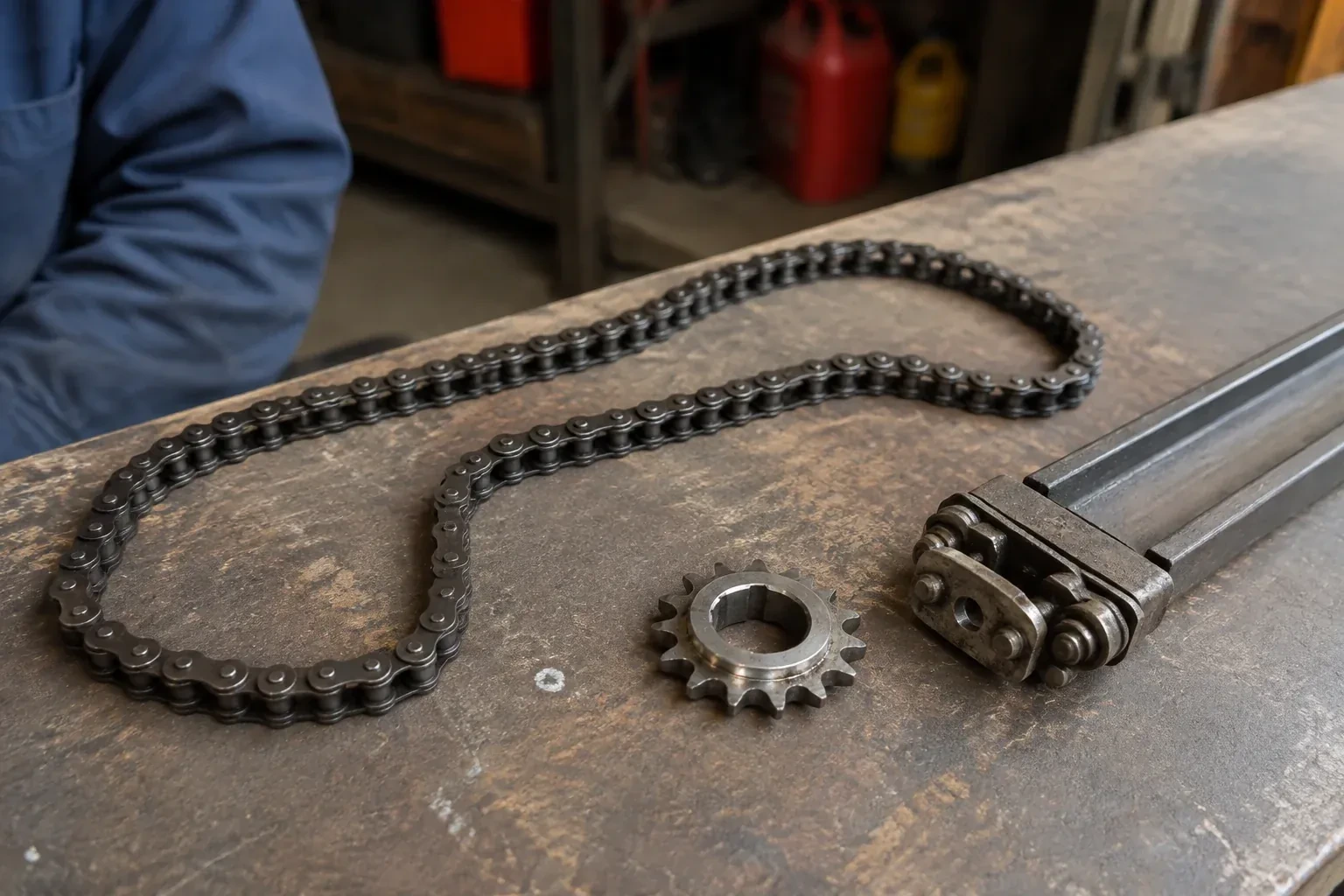
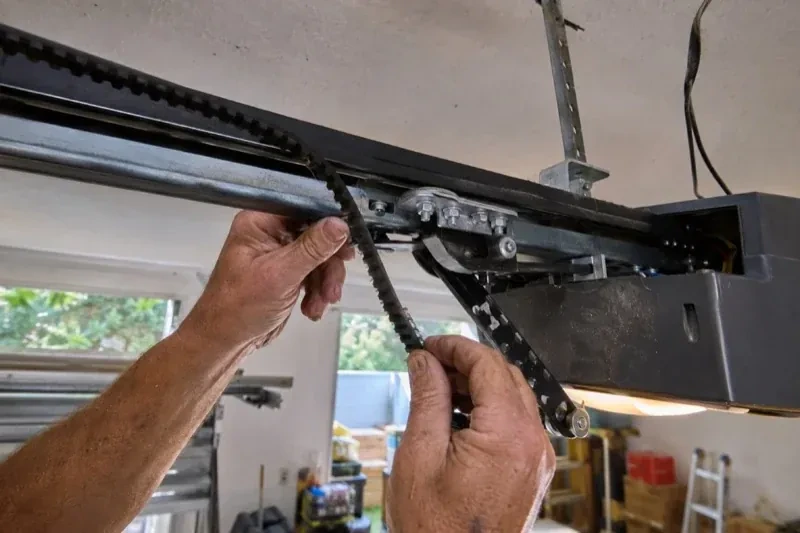
Yes, a fair amount. Correct chain tension removes the slap. A new sprocket and chain remove the clack. Tight hangers, a level rail and a snug header bracket remove the rattle that travels through the framing into rooms above. Nylon rollers and lubricated hinges on the door quiet the door itself, which is often louder than the drive. A vibration isolator between the head and the hangers helps where the ceiling carries sound into a bedroom.
How high off the floor should the sensors sit?
Low. The industry checklist expects the beam no more than roughly 15 cm (6 in) up from the floor, so that a small child, a pet or a bicycle wheel breaks it. Both sensors are set at the same measured height and level with each other, since a difference of a couple of centimetres is enough to lose the beam. Within that rule the technician can raise them a little to keep them out of the strip where slush collects.
What does the colour of the learn button tell you?
On many openers the learn button's colour marks the generation of radio coding the unit uses, which decides how a hub can talk to it. Some generations accept a simple two-wire connection at the wall-control terminals; others use an encrypted console and need the hub paired by radio or through a small adapter. Sending a photo of the button and the label ahead of the visit lets the technician arrive with the right hardware.
Request a visit
Landlords and property managers in Meadowvale South get a written summary after every visit: the address, what was found, what was replaced, and what is likely to need attention next. Tenants get a door that works and remotes that behave. Everyone knows where things stand without a second phone call.