Springs · Meadowvale South
Garage Door Roller Replacement in Meadowvale South
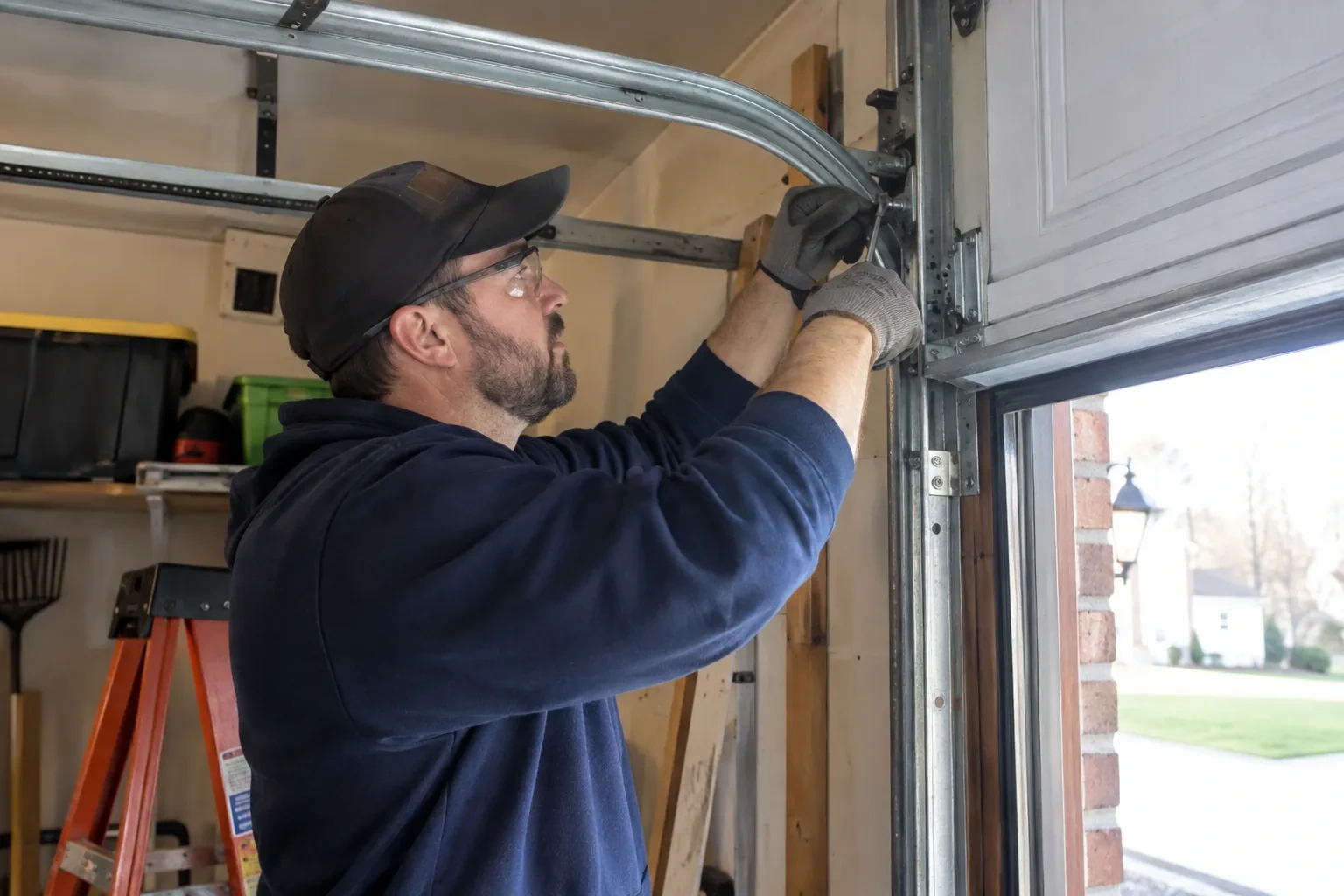
A roller near the top corner is riding on the lip of the track rather than inside it, and the section above leans back a little more each week.
In plain words
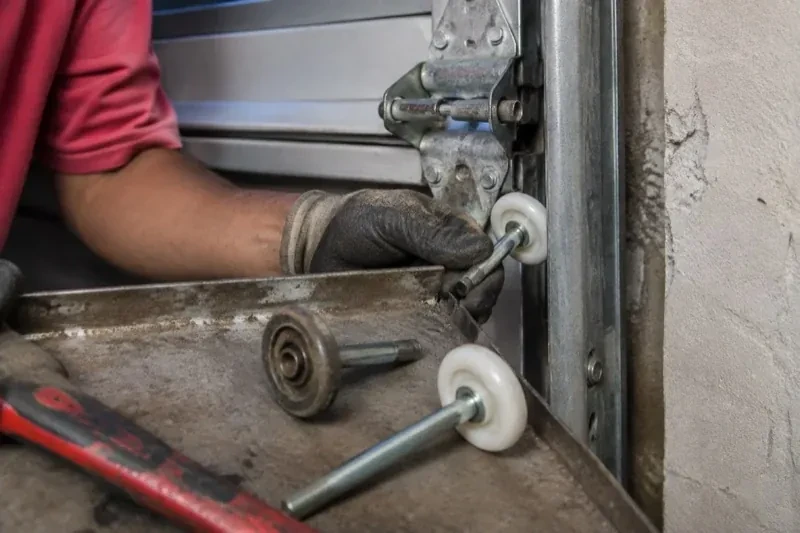
A garage door opener is designed to guide a balanced door, not to haul a rough one. Rollers that bind, wobble or grind add resistance across the whole travel, and the opener answers by working harder, running hotter and tripping its force limit or reversing partway. Replacing worn rollers with a smooth-running set takes that load away, which is why the opener often sounds calmer after the same visit. The technician confirms the door holds its own weight with the opener released, then checks the opener's force and reversal settings once the new rollers are in.
How the visit goesOne of the little wheels along the edge of the door has a chunk missing, another sits crooked in its hinge, and there is a fine grey dust on the floor under the track where plastic has been wearing away.
Garage Door Roller Replacement
How the visit goes
The hardware the rollers live in
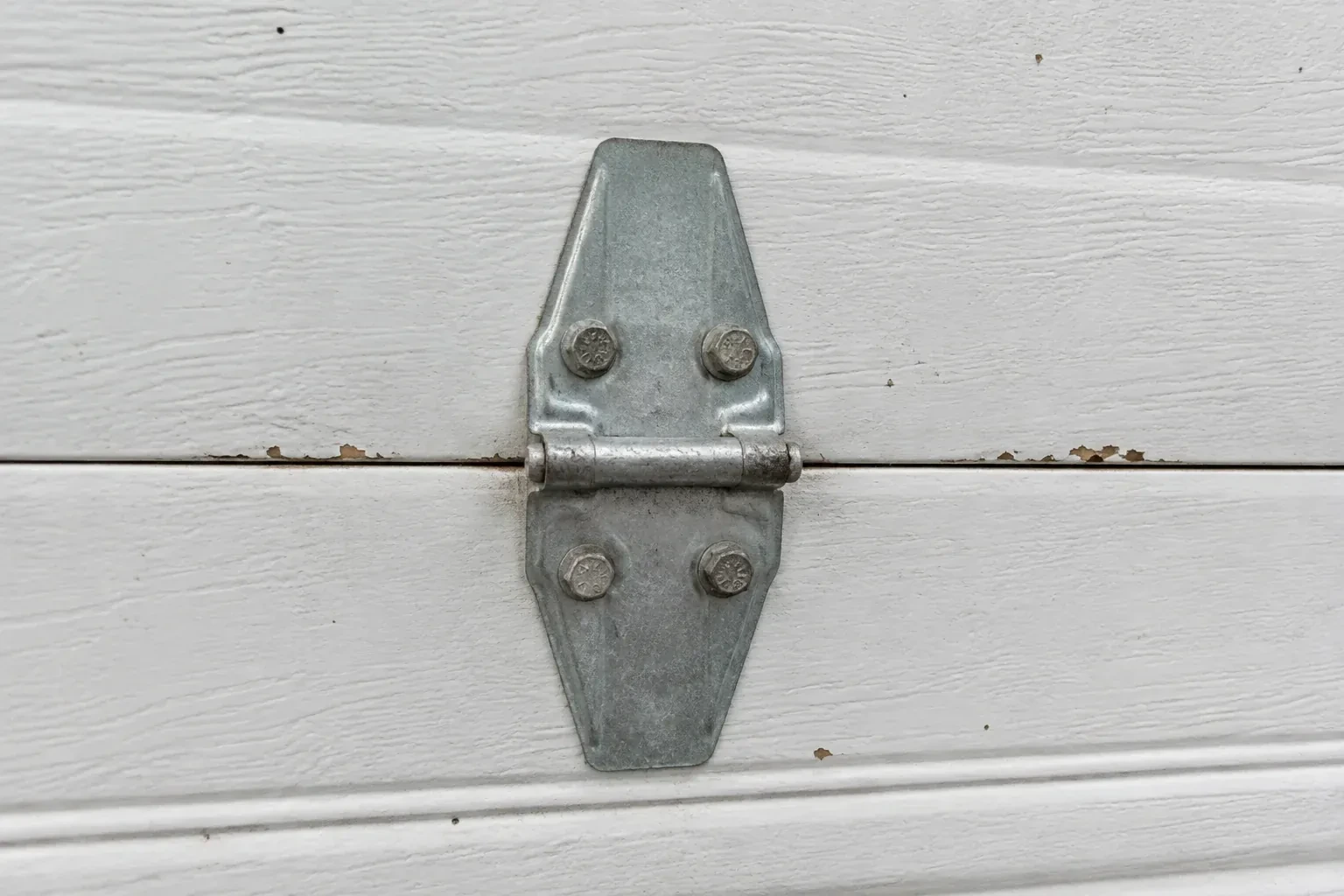
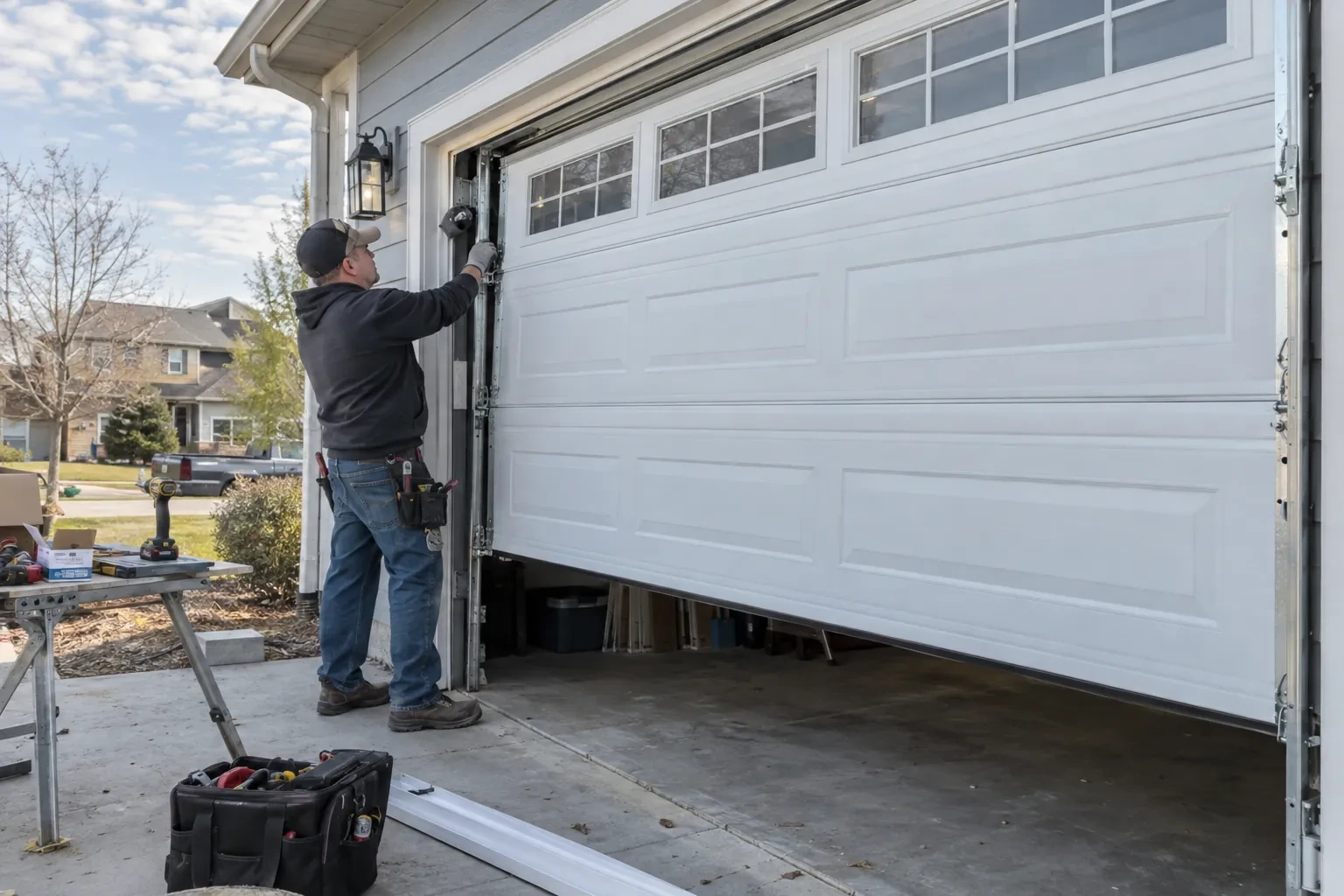
A roller is only as good as the bracket that holds it. The technician inspects every hinge for cracks at the knuckle, elongated holes and loose or missing fasteners, checks that the top fixtures still adjust and hold their setting, and looks over the bottom brackets for rust, deformation and the condition of the cable attachment. Jamb brackets and the flag brackets at the top of the vertical track are checked for movement. A door moves more than a thousand times a year and that vibration loosens bolts, so a hinge that has been working loose is often the reason a wheel wore crooked, and it is refastened or replaced as part of the same visit.
Running it in and testing
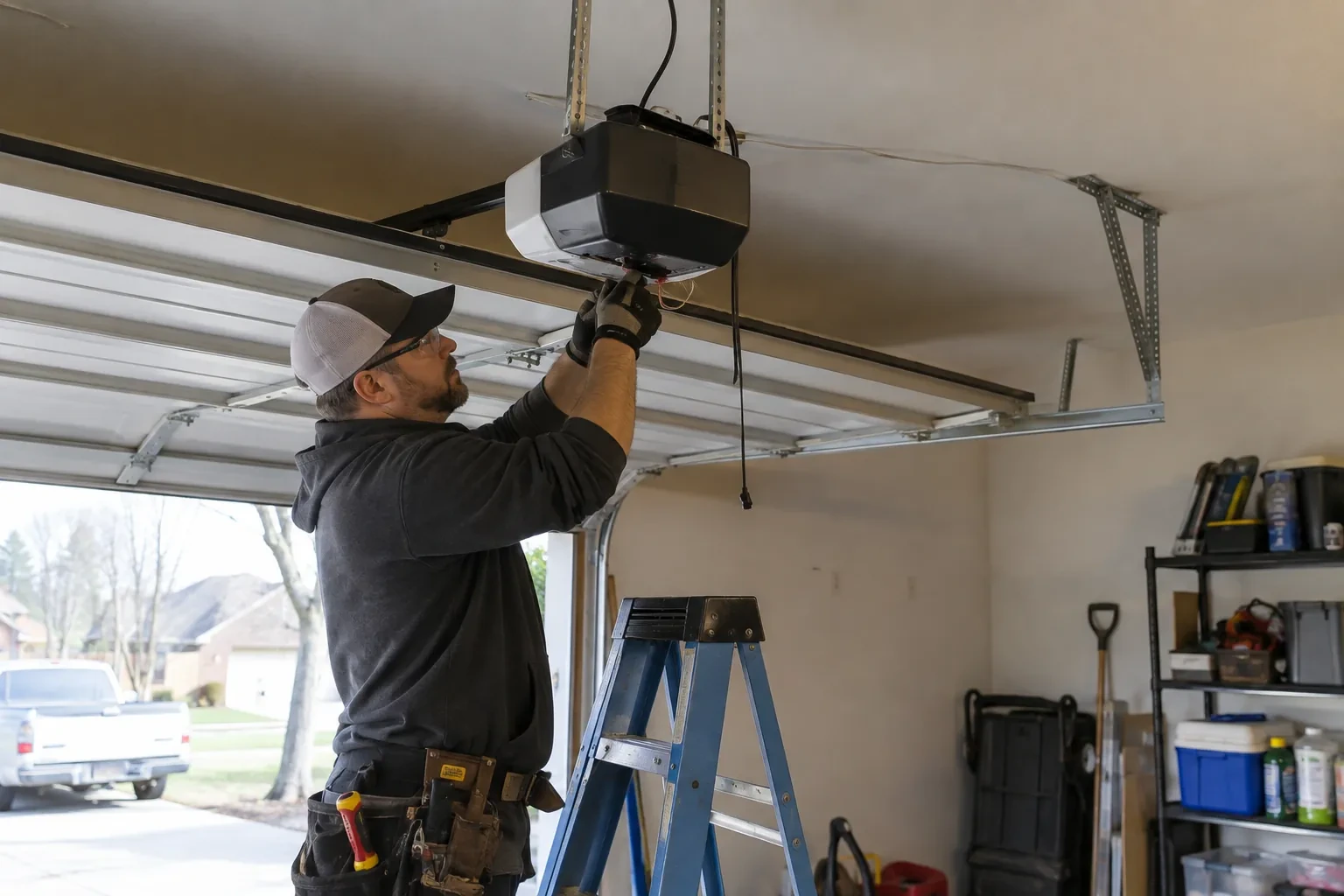
The opener is reconnected and the door is run through several full cycles while the technician watches each wheel stay seated in its track and listens for anything left over. Balance is rechecked with the opener released. Then the opener's settings are confirmed: the force limits, which may need reducing now that the door moves so freely, and the reversal, tested against a 1-1/2 inch block laid on the floor in the door's path exactly as the industry checklist describes. Only when the door travels smoothly, seals at the top and reverses on contact is the job called finished.
Signs to watch for next time
Rollers wear slowly, so it helps to know the early signals. A rhythmic clicking that travels with the door, like a train over rail joints, points to a bearing beginning to fail. A wheel that leans to one side in its hinge, or a door that starts to rock as it rounds the curve, suggests a stem or wheel wearing oval. Grinding that returns a day or two after lubrication means the wear is in the wheel, not the grease. Catching these while the door still runs makes the next roller change a planned visit rather than a door stuck halfway.
Garage Door Roller Replacement
In the van
Adjustable top fixtures
Steel ball-bearing rollers
Long-stem rollers for double hinges
Sealed-bearing nylon rollers
Replacement numbered hinges
Garage Door Roller Replacement
What affects the quote
Top fixtures and bottom brackets
A top fixture that no longer adjusts, or a bottom bracket that has corroded or bent, is changed while the door is secured, and the quote names each piece.
Opener adjustments afterwards
Resetting force limits and re-testing the reversal once the door moves freely is normally part of the job; reprogramming or repairs to the opener itself are quoted separately.
Relieving spring tension for the bottom rollers
When the bottom brackets have to be unbolted, the technician takes the spring load off first with winding bars, skilled extra work that is included in the figure for that position.
What to have ready
- Has the door ever come off its track or been hit by a vehicle?
- Does the door stay put at halfway when the opener is released?
- Where in the travel does the noise, shake or hesitation happen?
Garage Door Roller Replacement: questions
QuestionsCan I replace just the one roller that looks bad?
One roller can be changed on its own, and sometimes that is the sensible stopgap after a wheel breaks. The better result comes from a full set, because the other wheels have done the same number of cycles and are close behind, and mixing new with old, or nylon with steel, leaves the door running unevenly and sounding different on each side. A matched set also lets the technician set every top fixture and check every hinge in one pass.
How often should the whole door be inspected?
Industry guidance suggests a monthly visual and listening check by the homeowner, with the door closed and then in motion, and a yearly visit from a trained door systems technician who goes over springs, cables, rollers, hinges, track, balance and the opener's safety functions. Rollers themselves are worth a look twice a year, and they belong on the list whenever springs or cables are being replaced. A door used many times a day earns more frequent attention.
Why does the door shake as it rounds the curve of the track?
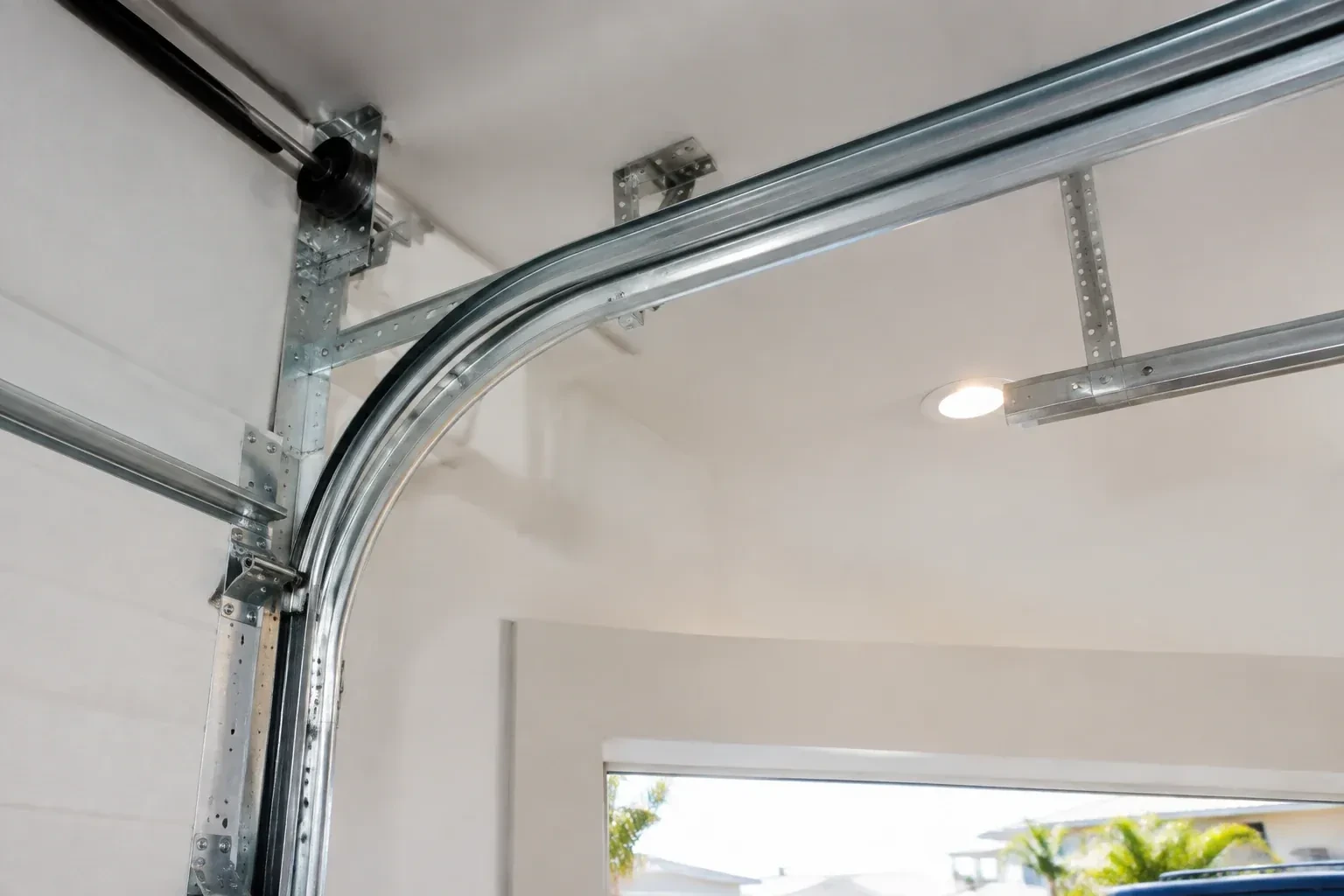
The curve is where each roller changes direction under load, so it exposes wear that straight travel hides. A wheel worn oval or flat-spotted bumps as it turns the corner, a wobbling stem lets the section lean back as it enters the horizontal run, and a track whose radius has been knocked out of shape pinches or drops the wheel for an instant. Fresh rollers of the right size in a track that has been checked for shape and spacing usually take the shudder away.
Related services
- Garage Door Track Repair or ReplacementThe garage floor has settled at one corner, and the door now scrapes the concrete on that side while daylight shows at the other.
- Garage Door Cable ReplacementSomeone left the snow shovel leaning in the opening and the door came down on it.
- Torsion Spring ReplacementThe door starts to rise, gets about the height of your knee, then shudders and reverses.