Openers · Mississauga
Garage Door Opener Replacement
You want the ceiling back.
In plain words
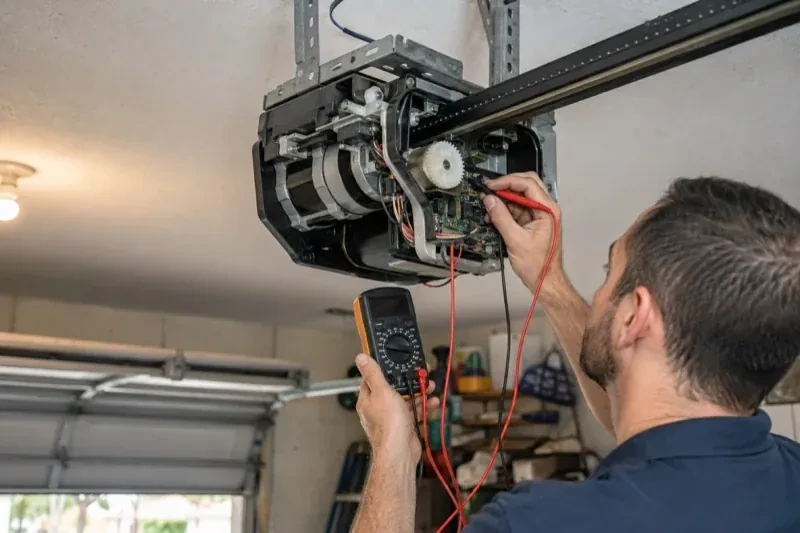
Openers have changed more than most people realise. Many units from before the early 1990s relied on motor resistance alone, without a photo-eye pair near the floor, though some carried a sensing edge or a close control instead. Fixed-code remotes set by tiny switches were common then too, so the same setting could open more than one door. A modern operator adds a beam across the opening, a force limit that reverses on contact, a rolling code that changes with every press, and a lock button that switches remotes off at night. Replacement brings all of those at once, and the safety tests are run in front of you.
How the visit goesYou swapped the old wooden door for a heavier insulated steel one, and the twenty-year-old opener that was kept has never settled. It strains on the way up, stops partway on cold mornings, and the rail shudders with every cycle.
Garage Door Opener Replacement
How the visit goes
Lifting the door by hand first
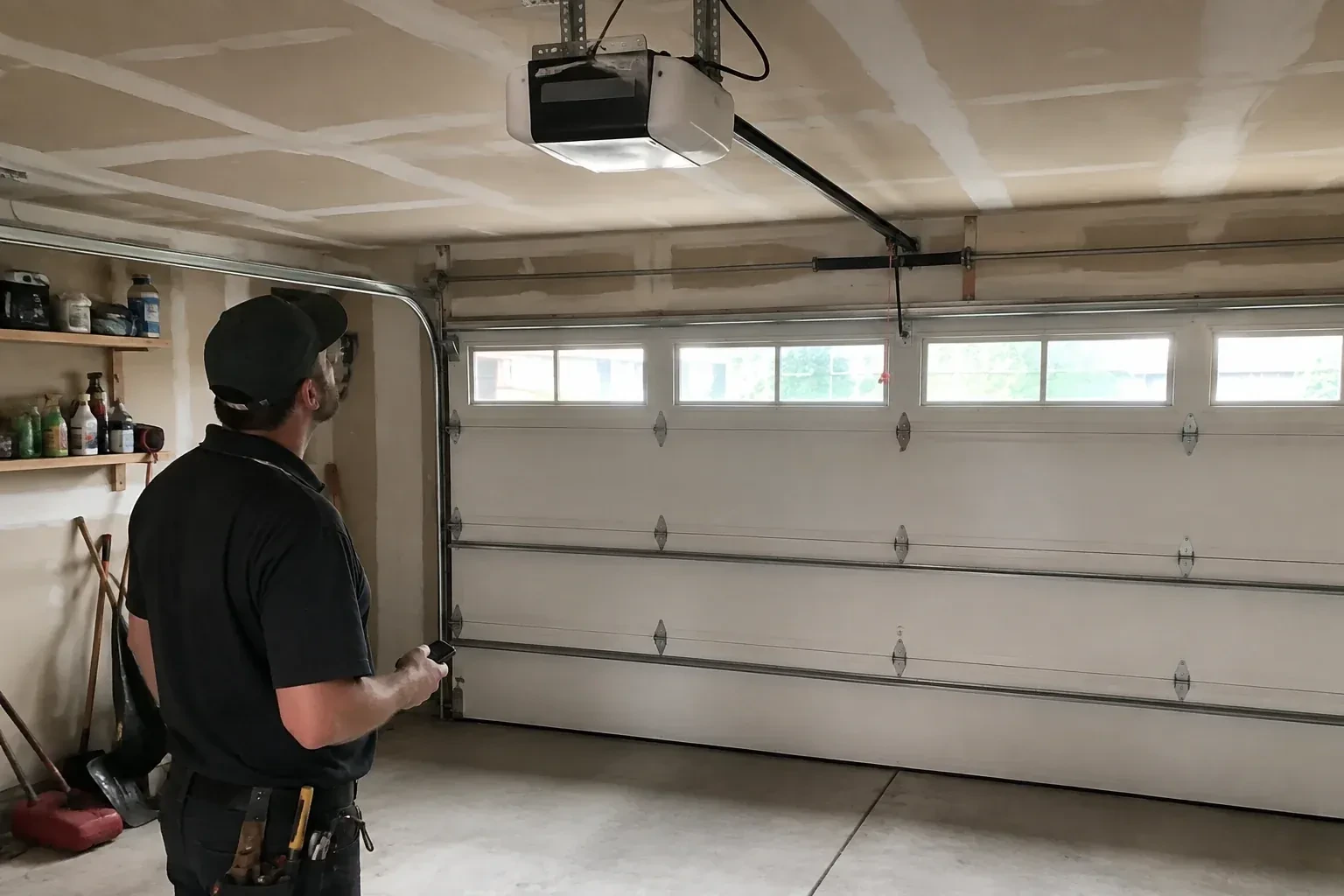
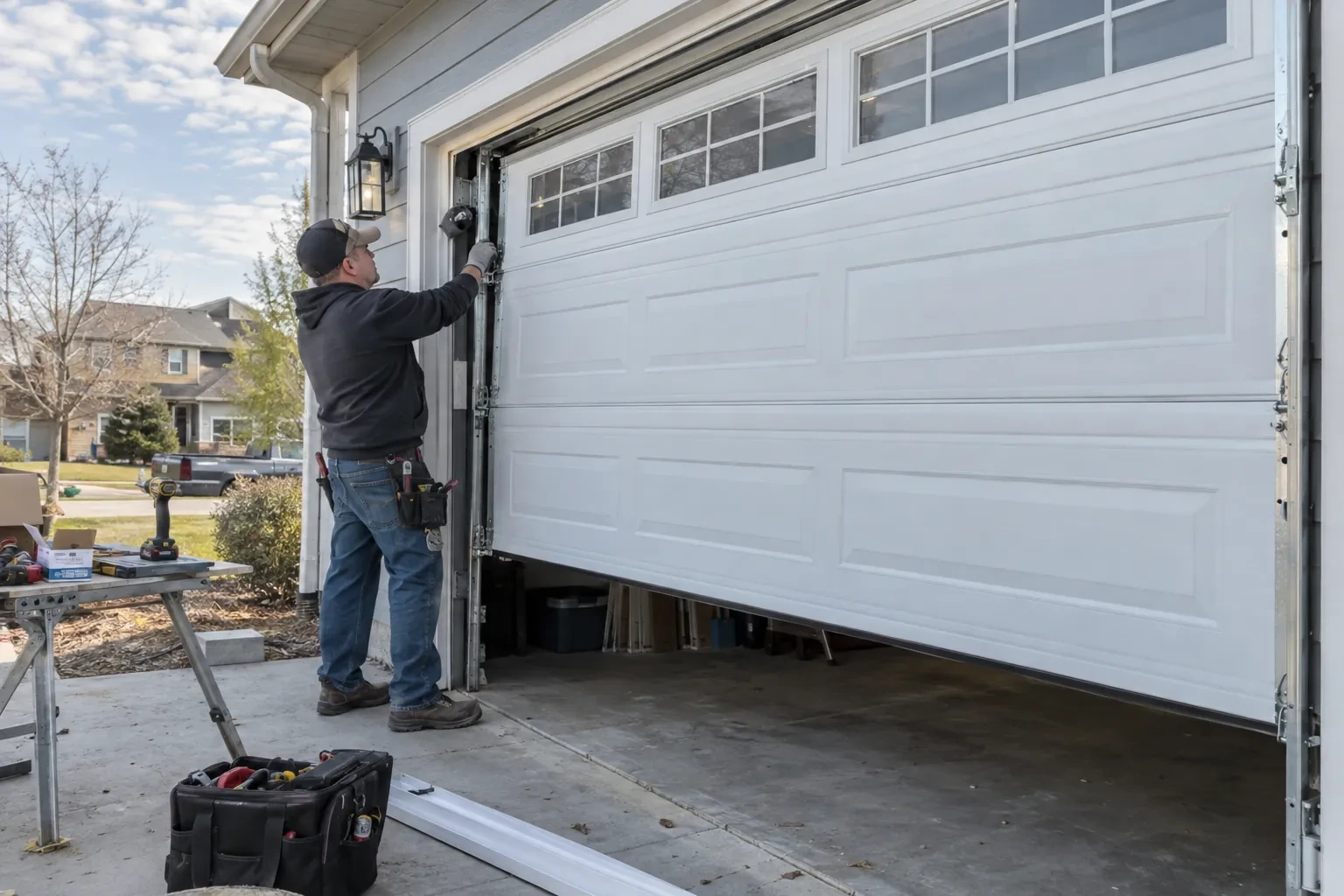
The first check has nothing to do with the opener. The technician unplugs the old unit, pulls the red release so the trolley lets go of the door, and lifts the door by hand. A healthy door rises with moderate effort, stays where it is left about a metre off the floor and comes to rest gently at the top and bottom. That balance is what the new opener depends on, because it moves the door rather than carrying it. If the door is heavy in the hands or drifts down, the springs need attention before any operator is chosen, and that conversation happens now rather than after the new unit is hanging from the ceiling.
Taking the old operator down
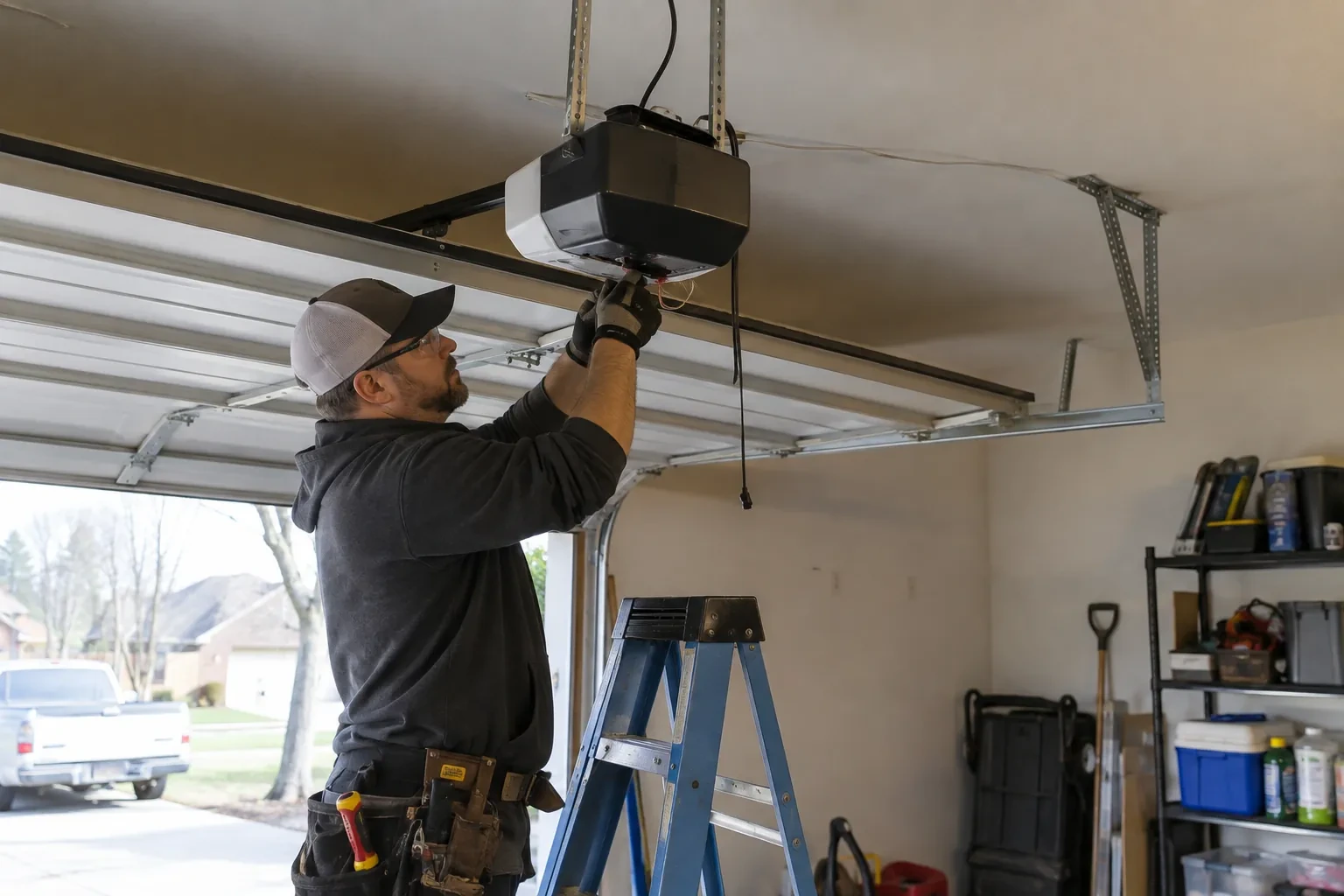
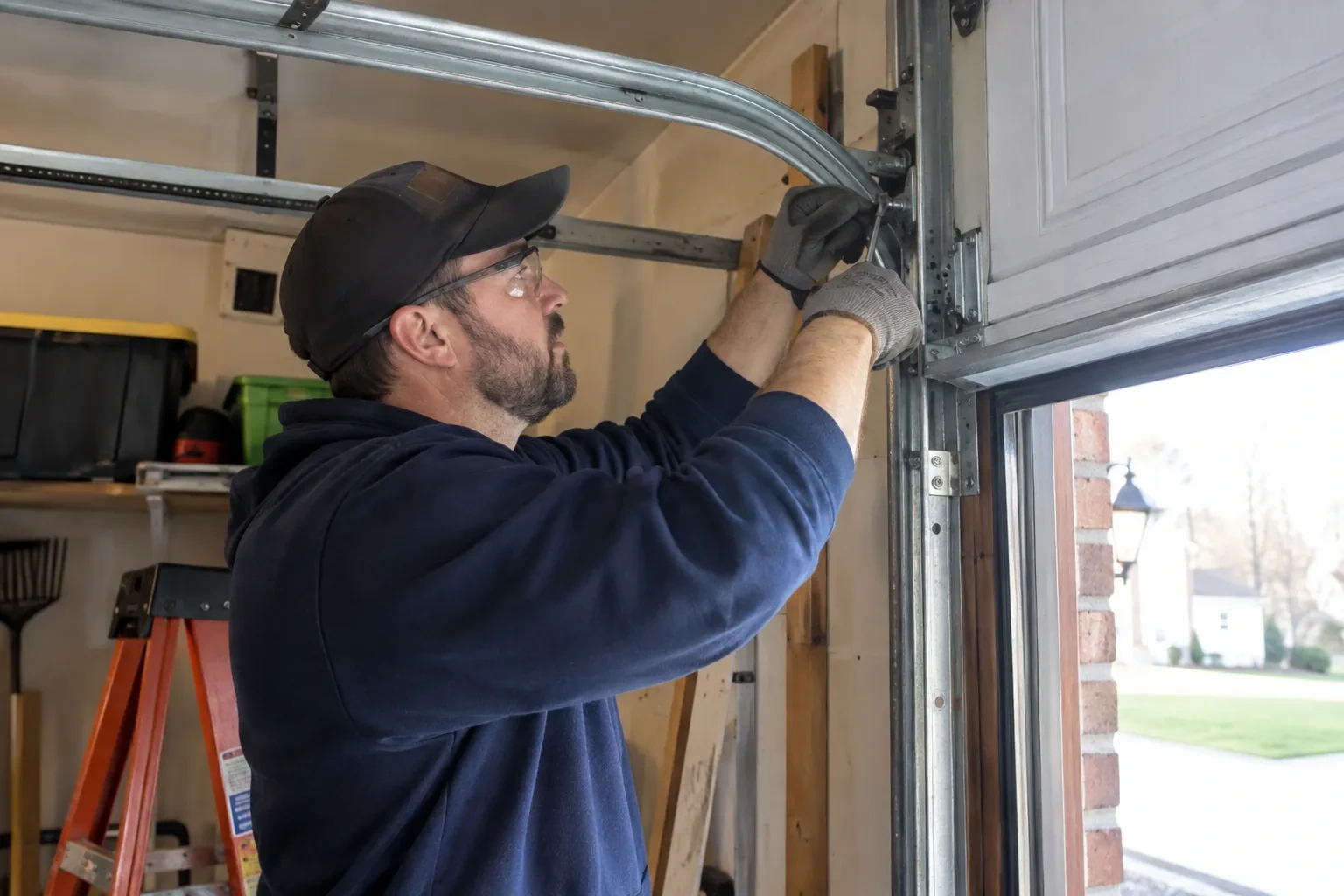
Removal starts with the power cord pulled and the release cord tugged so the trolley is free of the door. The door arm is unbolted from the door bracket, the rail is freed from the header bracket above the door, and the head unit is unbolted from its angle-iron hangers and lowered by hand. Old photo eyes, their wire and the wall control come off unless they are being kept, and any old door bracket that differs from the new one is removed. The technician leaves the door closed and resting on the floor throughout, so it is never balanced on a half-connected arm while the ceiling work is under way.
Ready for the next outage
If you chose battery backup, the door keeps opening and closing on stored power when the lights go out, and the operator tells you with a beep or a light when the battery is low or due for renewal every few years. Whether or not you have a battery, you now know where the red handle hangs and what it does: a pull detaches the door from the trolley so it can be lifted by hand, and reconnecting is either a second pull or simply running the operator, depending on the model. Practise it once with the door closed so that the first time you need it in the dark is not the first time you try it.
Garage Door Opener Replacement
In the van
Wall control console
Header bracket and lag screws
Top-section reinforcement strut
Backup battery
Low-voltage bell wire and staples
Garage Door Opener Replacement
What affects the quote
Battery backup
A backup battery, whether built into the head or added as a module, is an option that carries its own line, along with the renewal battery it will want every few years.
Working around what is in the garage
A vehicle lift, a storage loft, ductwork or shelving where the rail will run, or a garage that cannot be emptied before the visit, adds handling time that the technician accounts for after seeing the space.
Power at the head unit
If a grounded receptacle is already close to the operator, nothing is added. If one must be installed or moved, that electrical work is quoted separately by an electrical contractor.
What to have ready
- How much room is there between the top of the open door and the ceiling?
- Is the garage attached and heated, or detached and unheated?
- Is the door steel, wood or aluminum, and is it insulated?
Garage Door Opener Replacement: questions
QuestionsWhat is the red cord for?
It is the manual release. A tug on the red handle unhooks the trolley from the door arm so the door can be raised and lowered by hand while the power is off or the operator is being serviced. It hangs high enough to clear a vehicle roof but low enough to reach without a ladder. To reconnect, most units need only be run once and the trolley picks the arm back up; a few take a second tug.
Can I keep my existing wall button?
The new operator comes with its own console, and the two usually go together because the console is designed to speak to that board and adds a light button, a lock button and sometimes a timer or a battery indicator. The low-voltage wire running to the old button can often be reused if it is in good condition, which saves running a new line across the garage.
Chain or belt: which should I choose?
Both move the same doors, so the choice is about sound and setting. Chain is the sturdy, simple workhorse and a fine fit for a detached garage or a workshop where a little noise is nobody's concern. Belt is the pick when a bedroom, nursery or office shares a wall or floor with the garage, because it starts and stops softly and hums rather than rattles. If the ceiling is crowded, a wall-mounted unit beside the spring shaft removes the rail altogether.
Related services
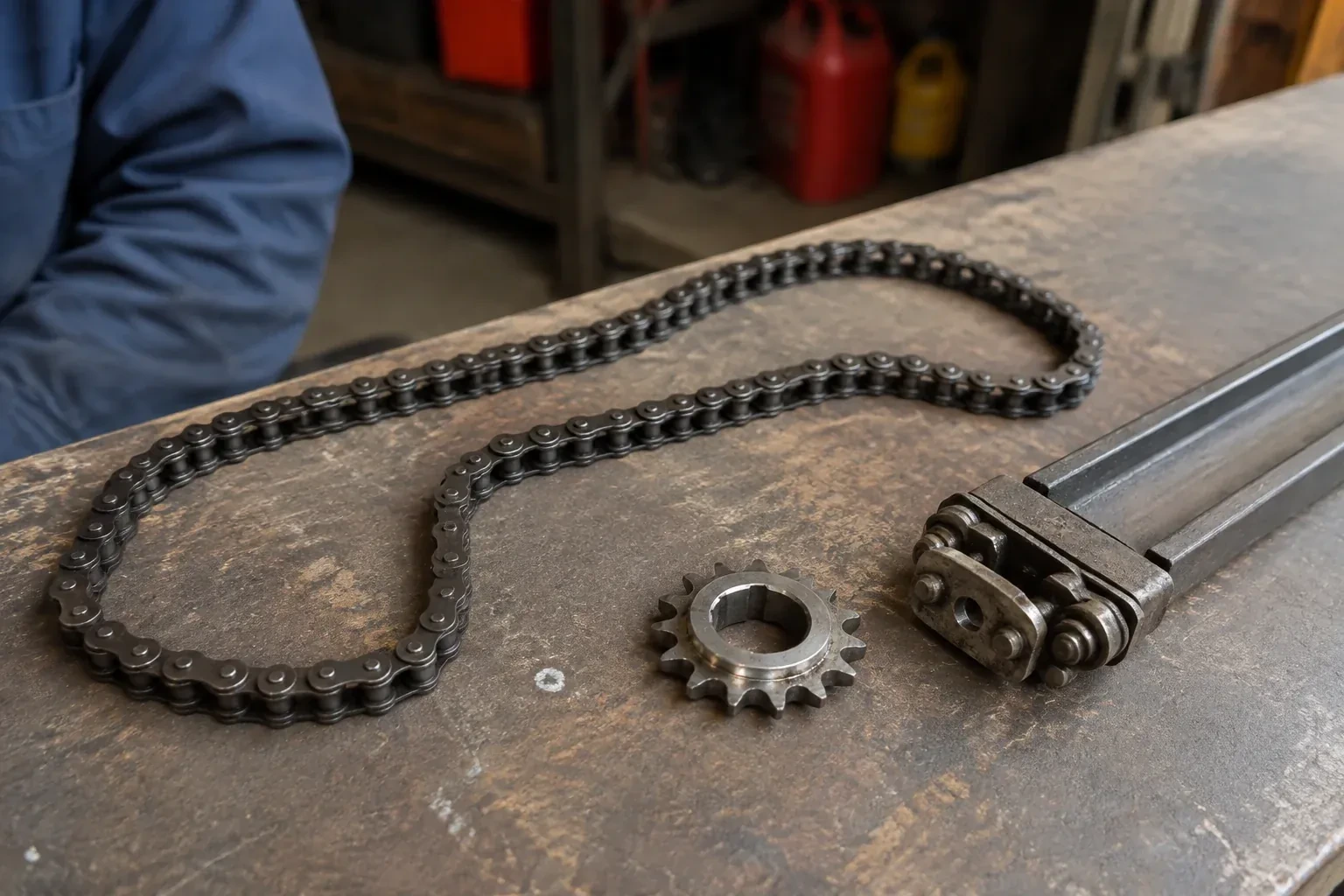
- Chain-Drive Opener RepairThe rail shakes when the door runs.
- Belt-Drive Opener RepairThere is a new squeal from the front of the rail, up near the header, on every cycle.
- Photo-Eye Sensor Alignment or ReplacementSince shelving went up along the garage wall, the door will not close and both sensor lights are dead.