Springs · Mississauga
Garage Door Track Repair or Replacement
The garage floor has settled at one corner, and the door now scrapes the concrete on that side while daylight shows at the other.
In plain words
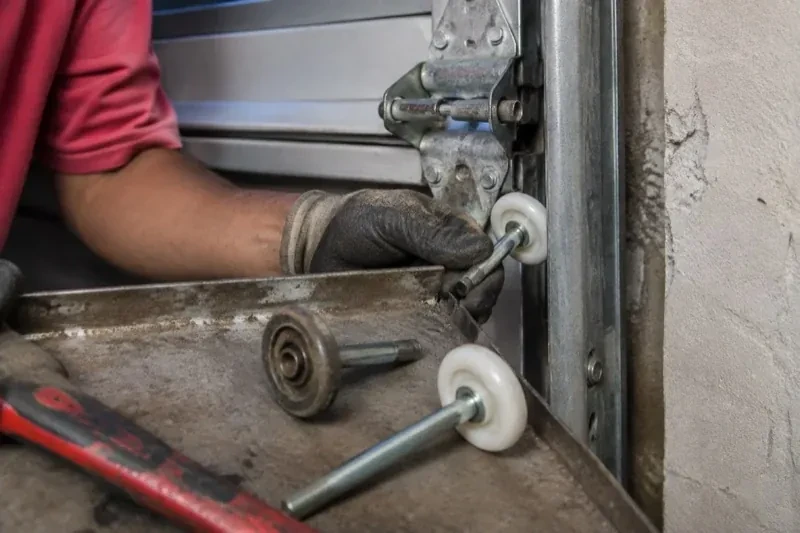
The bottom foot of a garage door track has a hard life in this climate. Slush and salt drip off the car and pool exactly where the bottom rollers sit, the jamb brackets and channel rust and thin, and a ridge of ice at the threshold can stop the door short while the opener keeps pulling. Winter track repair often means replacing the lowest section of vertical track and its brackets, sistering a jamb that has gone soft at the floor, and refixing everything into sound wood. A clear threshold and a look at the brackets each spring keep the new steel in good shape.
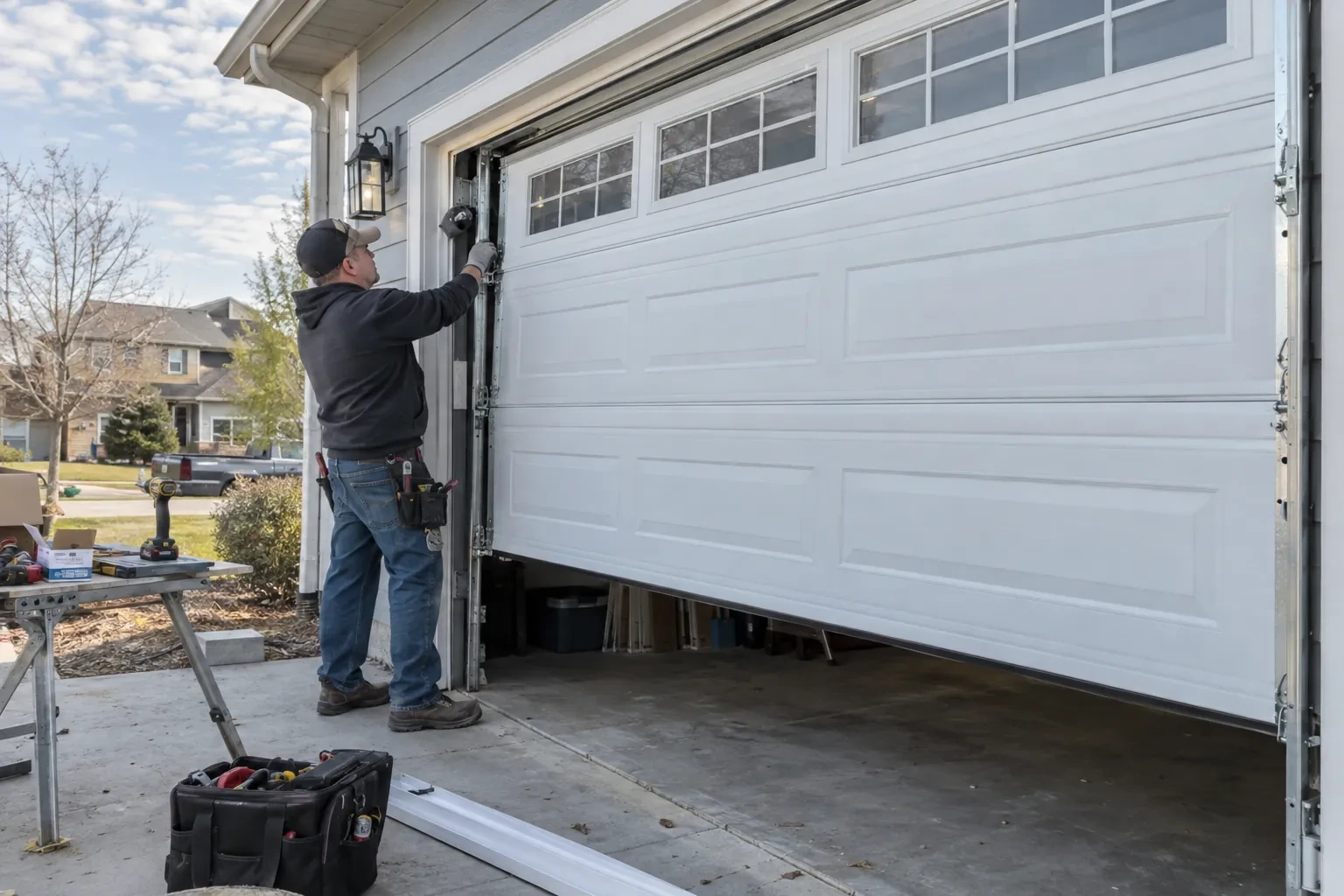
How the visit goesThe door climbs crooked, one side clearly ahead of the other. Nothing looks broken, but the two tracks sit different distances from the door, and one leans in toward the opening near the top.
Garage Door Track Repair or Replacement
How the visit goes
The horizontal run and its hangers
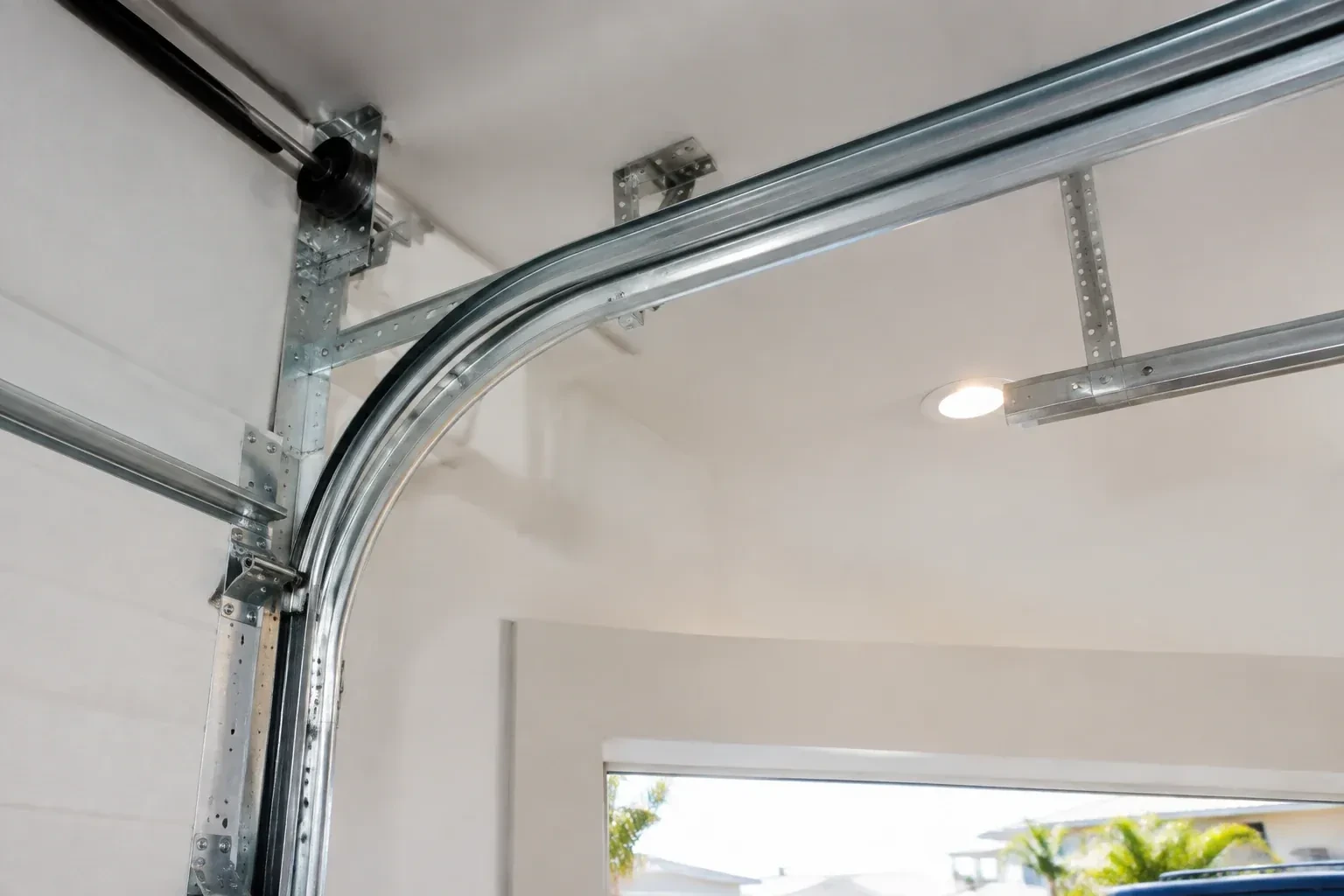
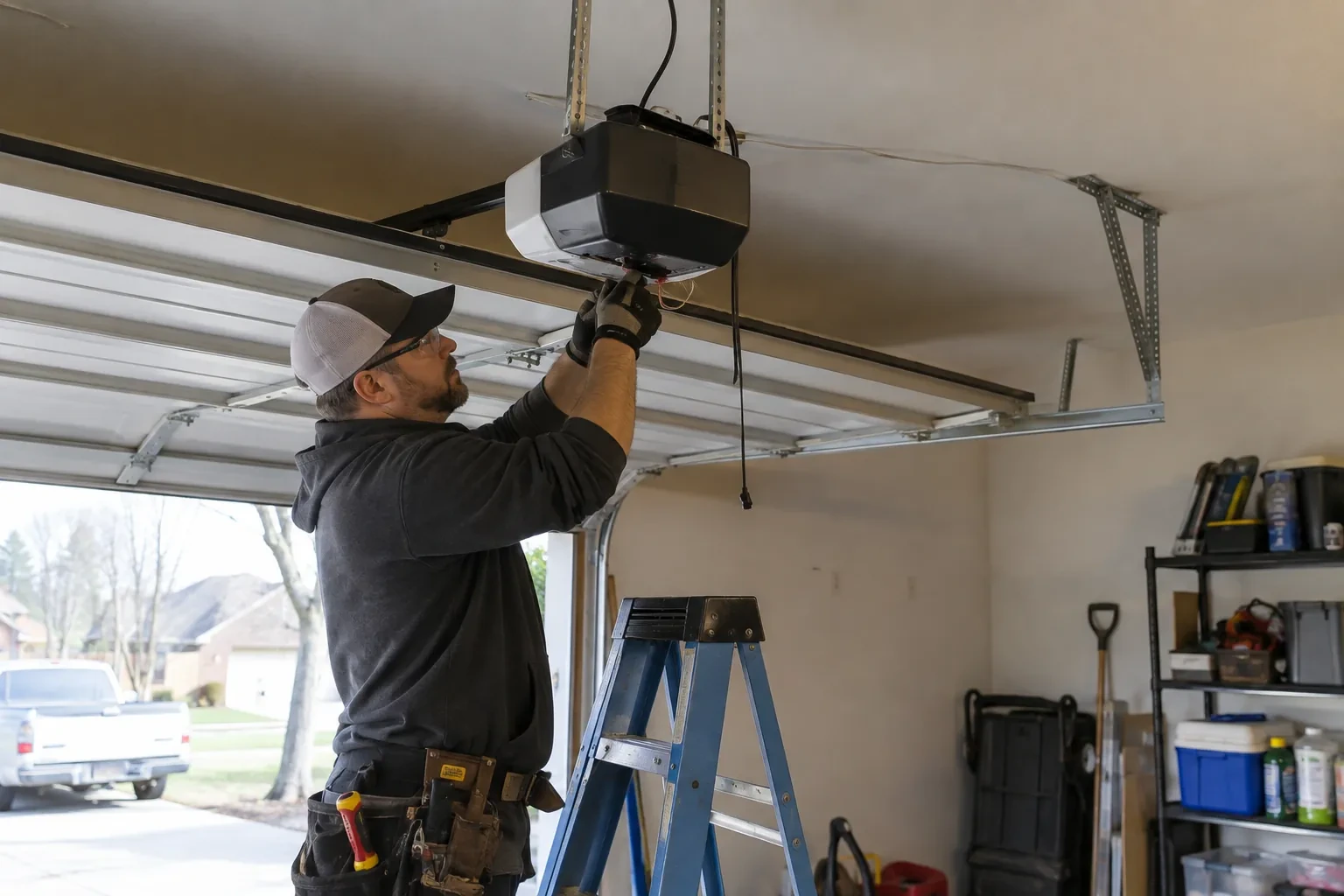
Overhead, the horizontal tracks should be level with each other, or set to the same pitch, held from the ceiling by back hangs of perforated angle screwed into joists. The technician sights along each run for sag, twist or a spread channel, checks the stiffening angle riveted to the track is intact, and puts weight on each hanger to check for flex. A run that droops at the rear slopes the wrong way rather than level or its intended pitch; one knocked sideways by a ladder or stored goods twists the top section as it travels. A door drifting back toward the opening once raised points to balance instead. Any hanger anchored into drywall alone is flagged for a joist.
Renewing the curve or the horizontal run
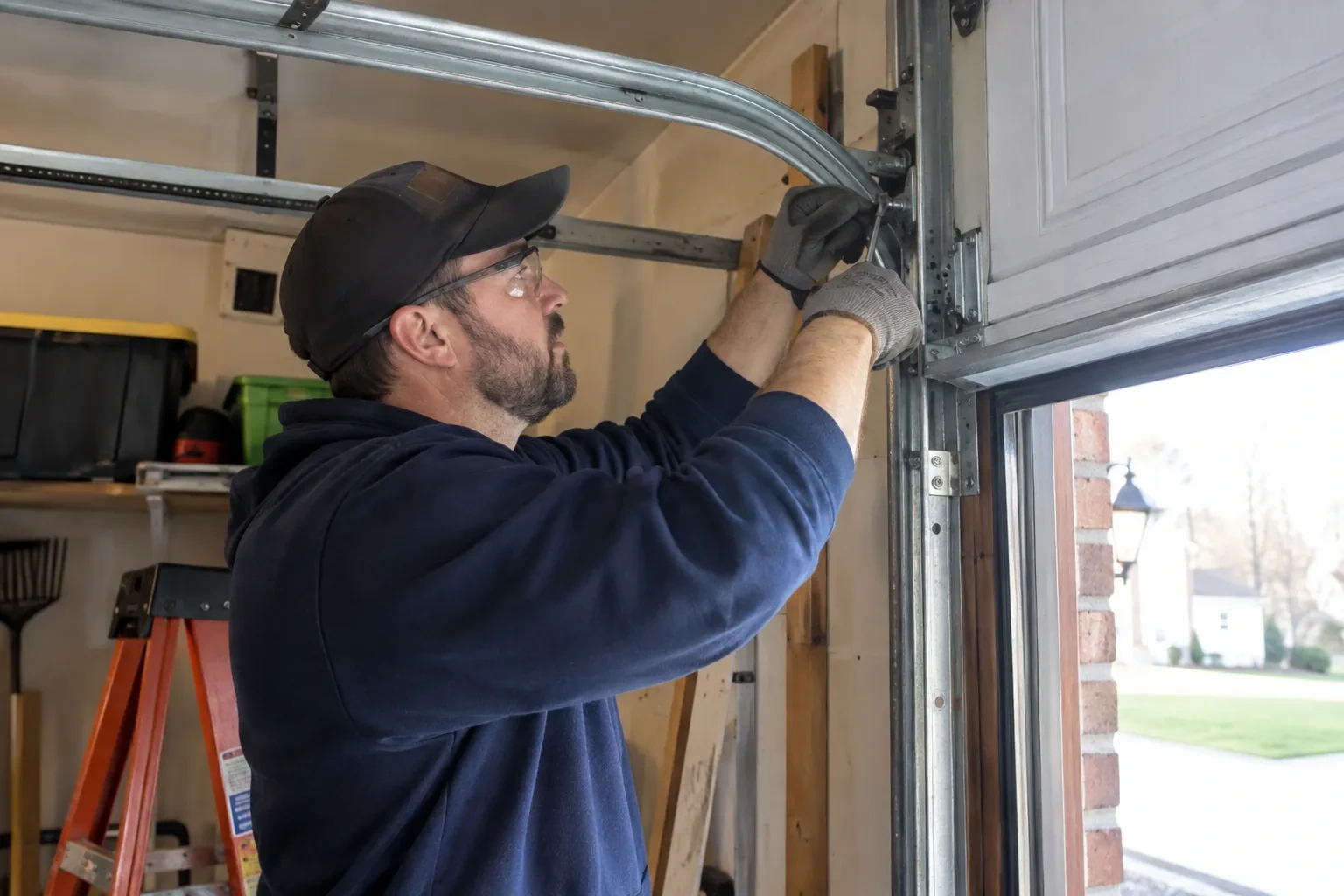
Overhead work starts with the springs unloaded, since the flag bracket carrying the end bearing plate has to come loose for the curve to change. The technician fits a curve of the same radius so the door meets the horizontal run at the same height, then hangs a new or straightened horizontal track from back hangs screwed into joists, not drywall, with a stiffening angle along its length. The rear of each run is set level with its partner, or to the same pitch, and square to the vertical track, and the two hangers are adjusted until a straightedge across the pair reads true. A bent hanger is replaced rather than bent back.
A door that runs the full path without a catch
The change is felt more than seen. The door rises without the bang or hesitation that marked the damaged spot, both sides climb together, and it turns the curve overhead without the top section twisting. Closed, it sits flush against the stop moulding on both jambs with no stripe of daylight, and open, it stays where the opener leaves it instead of drifting back. The opener sounds calmer because it is no longer dragging a door through a pinch point. Lifted by hand with the opener released, the door moves lightly and holds at waist height, which tells you the track and springs are working together again.
Garage Door Track Repair or Replacement
In the van
Flag brackets
Level, plumb line and square
Top fixtures
Vertical track, two-inch or three-inch
Perforated angle back hangs
Garage Door Track Repair or Replacement
What affects the quote
Access and storage around the track
Shelving, a workbench or a ceiling full of stored goods around the horizontal run slows the work. Clearing the area beforehand changes the time quoted.
Opener adjustment afterwards
A door running on a freshly aligned track often needs the opener's travel limits and force reset and its reversing tested. That short adjustment is named when it is needed.
Snow or ice around the track needing clearing first
A track buried under snow or glazed with ice has to be cleared before the technician can see what is actually bent or worn underneath. That extra step is common in winter and is worked into the visit rather than treated as a separate call.
What to have ready
- Do you have the door's manual or a label with its model?
- Does the door rub the frame or catch at the same spot every time?
- Do you know what caused it, such as a car, a ladder or stored items?
Garage Door Track Repair or Replacement: questions
QuestionsCan a low-headroom or high-lift layout be fitted to my existing door?
Often, yes, and it is a track job with a spring job attached. Low-headroom dual track lets a door open under a low ceiling or a beam, while high-lift track carries the door further up the wall to clear a car lift or storage. Each changes the horizontal run, the curve, the top fixtures and usually the cable drums and spring turns. The technician measures headroom, sideroom and backroom first and confirms the door suits the change.
Does a new piece of track have to match the rest of the set?
It does. Profile, gauge and radius all need to agree so a roller passes from old track to new without a step, and so both sides carry the door the same way. A two-inch track cannot mix with three-inch hardware, and a 12-inch curve beside a 15-inch one leaves the door meeting the horizontal run at two different heights. The technician measures the existing track and orders to it rather than to a general size.
Can a bent garage door track be straightened, or does it need replacing?
Both happen, and the damage decides. A shallow dent in the vertical run away from the curve is usually dressed back to shape with track pliers or a block, and a channel that has spread can be squeezed closed. A kink, a crack, a bend in the curved piece or steel thinned by rust is replaced with a matching section, because a hard spot in the roller path keeps catching however carefully it is worked.
Related services
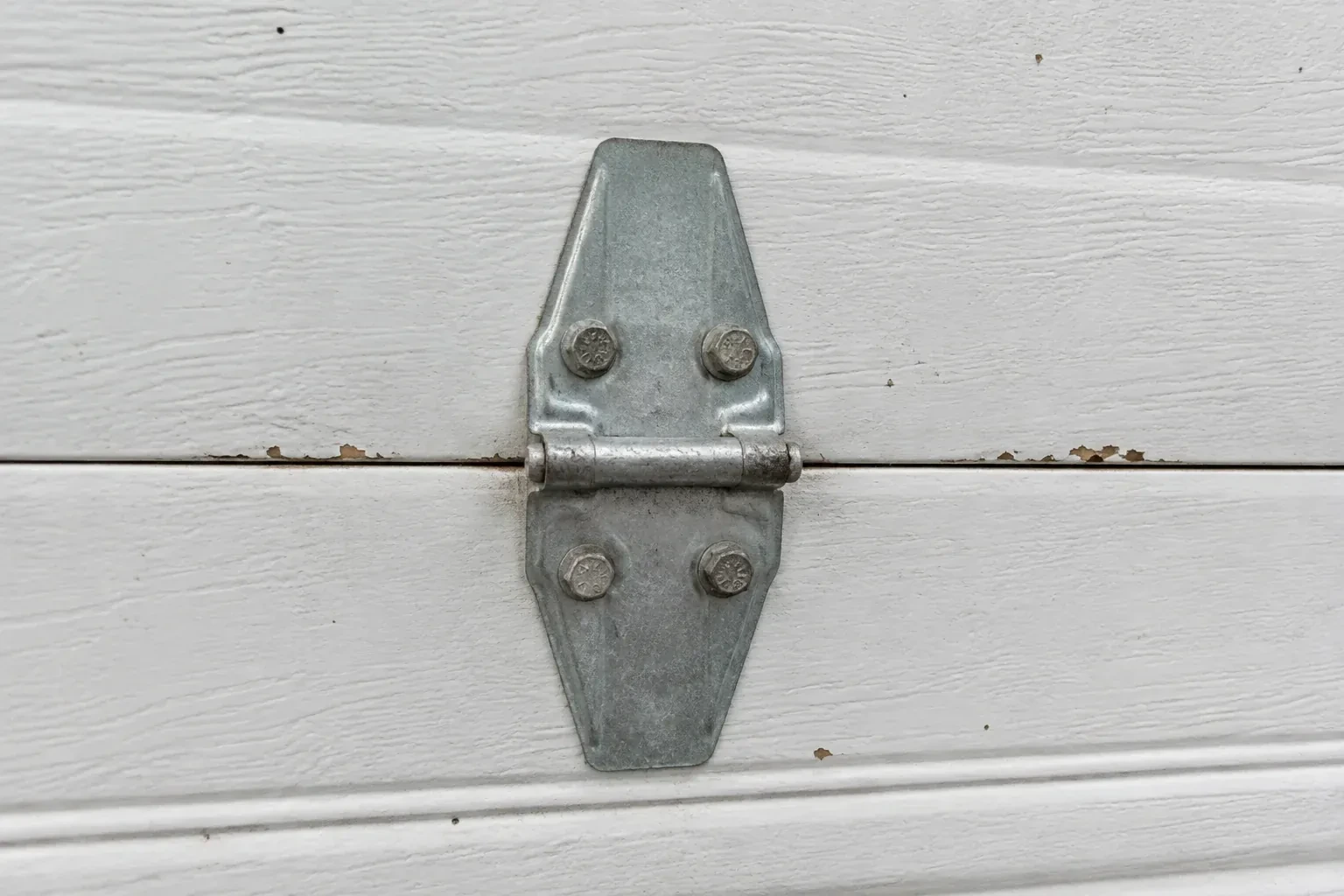
- Garage Door Hinge ReplacementWatching from inside as the door opens, you can see the gap between the second and third panels open up on one side as they turn the corner into the ceiling, then close again.
- Garage Door Cable ReplacementSomeone left the snow shovel leaning in the opening and the door came down on it.
- Torsion Spring ReplacementThe door starts to rise, gets about the height of your knee, then shudders and reverses.