Garage Doors in Meadowvale Village, OntarioA new door,chosen with care.
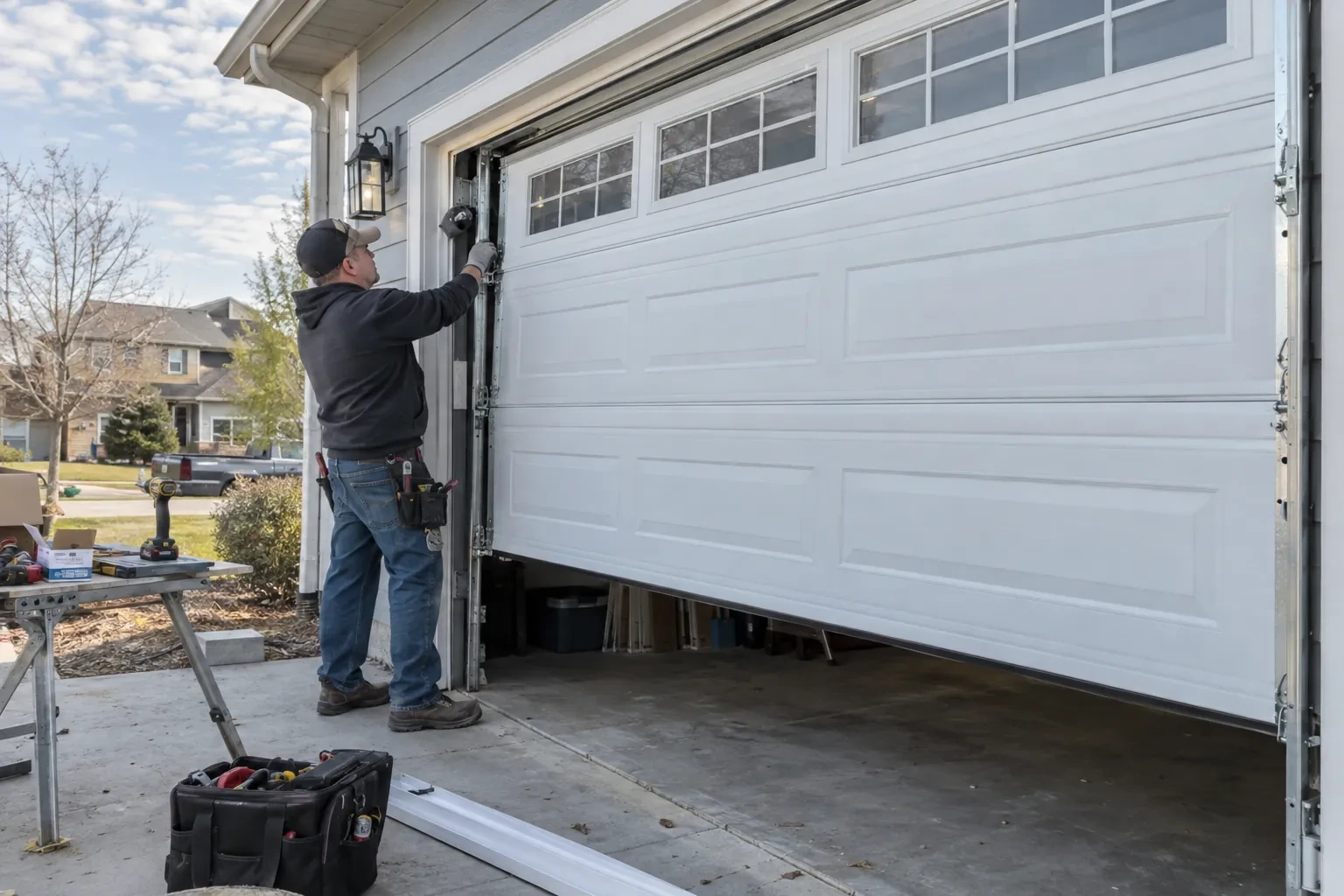
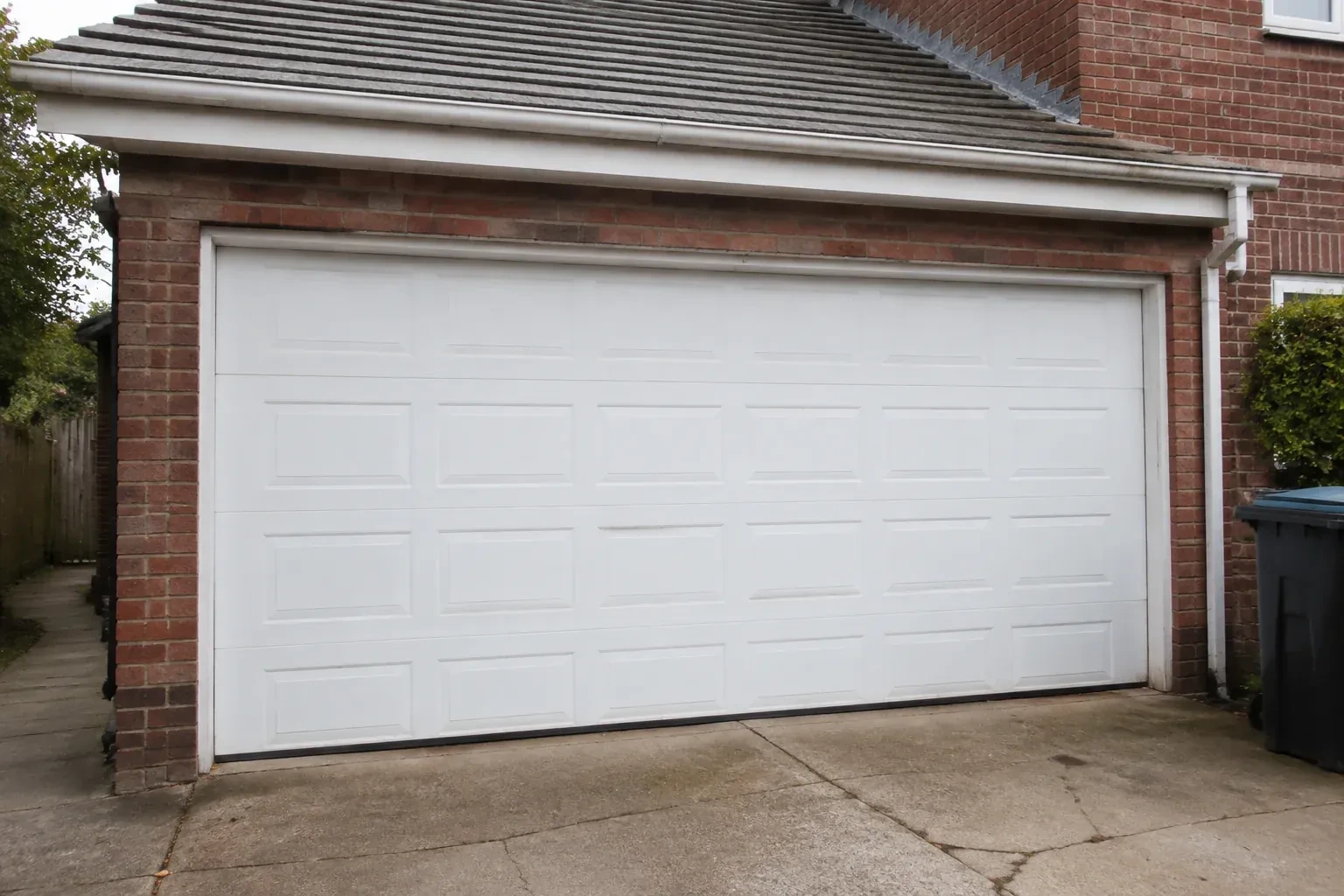
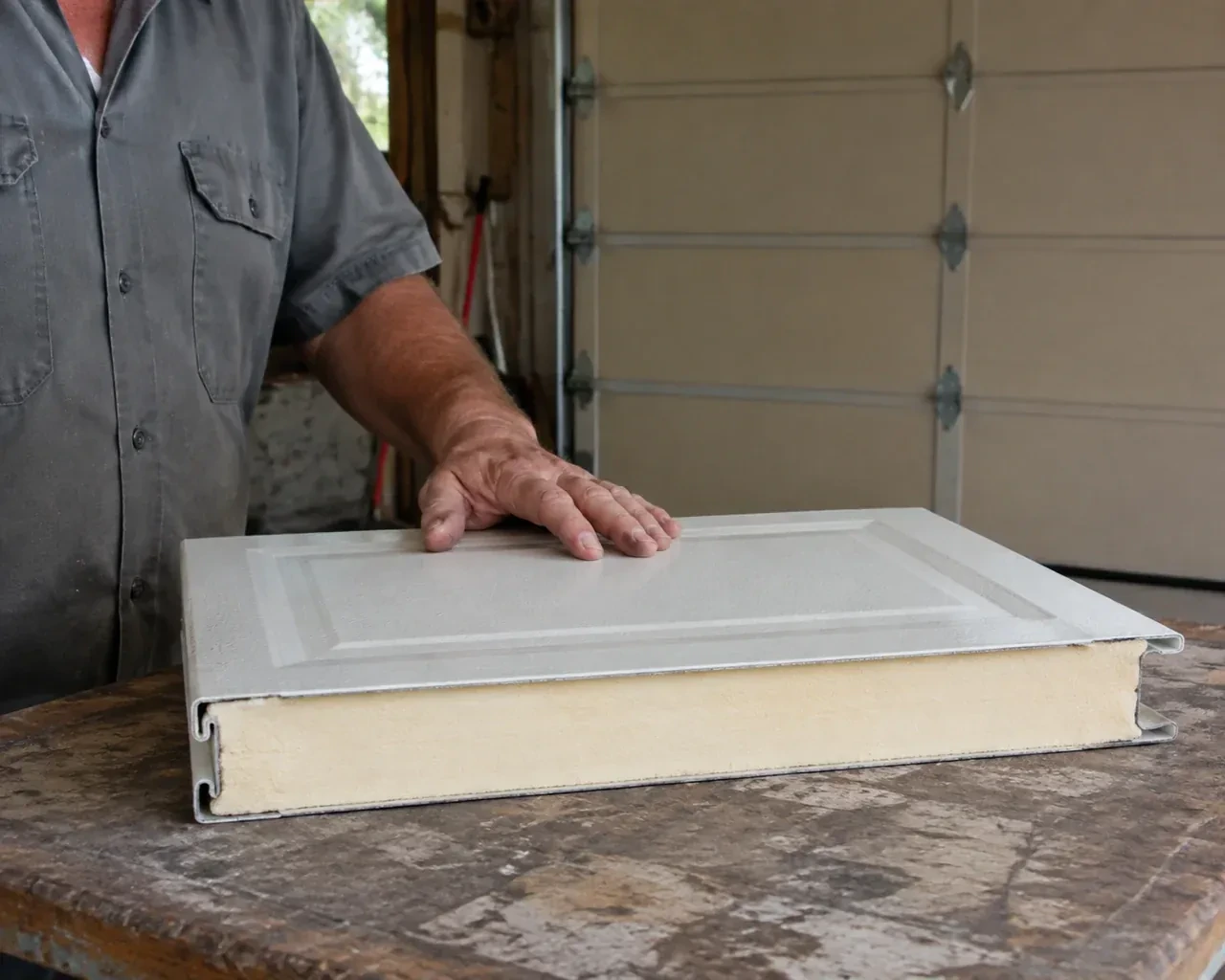
Choosing a garage door for a house in Meadowvale Village means thinking about insulation, windows, colour, how the panel pattern breaks up the face of the home, and how the door will sound at dawn. We walk through each of those questions with you and measure the opening before anything is ordered. The same crew covers Britannia and Derry West.
Choosing a garage door for a house in Meadowvale Village means thinking about insulation, windows, colour, how the panel pattern breaks up the face of the home, and how the door will sound at dawn. We walk through each of those questions with you and measure the opening before anything is ordered. The same crew covers Britannia and Derry West.
Open, close, repeat, for years.
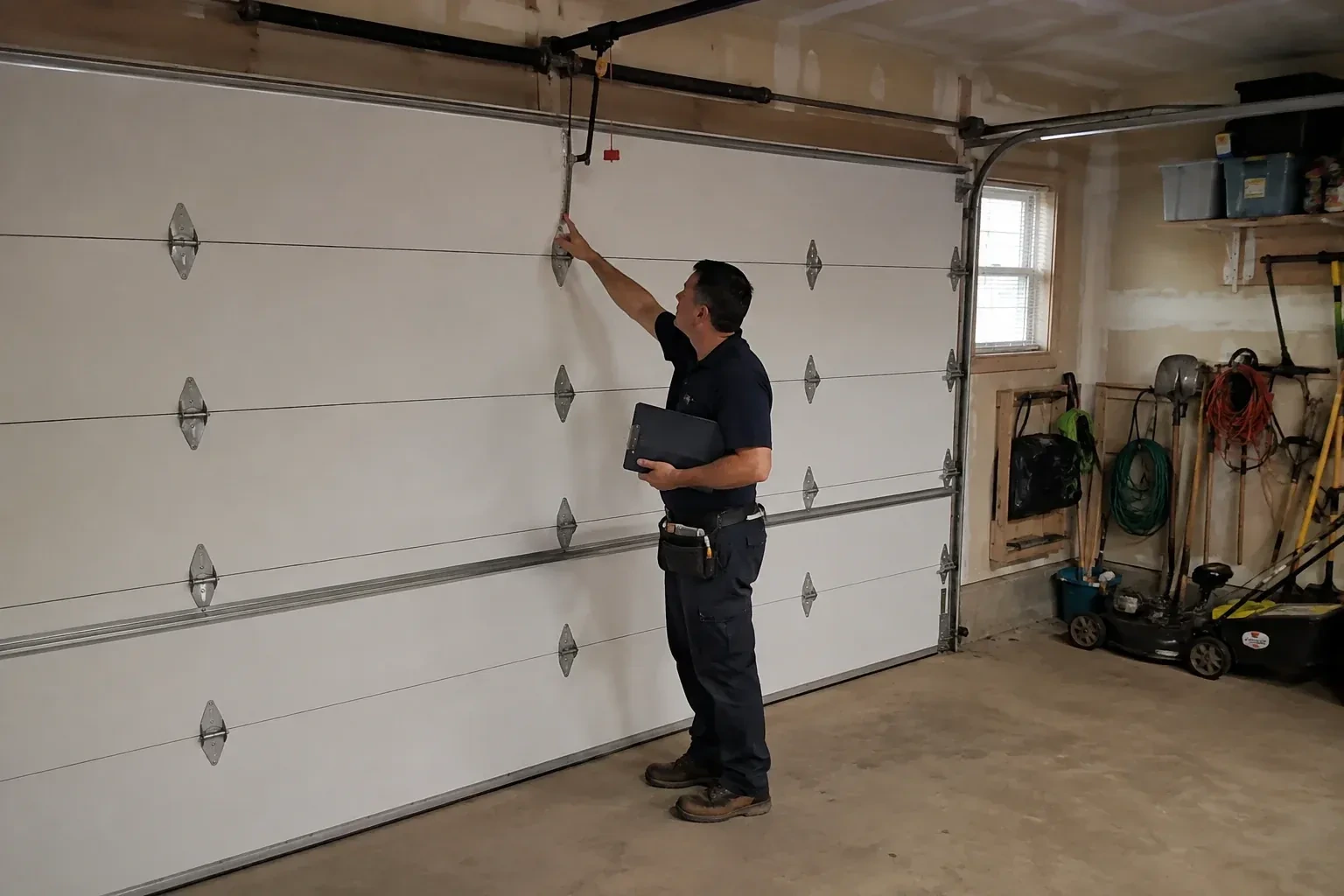
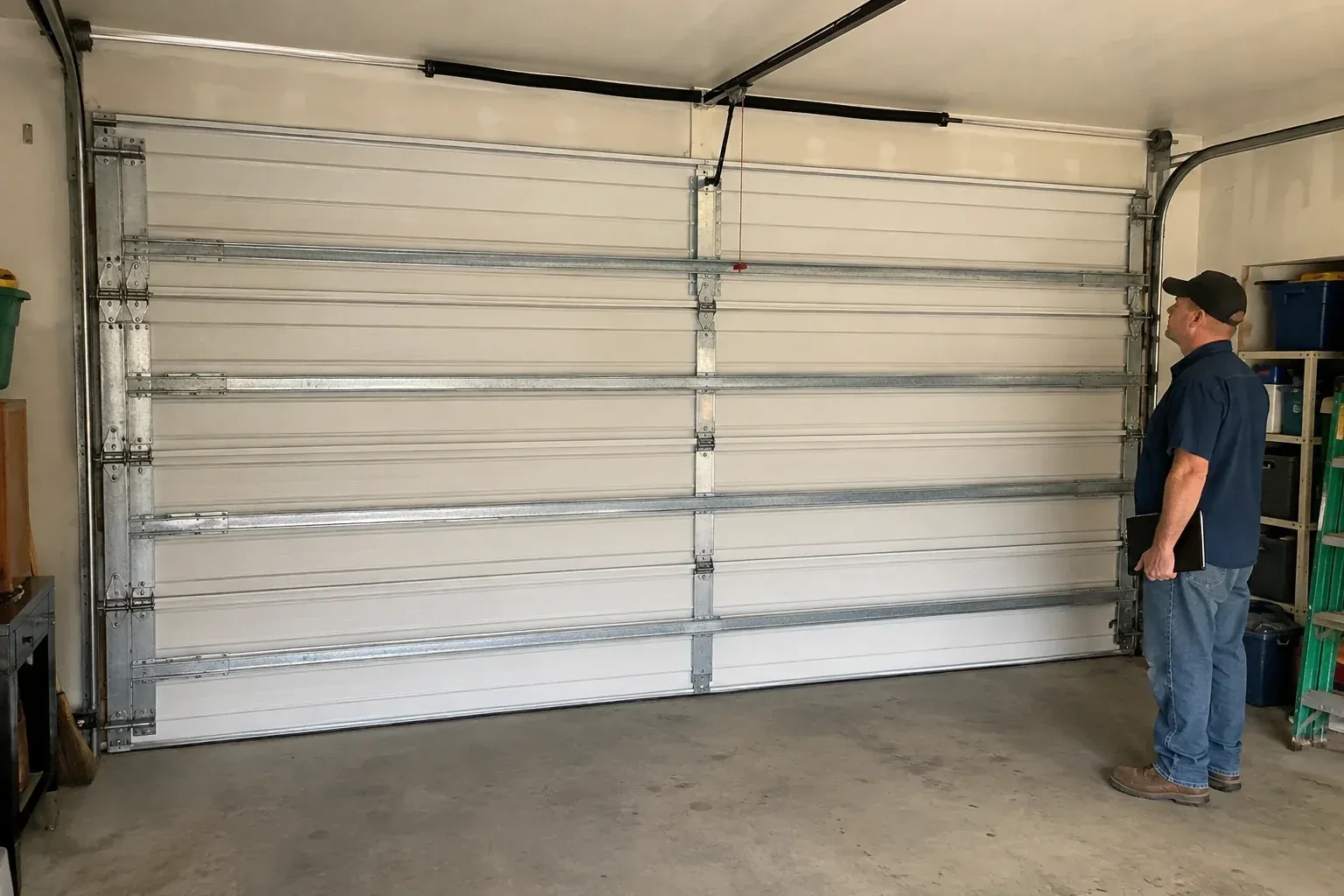
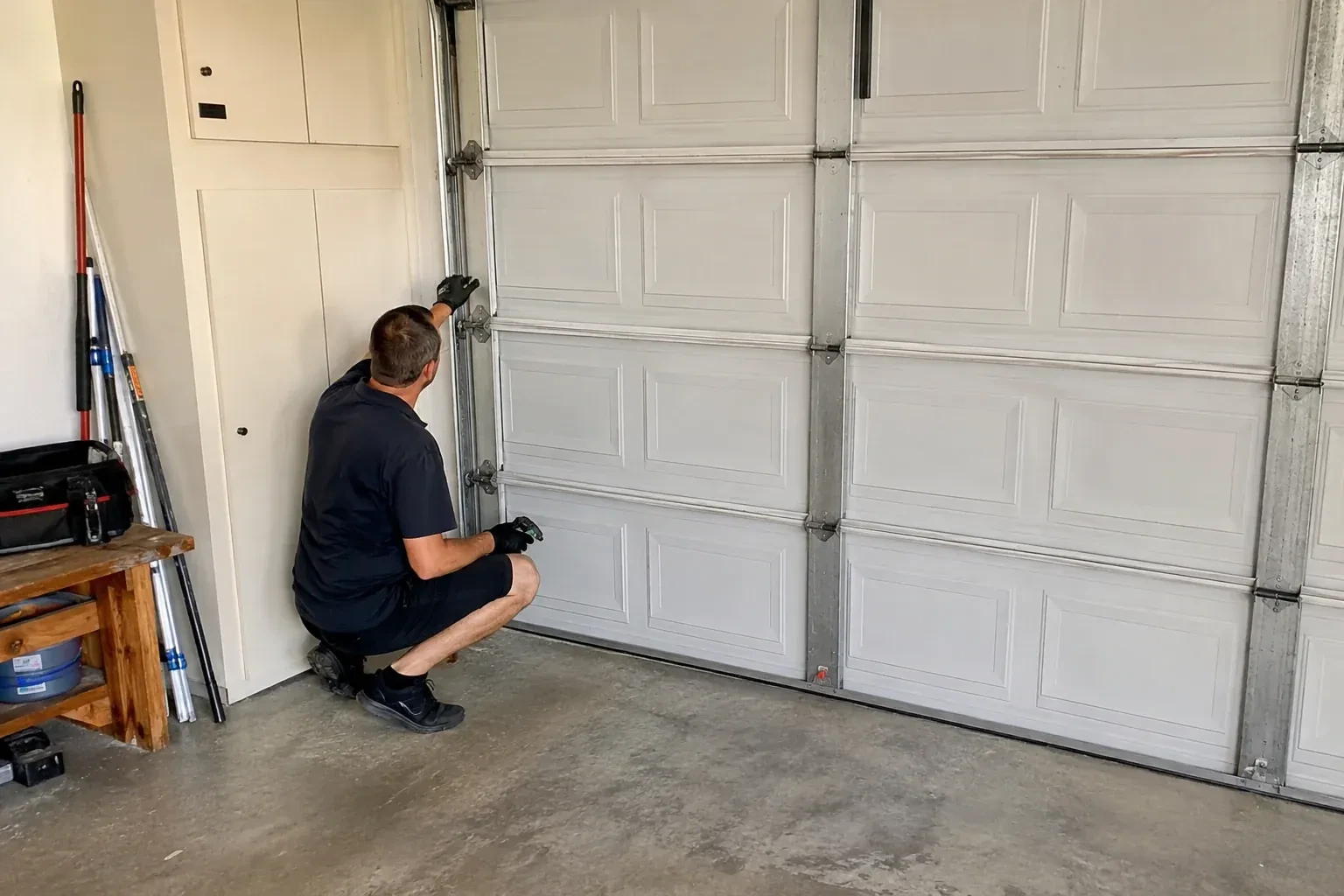
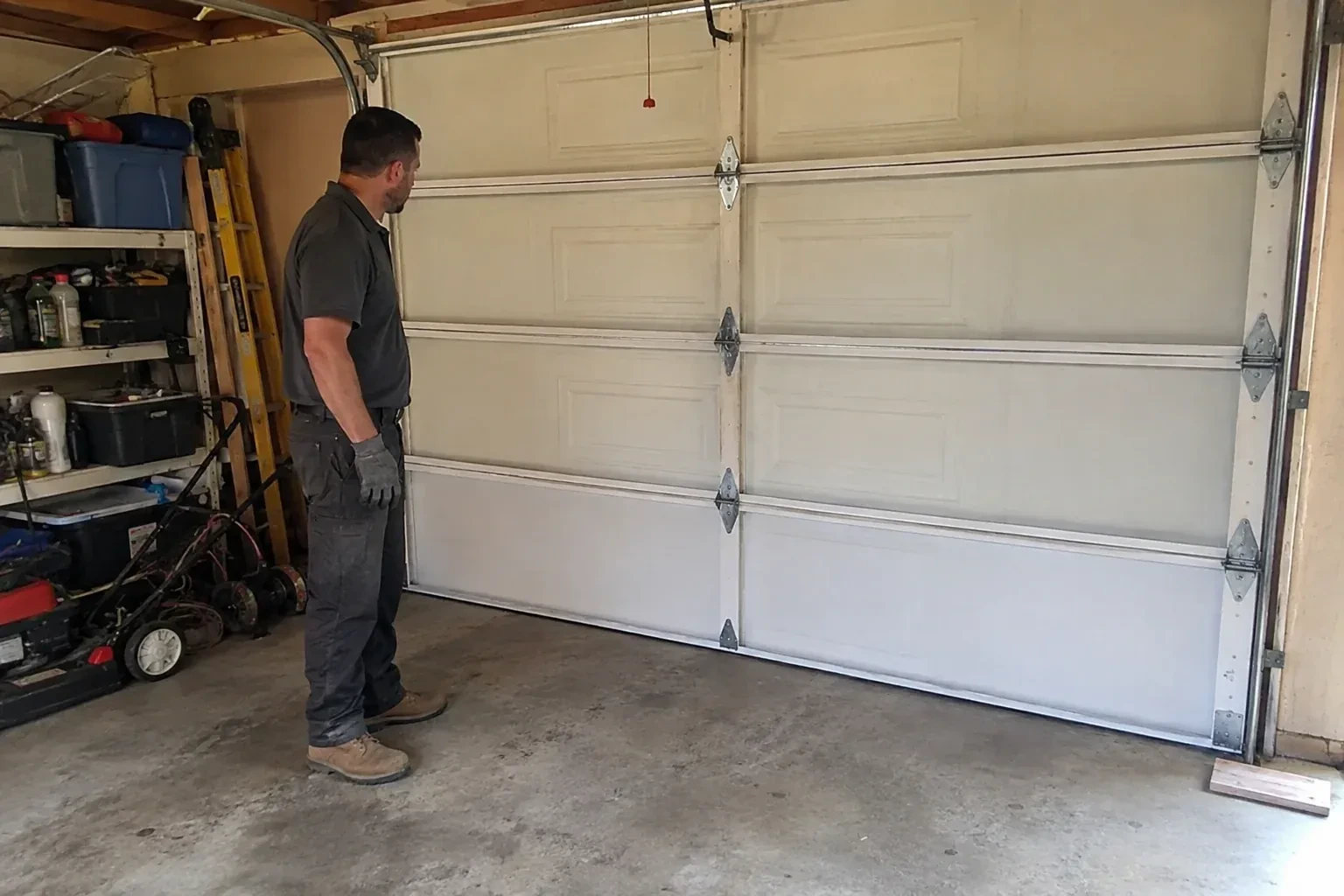
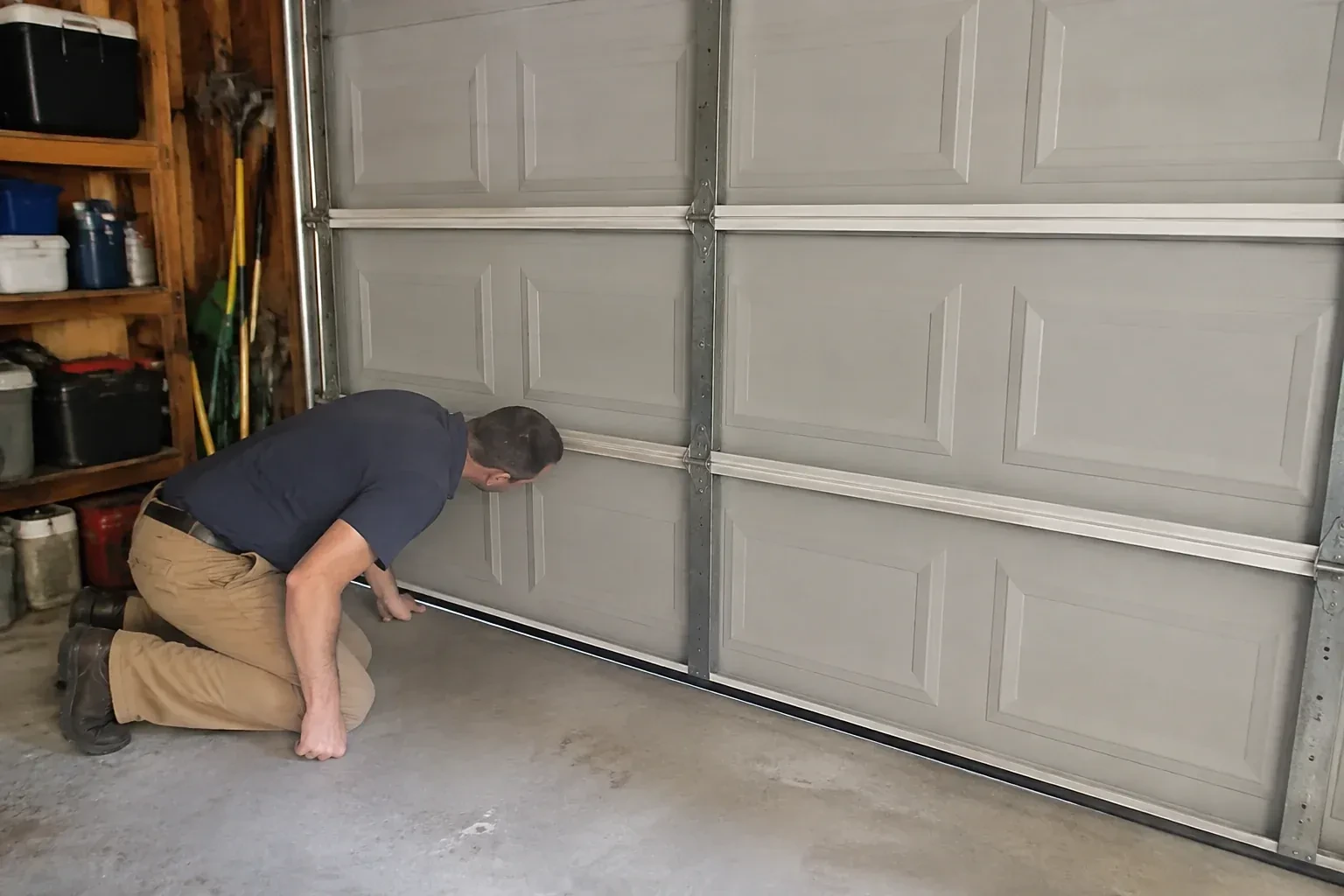
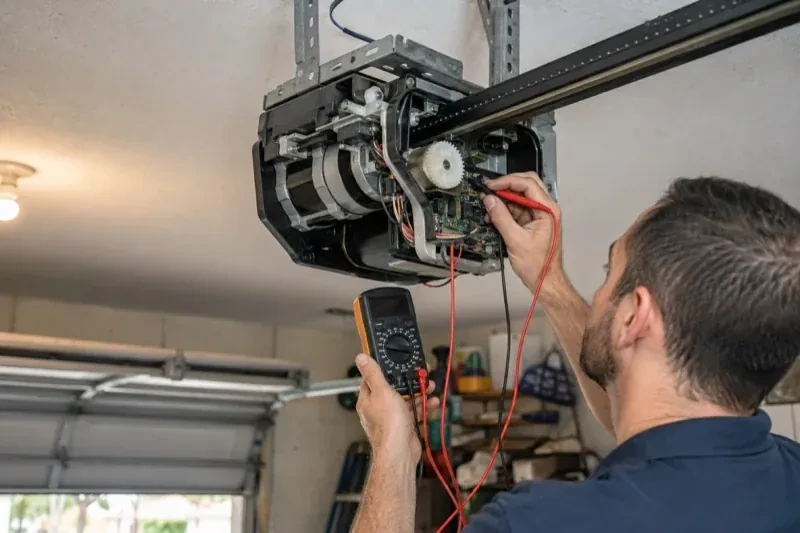
Every door in Meadowvale Village gets a safety check as part of the visit, whatever the reason we came. Photo-eyes are aligned, the auto-reverse is tested, the balance is confirmed and the cables are inspected. If something is close to failing, you hear about it plainly, with no pressure to act that day.
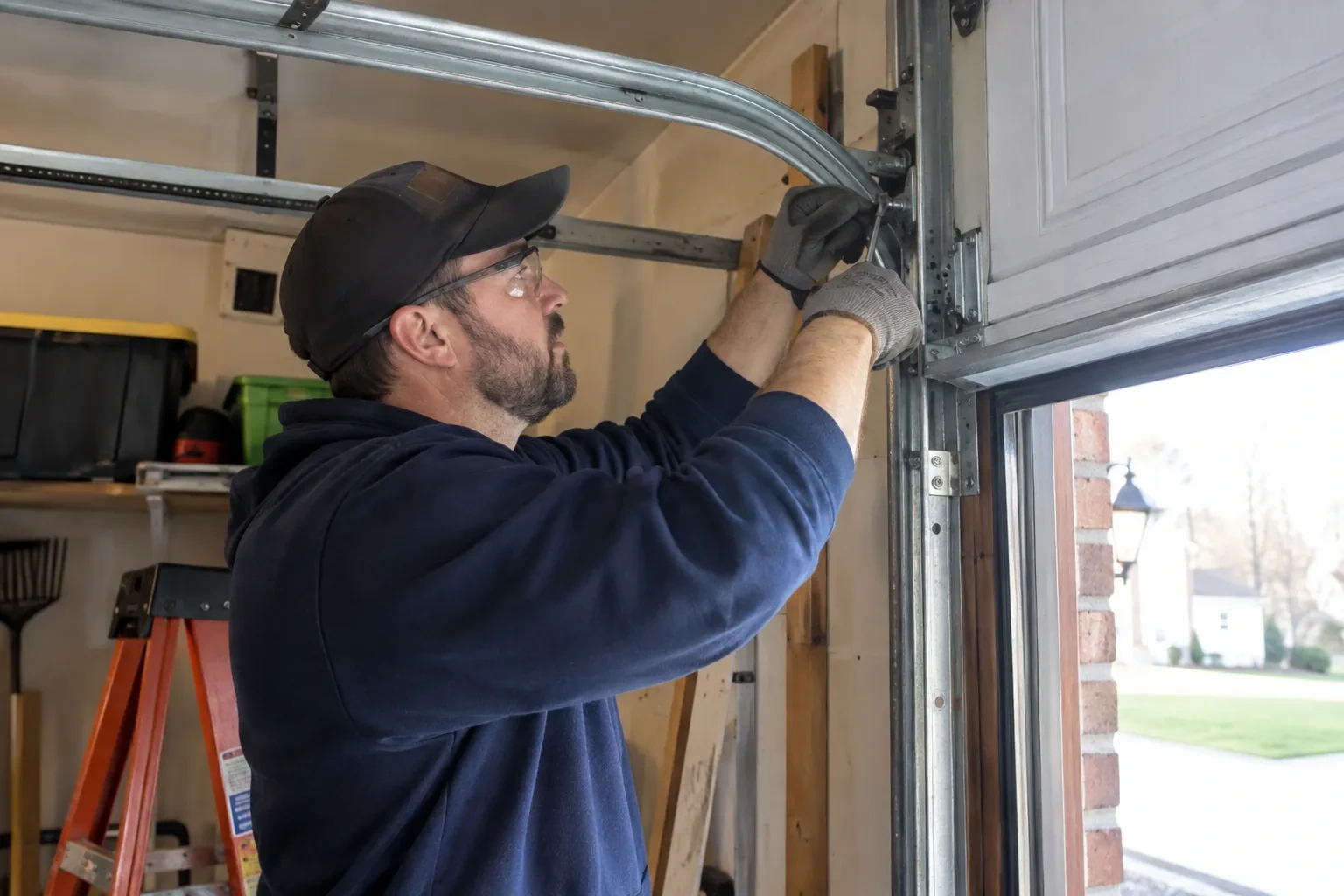
If you live in Meadowvale Village and your garage door has let you down, you are in familiar territory for us. Our vans pass through the neighbourhood regularly, so the drive is short and the streets are known. We repair springs, cables, rollers and openers, install new doors, and take the time to explain each step so you understand what was done and why.
29years in business
24/7open every day
You understand what we found. We point to the worn part, show what it should look like and explain what happens if it stays as it is.
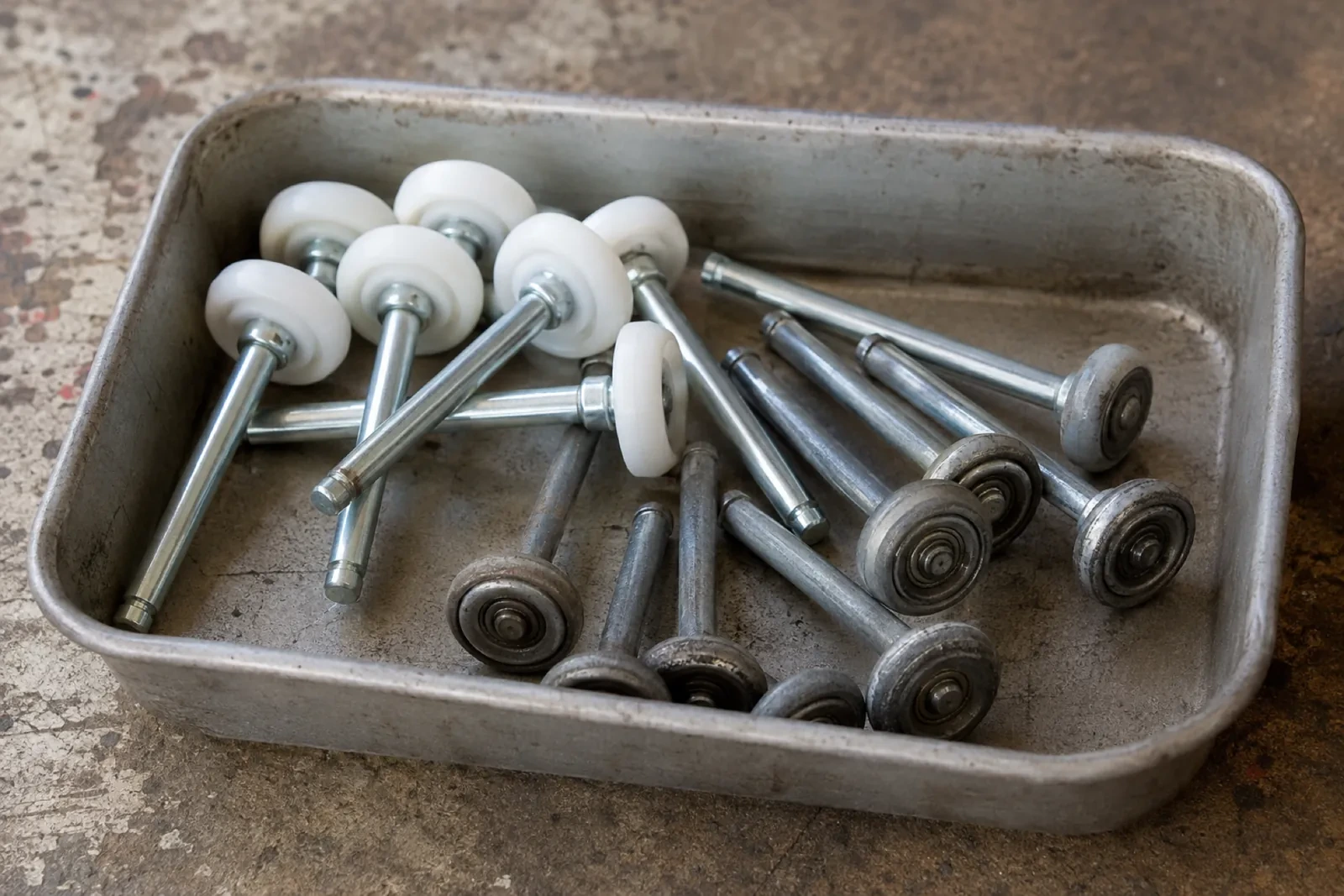
Tools and parts kept tidy. Our kit stays in one spot, cables and springs are bagged as they come out, and nothing gets left behind.
More than one way forward. Repair the part, refresh the whole system, or start over with a new door: we explain each so you can choose confidently.
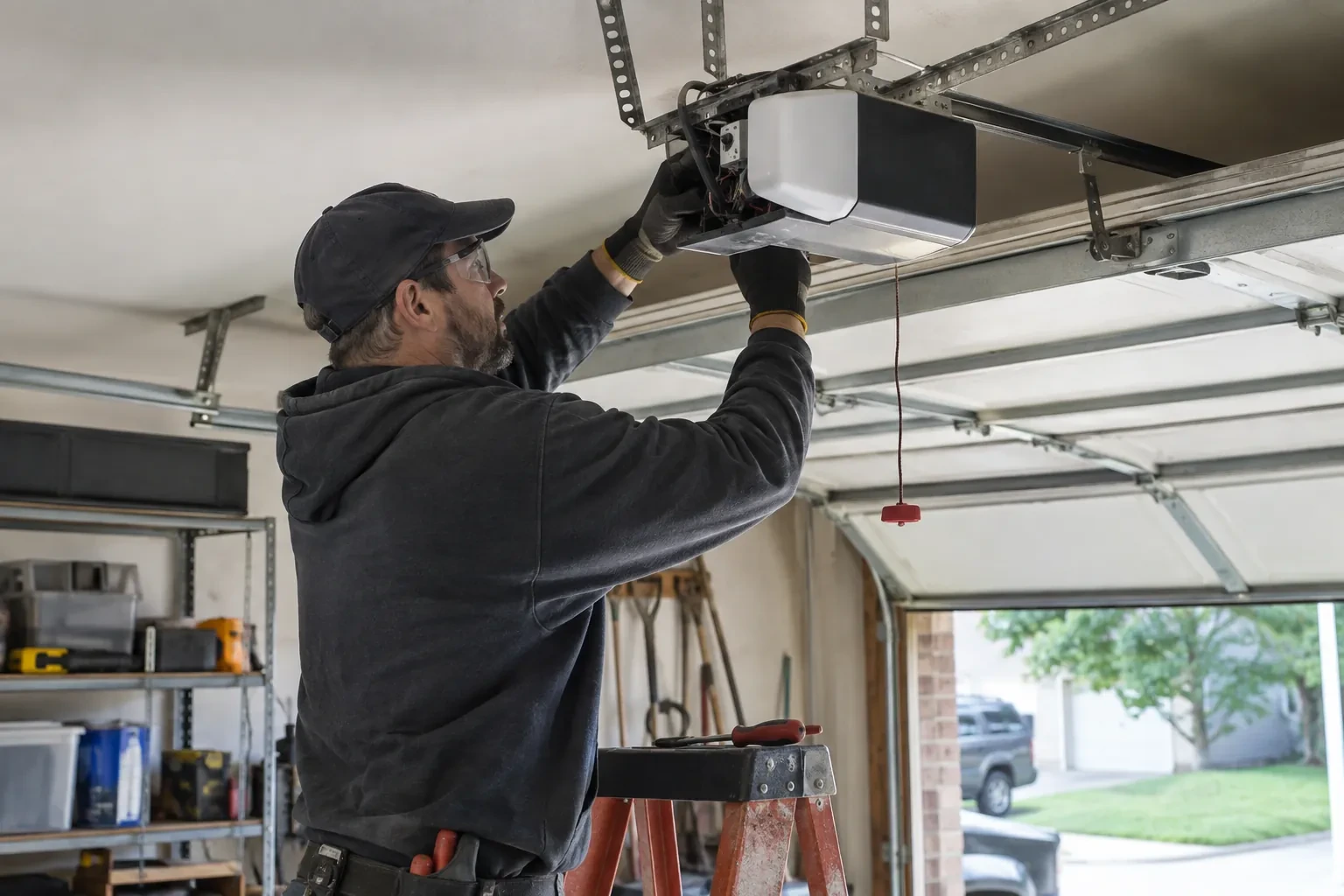
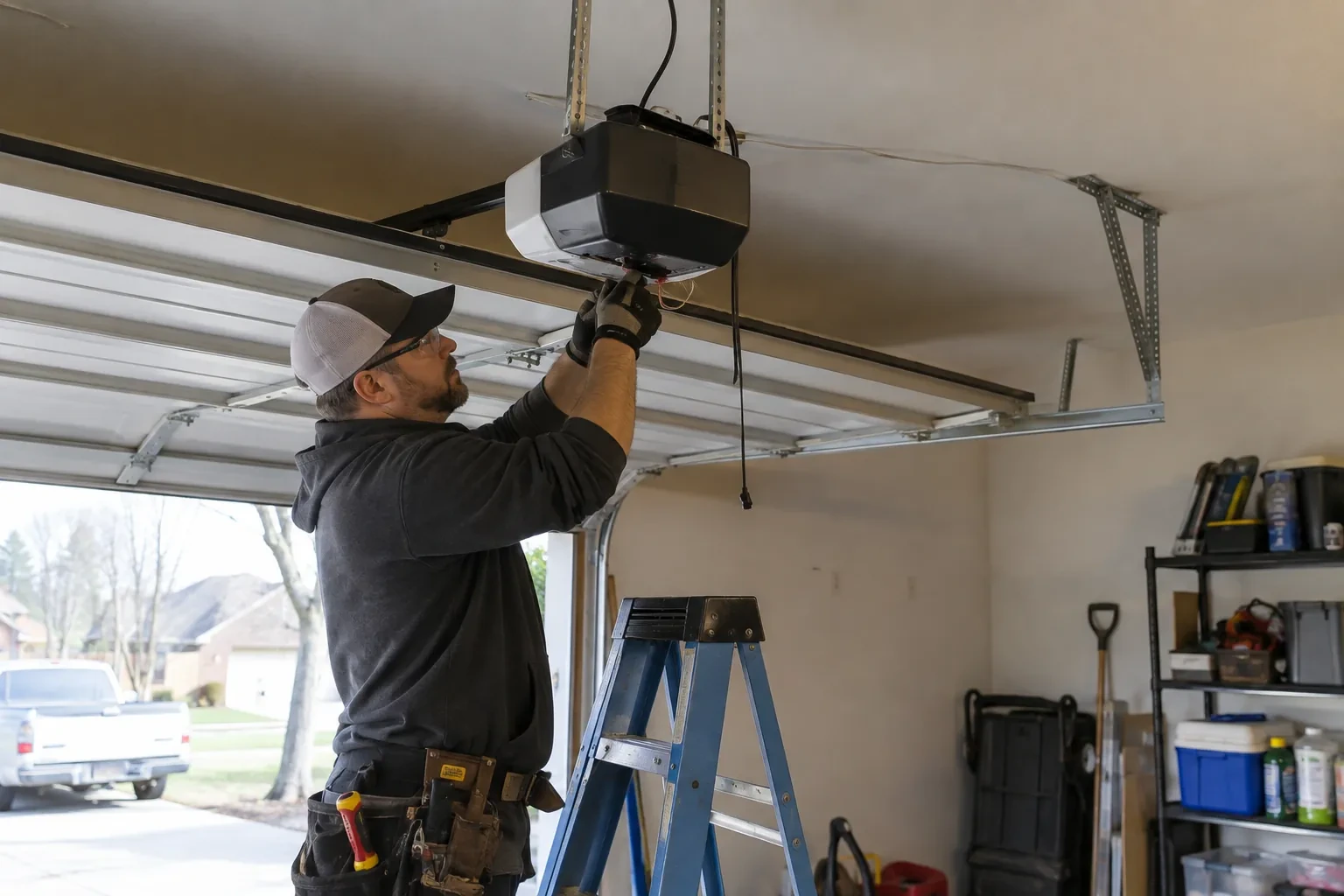
A garage door in Meadowvale Village is really three systems working together: the door and its panels, the springs and hardware that carry the weight, and the opener that does the lifting. Our services are organised the same way, so you can find help for the part that is giving trouble.
About 38% of homes in Mississauga were built in 1980 or earlier, according to the 2021 Census.
Where housing is mixed, so are garage sizes: single doors on older lots, double doors on infill and newer builds. Spring pairs, cable lengths and opener strength are all sized to the actual door, and we carry the range to cover whichever door is in front of us.
Single-detached houses make up about 37% of homes in Mississauga (2021 Census).
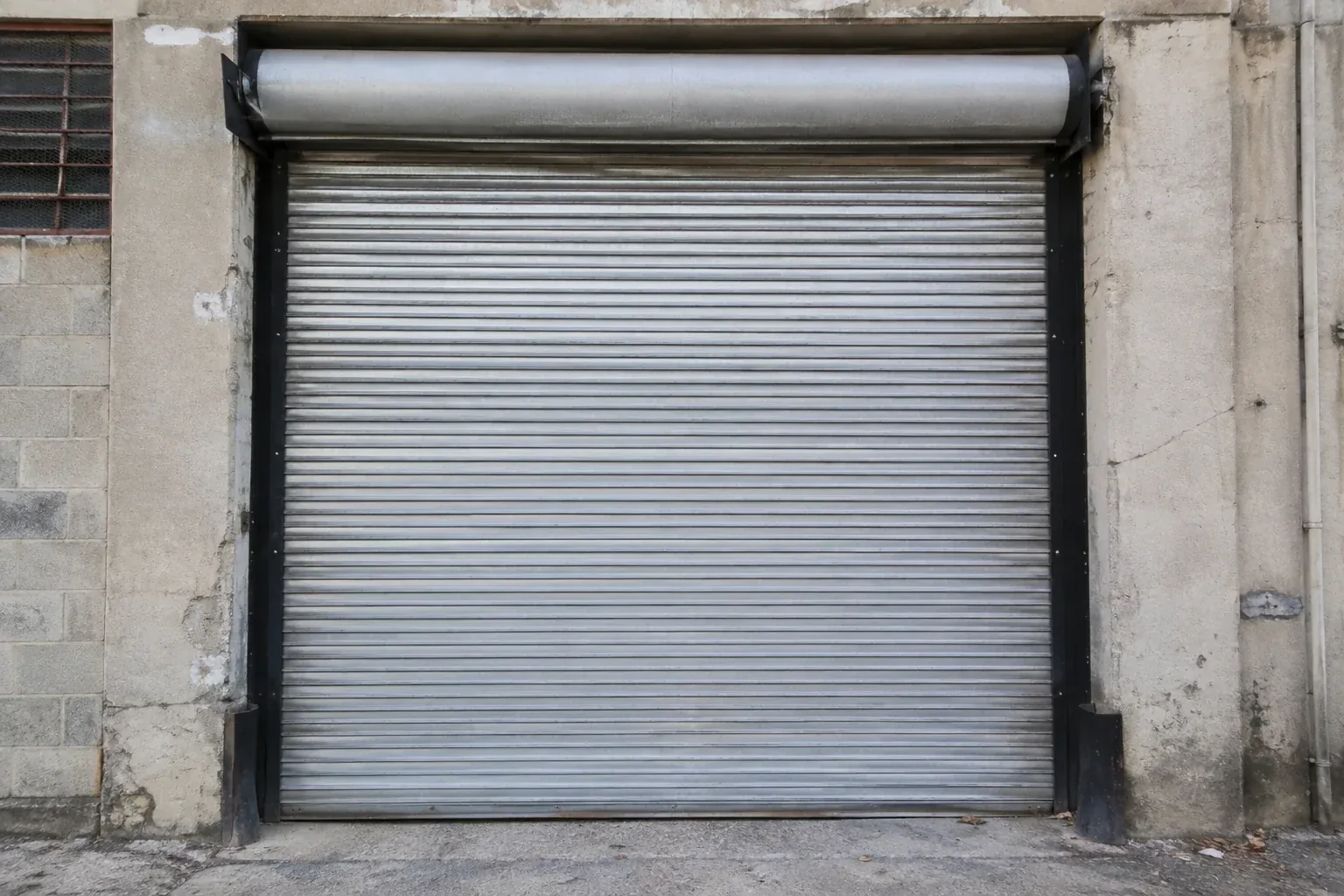
Where housing is mostly attached, the common garage entrance may be a rolling grille or heavy sectional door with access by fob or remote, managed by the property. We service these operators, safety edges and photo-eyes, and coordinate with management so residents keep their access throughout.
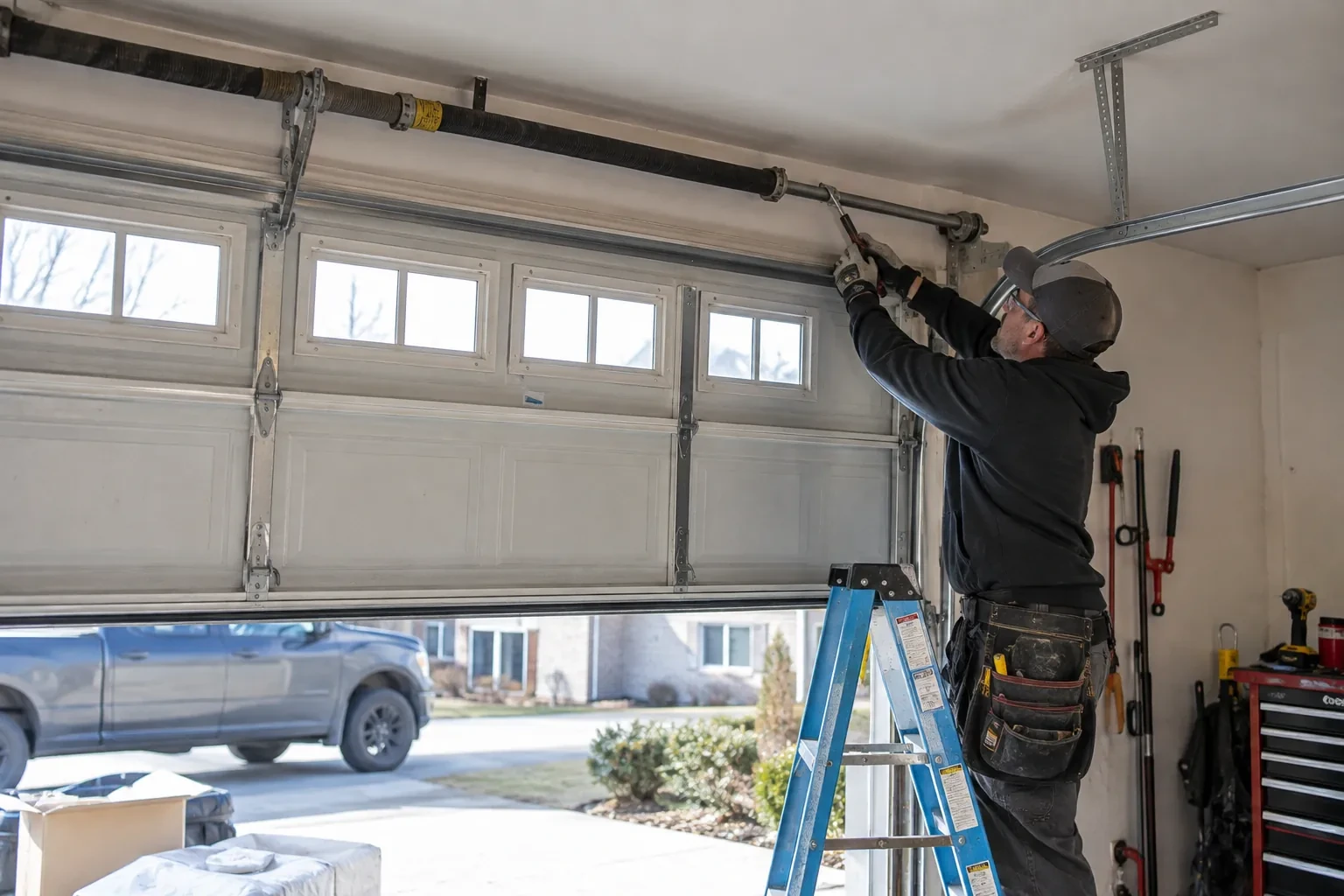
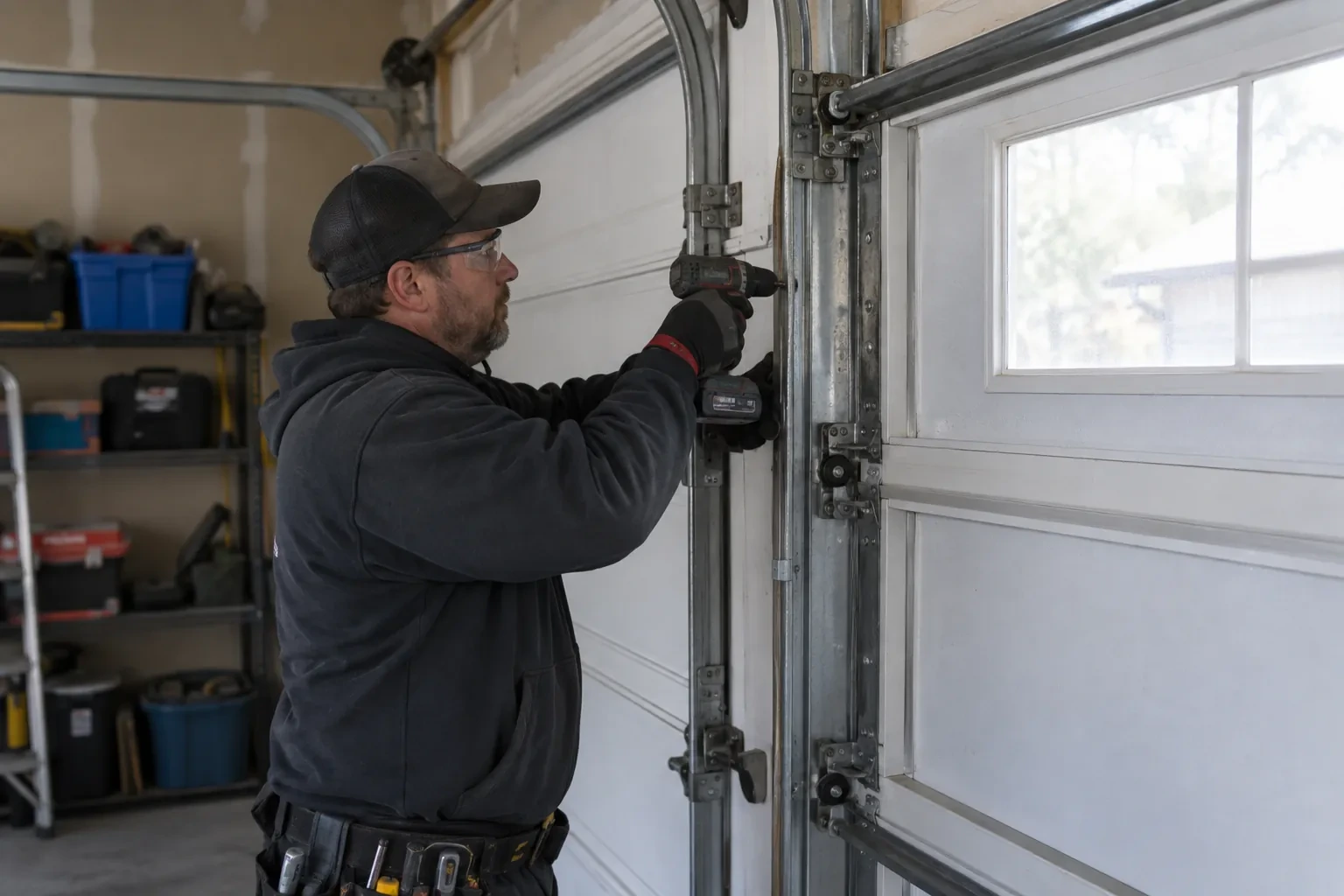
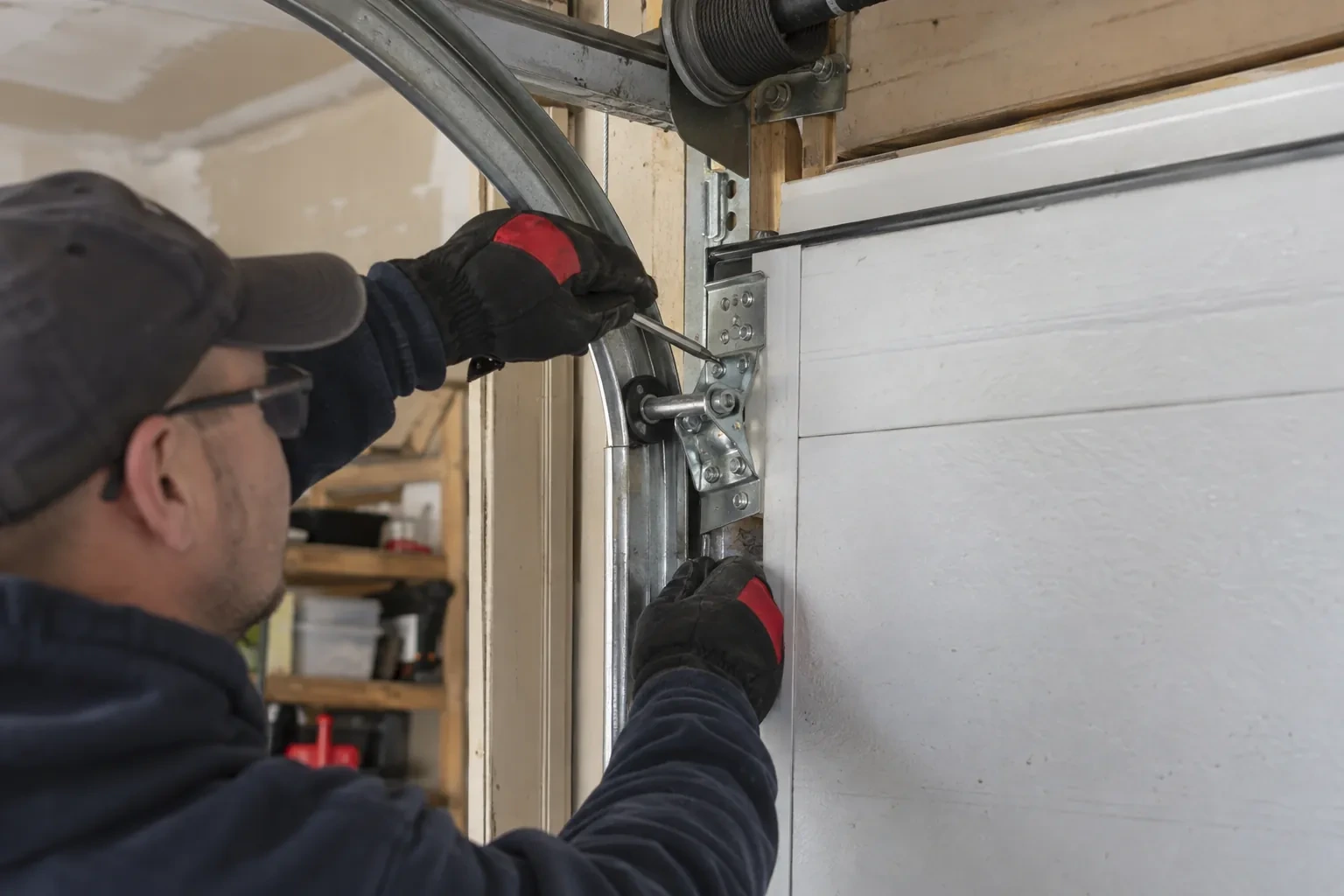
Winding a torsion spring is not a job for a ladder and a screwdriver. It takes proper bars, a secured door and a technician who knows how many turns the door wants. That is the work described in this group.
It is a January morning and the door lifts about a hand's width, groans, and settles back down. When you pull the release and try by hand the door feels far heavier than it used to, and the bottom seal is stuck hard to the slab.
The rail shakes when the door runs. The steel straps holding it to the ceiling have worked loose, the chain rattles the length of the garage, and a bolt has already dropped onto the hood of the car.
There is a new squeal from the front of the rail, up near the header, on every cycle. The belt has started tracking to one side and its edge is fuzzy where it has been rubbing.
You want the ceiling back. A storage loft, a vehicle lift or kayak racks would fit if the long rail and motor box were not hanging in the middle of the garage, and the low ceiling of an older house leaves little room for the standard rail anyway.
Since shelving went up along the garage wall, the door will not close and both sensor lights are dead. A screw or staple may have gone through the thin wire that runs from the opener to the sensors.
After a week of lifting the door by hand you pressed the button, hoping it would catch. Instead the motor grinds, the trolley thumps against the end of the rail, and the little lever that should snap back stays stubbornly upright.
Which fix fits?
The door lands with a thud you can feel through the kitchen floor, and sometimes it bounces back up a few centimetres before settling.
WhyOlder openers set their code with a row of tiny switches inside the remote and the receiver, and once those remotes stop being made the door seems stranded.
The bottom section has absorbed years of moisture and road-salt residue.
WhyWhen permit drawings or a building designer specify wind criteria, the replacement is planned from those documents rather than from appearance alone.
The wall control asks the door to close, but the operator hums and stops.
WhyA labelled rolling fire door is both an operating door and part of a fire separation, so its identity shapes the repair.
How a visit goes
Describe the property, the hardware and what has changed, and the visit starts from what you have seen.
01
Booking made simple
One call sets the visit. We ask for the door type, the opener if you know it, and whether the door is currently stuck open or shut.
02
A careful look
Every visit opens with a full check: balance, spring condition, cable wear, roller state, track alignment and sensor response.
03
Clear choices, careful work
We lay out the options in plain terms, do what you choose with the right tools, and run the door until we are satisfied it is right.
An entrance. Not an afterthought.
1/10Garage Door Tune-Up
The door lands with a thud you can feel through the kitchen floor, and sometimes it bounces back up a few centimetres before settling. The bottom section has a small dent where it keeps slamming the concrete.
The door came down fine but with a scraping noise, and now the vertical track on one side is bowed away from the wall. Two screws have pulled out of the wood and the roller nearest the floor has no rail around it.
Someone replaced the springs a while back and the door has bounced at the top ever since. It slams open against the stops, then creeps down a few inches, and the opener trolley rattles because the door is pushing where it should be resting.
There is a new squeal from the front of the rail, up near the header, on every cycle. The belt has started tracking to one side and its edge is fuzzy where it has been rubbing.
Press the button and the motor hums, but the door stays exactly where it is. Under the housing there is a dusting of white plastic shavings, the sign of a stripped drive gear, and this is the second time it has happened.
Your remote was in the visor when the car was broken into last night. So was the insurance slip with your address on it. The door still answers that remote, wherever it is now, and you would very much like it not to.
The bottom section has absorbed years of moisture and road-salt residue. Its edge is swollen, the seal retainer is failing, and the door leaves an irregular gap across the floor whenever it closes.
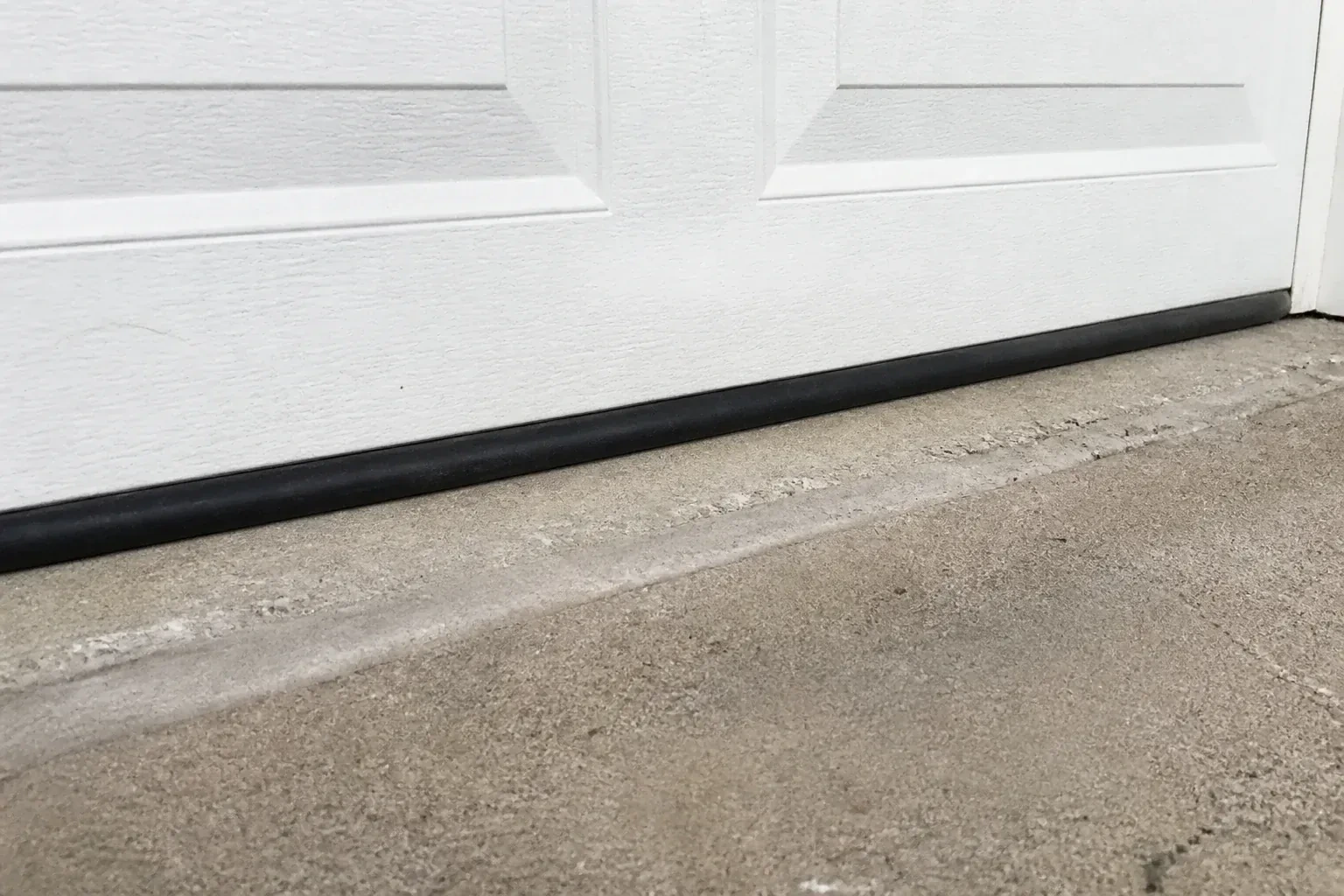
Daylight appears beside the closed door and powdery snow collects just inside after windy weather. The sections still move, but worn perimeter seals and an uneven floor leave the garage exposed.
New windows would improve the door's appearance, but they also change the section layout and reinforcement pattern. You need a wind-rated configuration designed with the chosen glazing instead of treating the windows as a later addition.
The wall control asks the door to close, but the operator hums and stops. The curtain remains overhead while the control light and the photoelectric sensors suggest that the powered system needs a connected diagnosis.
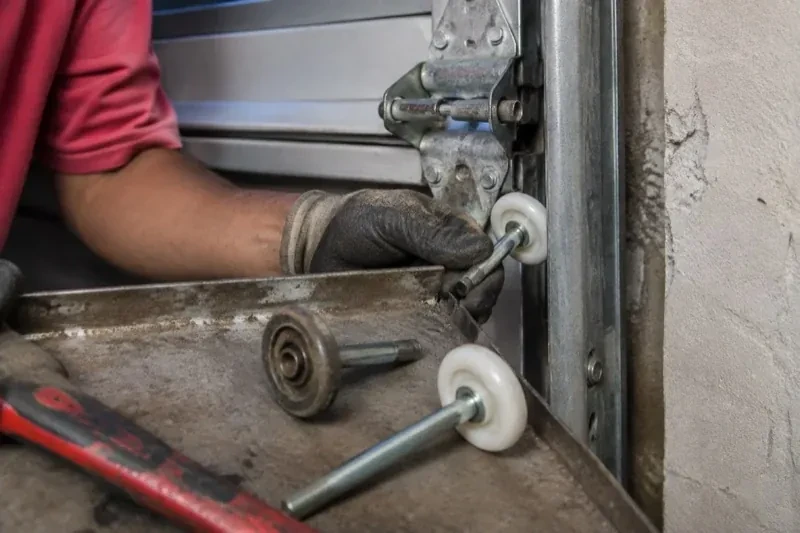
Small wear items found on the day, such as a roller or a hinge on a middle section, a bottom seal or a few fasteners, can often be replaced during the visit if you agree and the part is on the truck. Larger items, including springs, cables, drums, bottom brackets, a bent track or an opener gear, are written up as separate repairs with their own quote so you can decide with the facts in hand rather than under a raised ladder.
Why did the door come off its track in the first place?
The usual causes are an impact from a vehicle, a lifting cable that broke or slipped off its drum, ice holding the door to the floor while the opener pulled, an obstruction under the door, worn rollers that no longer hold in the rail, or track brackets that have loosened from the wall. Finding which one applies is the first part of the visit, because the reset is only durable once the cause is corrected.
Why does my door sink or slam down when released?
Not enough spring tension for the door's weight. Springs lose a little pull as they age through thousands of cycles, and a door gains weight when insulation, windows or a heavier seal are added. Either way the door outweighs its springs. Adding tension in measured quarter turns restores the hold, provided the springs are sound; if they are near the end of their life, new ones are the right answer.
What does out of phase mean, and why does my door stop short?
When the belt has been off the sprocket, or the motor has run without it, the motor's idea of where the door is no longer matches where the trolley sits. The door then stops short at one end however the limits are turned. The technician lifts the belt off, runs the sprocket to its closed position, refits the belt with the trolley at the closed end and relearns the limits.
Can I keep my existing wall button?
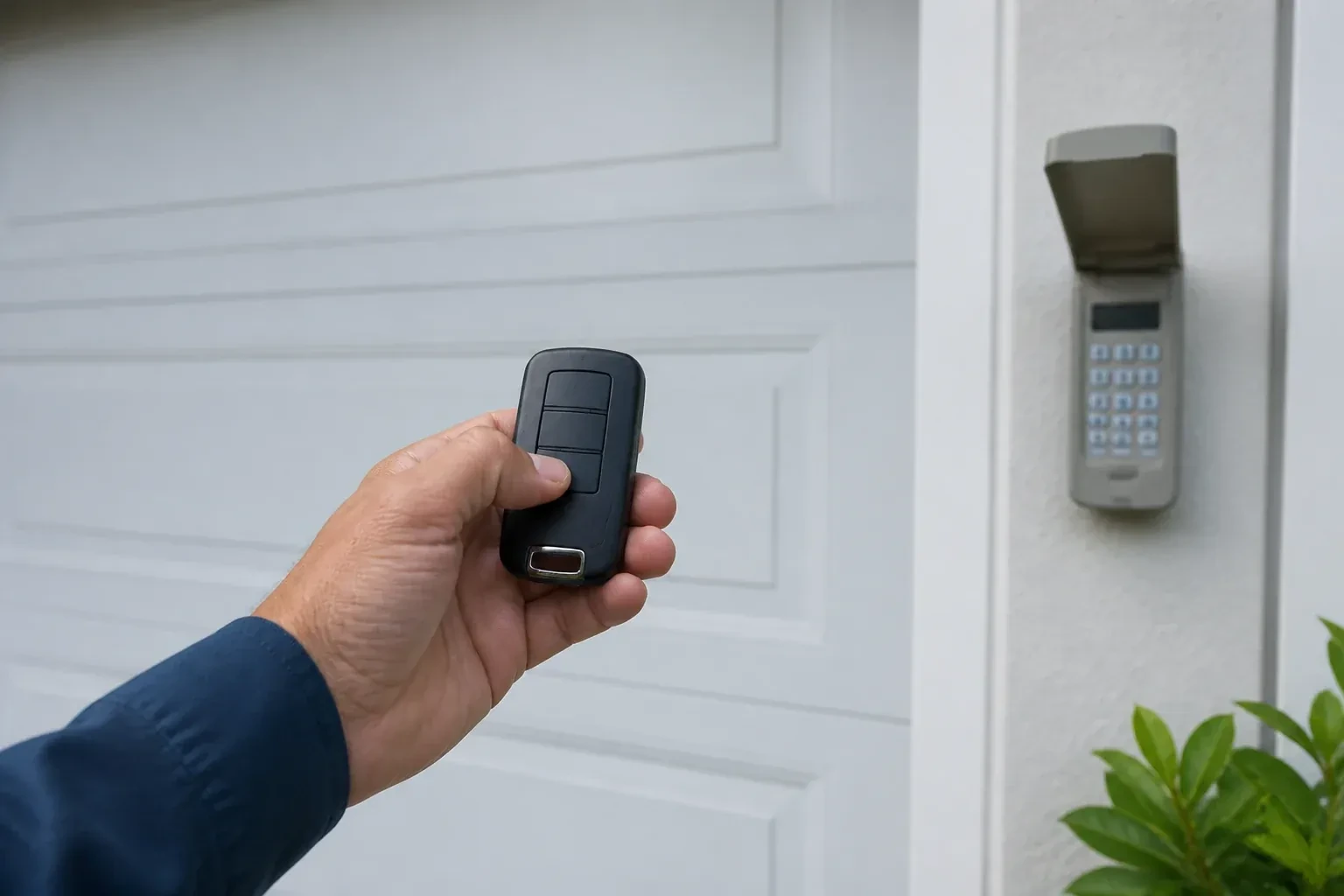
The new operator comes with its own console, and the two usually go together because the console is designed to speak to that board and adds a light button, a lock button and sometimes a timer or a battery indicator. The low-voltage wire running to the old button can often be reused if it is in good condition, which saves running a new line across the garage.
Where should the keypad and wall control be mounted?
Out of children's reach and in sight of the door. The door industry's checklist puts wall-mounted push buttons at least about one and a half metres above the floor, in clear view of the door and away from moving parts, and outdoor keypads follow the same idea beside the door. Keypads are programmed before mounting, then fixed with the screws and anchors suited to the wall.
Do I need a new opener at the same time?
Not automatically. The decision depends on the existing operator's condition, compatibility, attachment and the customer's access goals. Door replacement and opener replacement are separate scopes that can be coordinated. Evaluating the mechanical door first keeps the operator decision grounded in how the new assembly moves and what equipment information supports.
Why are new springs selected for the replacement door?
Counterbalance springs are chosen around the completed door's weight, height, track arrangement and intended travel. Insulation, steel skins, windows and reinforcement all contribute to that load. A spring combination from a different assembly may provide unsuitable torque even when it physically fits. Matching the counterbalance to the ordered door supports manageable manual movement and orderly cable travel.
Can two single doors be replaced with one wide door?
Yes, as a coordinated renovation. The centre support, new header or beam, side jambs, electrical routing, and finished opening are building-work considerations, while the sectional door needs suitable clearances, pressure criteria, reinforcement, tracks, and attachments. Structural design and door selection should be aligned before materials are ordered so each trade works to the same dimensions.
Are photoelectric sensors and vehicle detectors the same thing?
They can serve different purposes. A monitored photoelectric device may be part of the operator's entrapment-protection system, while a higher beam, loop or other accessory may be intended to detect vehicles or support traffic flow. The installed operator information establishes each role, and added vehicle protection does not replace the primary protective device required by that system.
Request a visit
Every door in Meadowvale Village gets a safety check as part of the visit, whatever the reason we came. Photo-eyes are aligned, the auto-reverse is tested, the balance is confirmed and the cables are inspected. If something is close to failing, you hear about it plainly, with no pressure to act that day.