Openers · Meadowvale Village
Garage Door Remote and Keypad Programming in Meadowvale Village
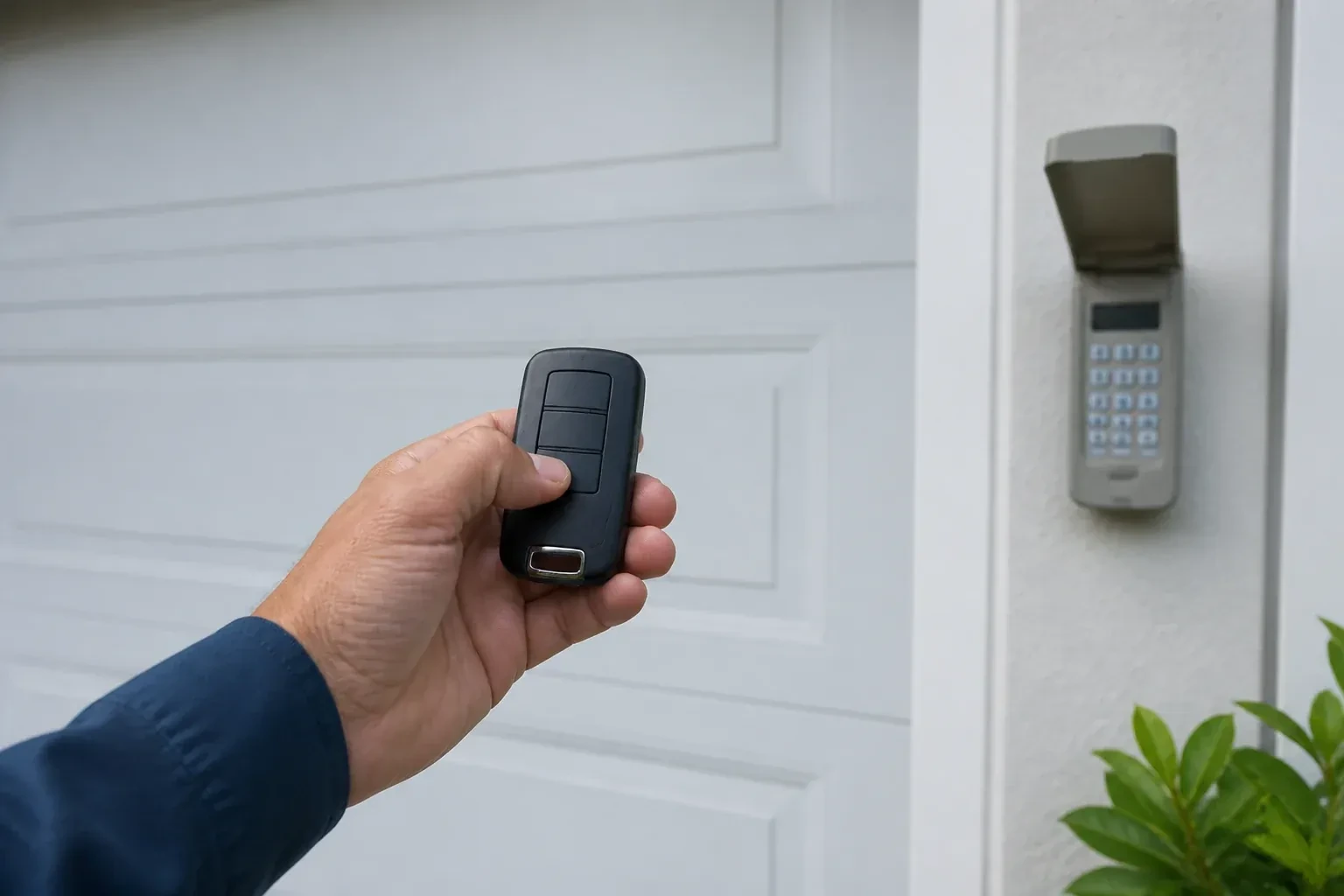
The remote opens the door only when you are almost underneath it.
In plain words
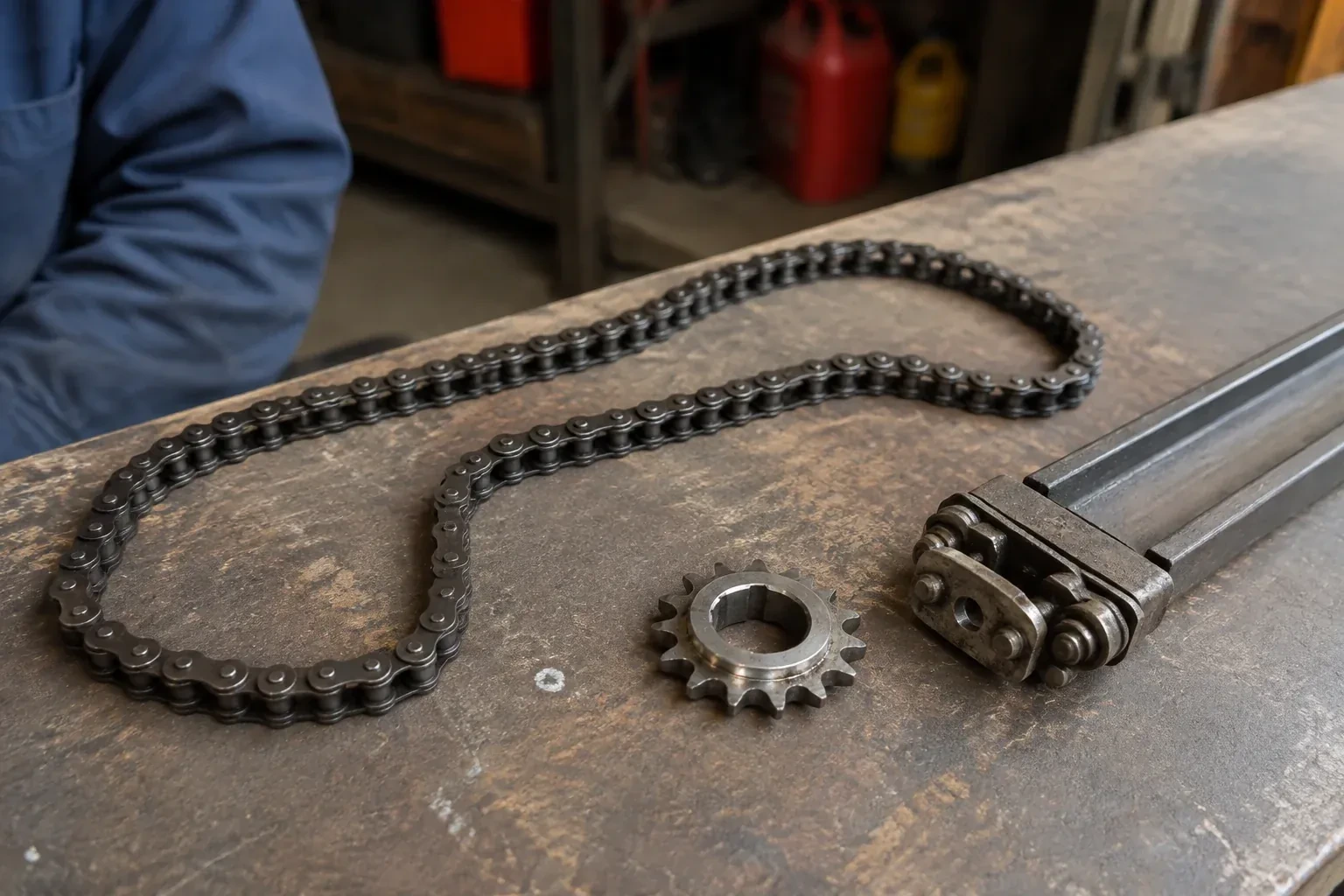
Older openers set their code with a row of tiny switches inside the remote and the receiver, and once those remotes stop being made the door seems stranded. It is not. An add-on receiver wires to the same two terminals as the wall button and plugs into the ceiling outlet, giving the old motor a modern rolling-code radio along with new remotes and a keypad. The door mechanics stay as they are, provided the opener already has photo eyes near the floor. Where it has none, the conversation turns to a new opener, and the reasons are explained plainly.
How the visit goesYour remote was in the visor when the car was broken into last night. So was the insurance slip with your address on it. The door still answers that remote, wherever it is now, and you would very much like it not to.
Garage Door Remote and Keypad Programming
How the visit goes
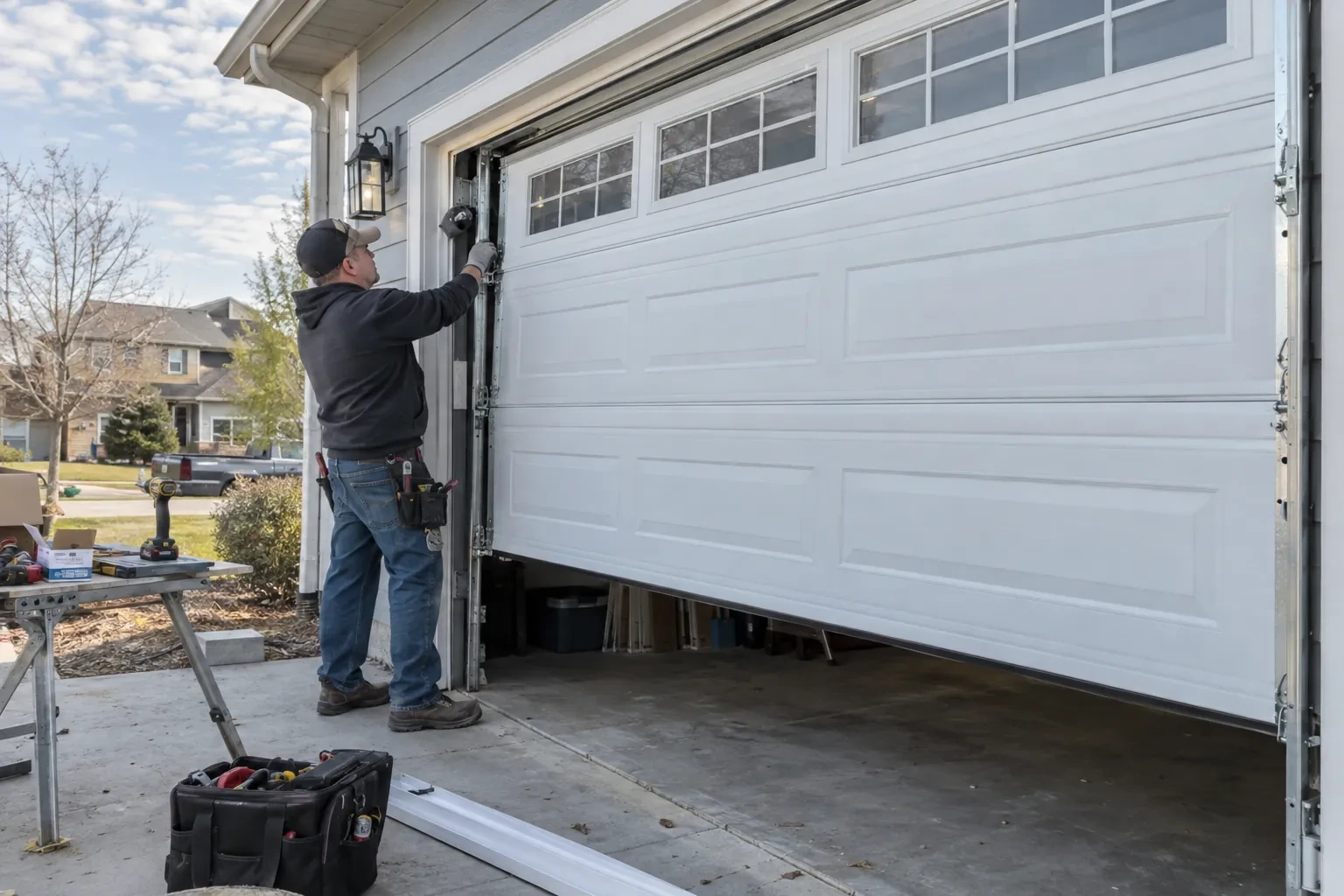
The keypad on the outside wall
An outdoor keypad gets its own look. The technician checks whether it lights when pressed, whether the door responds to the existing code from close by, and what condition the buttons, slide cover and battery compartment are in after years of weather. A keypad that accepts a code but does not move the door may be unpaired, low on cells, or hearing interference. A code nobody remembers is not a dead end: the keypad can be reset and given a new code during programming. The mounting height and sight line to the door are noted, since a keypad should sit out of children's reach and where the door can be seen.
Training the buttons in the car
A vehicle's built-in garage button often learns in two stages on rolling-code openers. First the car learns the remote: with the handheld remote carrying a fresh cell held close to the mirror or console, the vehicle button and the remote button are pressed together until the indicator changes. Second, the opener learns the car: the technician presses the head unit's learn button and returns to the vehicle inside the window that follows to press the trained button until the door moves. Some vehicle systems follow a different sequence with no handheld remote, so the vehicle and opener instructions are checked first. Where an older in-car system cannot hear a newer opener, a small bridge module is added.
Codes kept private, visitors kept temporary
Your keypad code is yours alone. It is not written on the invoice or left in the garage, and it is chosen to be something other than the house number or a birth year. On keypads that support them, you have learned to set a temporary code for a cleaner, a trade or a house-sitter that stops opening the door after a set number of hours or uses, and you know how to change the main code yourself from the instructions. If a code is ever shared too widely, changing it is a two-minute job rather than a service call.
Garage Door Remote and Keypad Programming
In the van
Replacement remote (one, two or three buttons)
CR2032 and CR2016 coin cells
Contact cleaner and fibreglass brush
In-vehicle compatibility bridge module
Add-on rolling-code receiver kit
Garage Door Remote and Keypad Programming
What affects the quote
Batteries supplied
Coin cells for remotes and the small cells in keypads are counted per device when the technician supplies them, and noted so you know what to buy next time.
Receiver or logic board fault found
If a known-good remote also fails, the receiver or board is the cause; its diagnosis and replacement are quoted separately from programming.
Number of controls
Each remote, keypad and vehicle button is programmed and tested individually, so a single replacement remote and a household with three cars, two keypads and a gate are different visits.
What to have ready
- Is any remote missing or stolen, or with someone who should no longer have access?
- Are you adding a control, replacing a lost one, or starting fresh after a move?
- Roughly how old is the opener, and can you read its model label?
Garage Door Remote and Keypad Programming: questions
QuestionsHow do I program the built-in button in my car?
Often in two steps, on a common HomeLink-style setup. First the car learns a working handheld remote: hold the remote close to the mirror or console and press its button together with the vehicle button until the indicator changes. Then the opener learns the car: press learn on the head unit, walk back to the car within the window that follows, and press the trained button repeatedly until the door responds. Some vehicle systems use a different sequence with no handheld remote, so the vehicle manual is checked first.
Where should the keypad and wall control be mounted?
Out of children's reach and in sight of the door. The door industry's checklist puts wall-mounted push buttons at least about one and a half metres above the floor, in clear view of the door and away from moving parts, and outdoor keypads follow the same idea beside the door. Keypads are programmed before mounting, then fixed with the screws and anchors suited to the wall.
Can a phone app replace remotes and keypads?
On connected openers the app is one more control, useful for checking the door is closed and letting someone in from afar. Remotes, the keypad and the wall control keep working without a network, so most households keep them alongside the app. During programming the technician confirms the app account is in your name and that no previous owner's phone is still linked, and tests the app with the other controls.