Repairs · Meadowvale Village
Garage Door Tune-Up in Meadowvale Village
The door lands with a thud you can feel through the kitchen floor, and sometimes it bounces back up a few centimetres before settling.
In plain words
A noisy garage door is a door asking for a small amount of attention. Squeaks usually come from dry hinge pins and roller bearings. A rattle is often a hinge screw or track bolt that vibration has backed out. A grinding or popping sound can be a roller worn out of round, or a chain slapping the opener rail. A tune-up goes through these one at a time, tightening, lubricating and adjusting, and separates the sounds that maintenance settles from the ones that point to a worn part. The result is a door your neighbours stop noticing, and a clear list if something needs replacing.
How the visit goesThe door lands with a thud you can feel through the kitchen floor, and sometimes it bounces back up a few centimetres before settling. The bottom section has a small dent where it keeps slamming the concrete.
Garage Door Tune-Up
How the visit goes
Watching one full cycle first
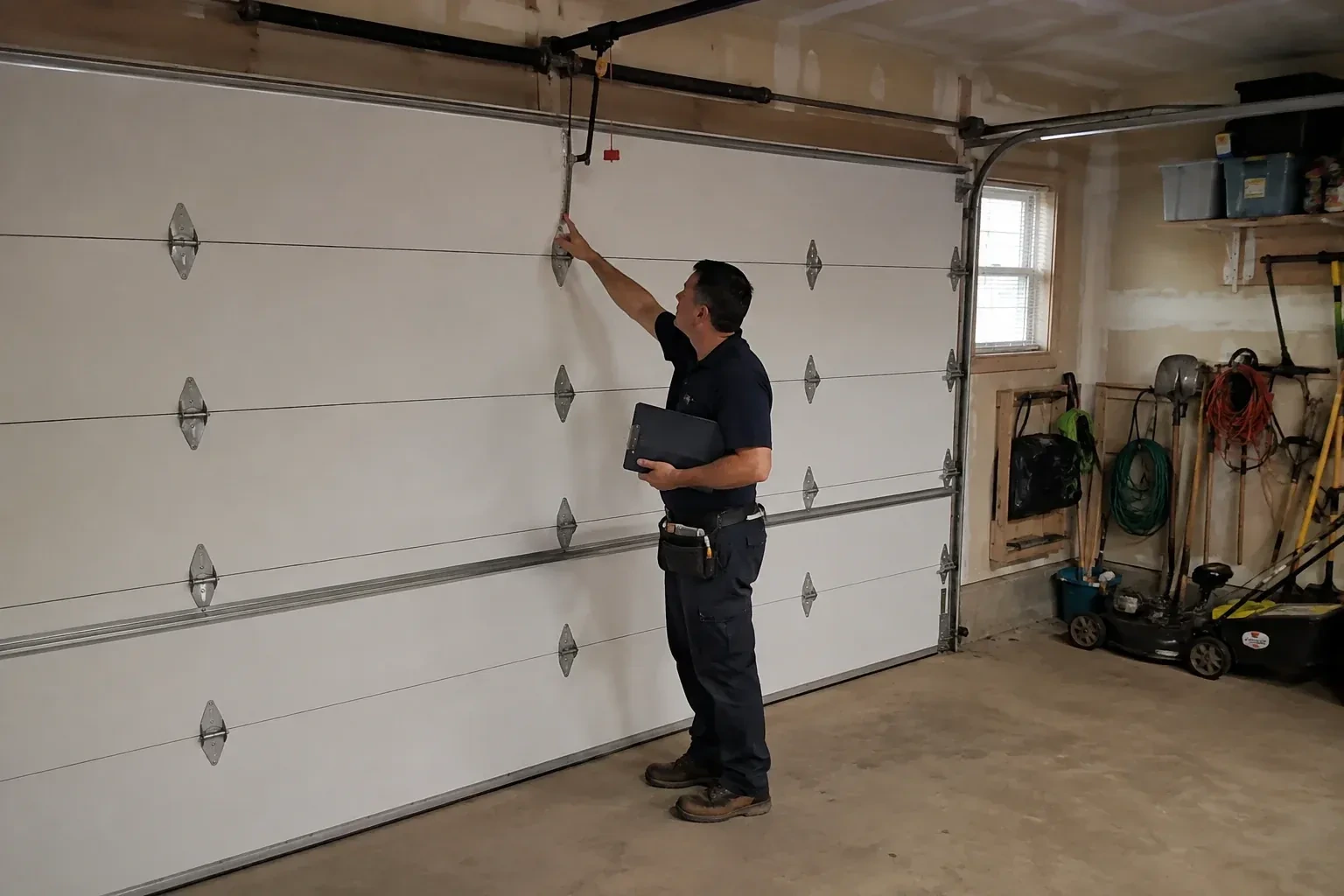
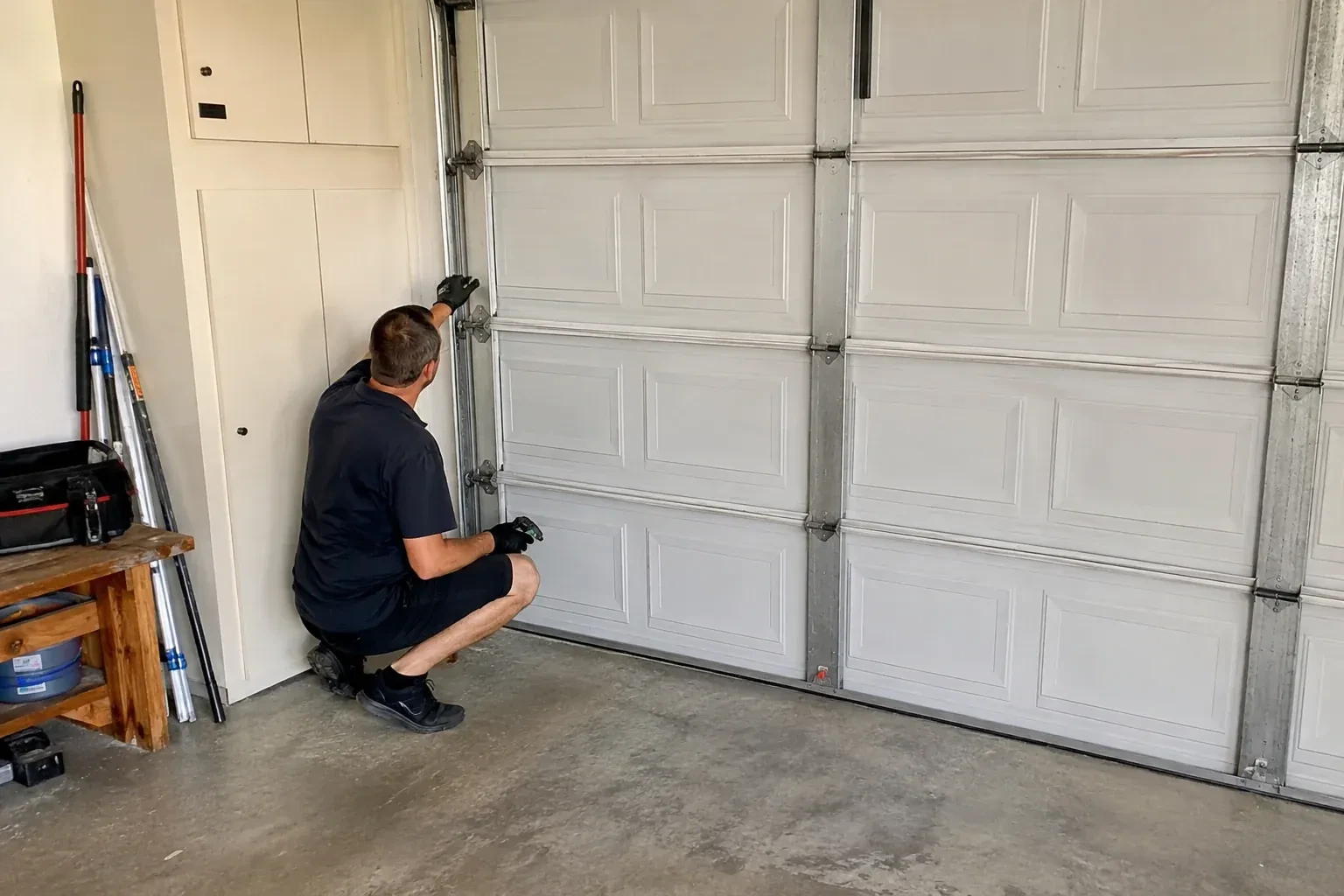
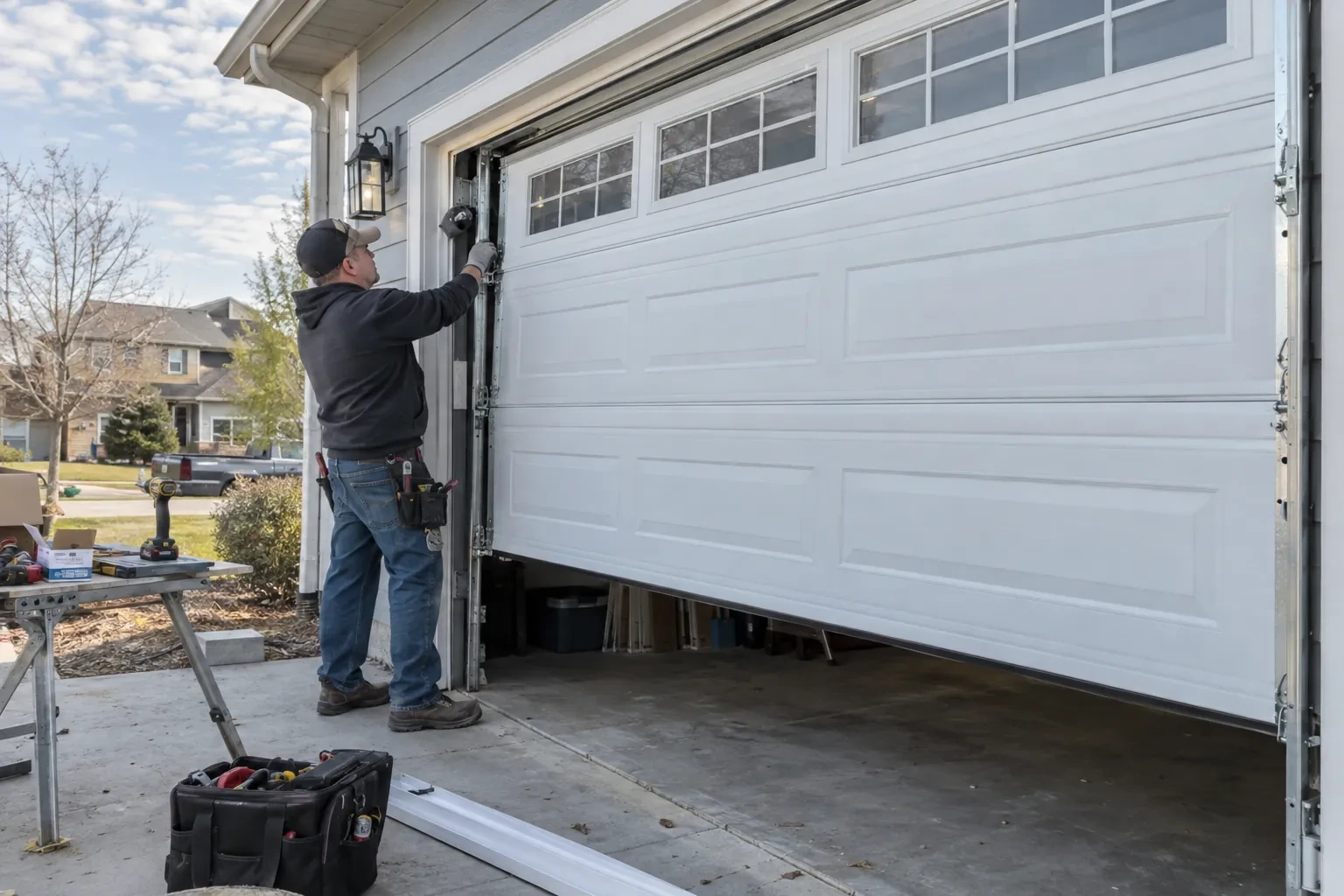
Before a wrench comes out, the technician stands clear of the opening and runs the door all the way up and all the way down. They are listening and watching at the same time: where the squeal starts, whether the sections shake at a particular height, whether the door hesitates at the curve of the track, how it lands on the floor, and whether the opener labours or hums. Each observation is tied to a spot on the door or a point in the travel. That map guides the hands-on inspection that follows and gives a fair comparison at the end, when the same cycle is run again after the work.
Chain, belt, rail and trolley
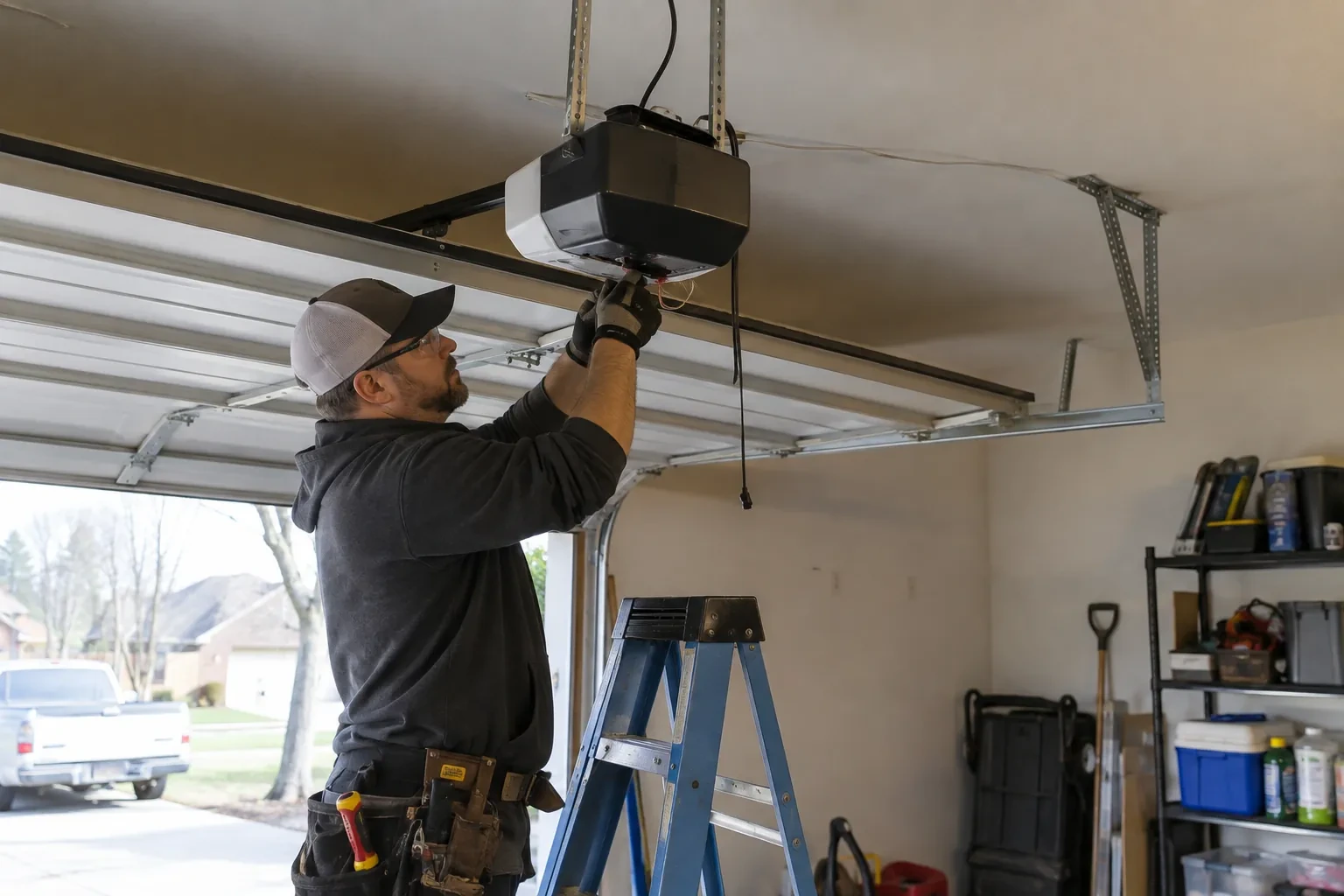
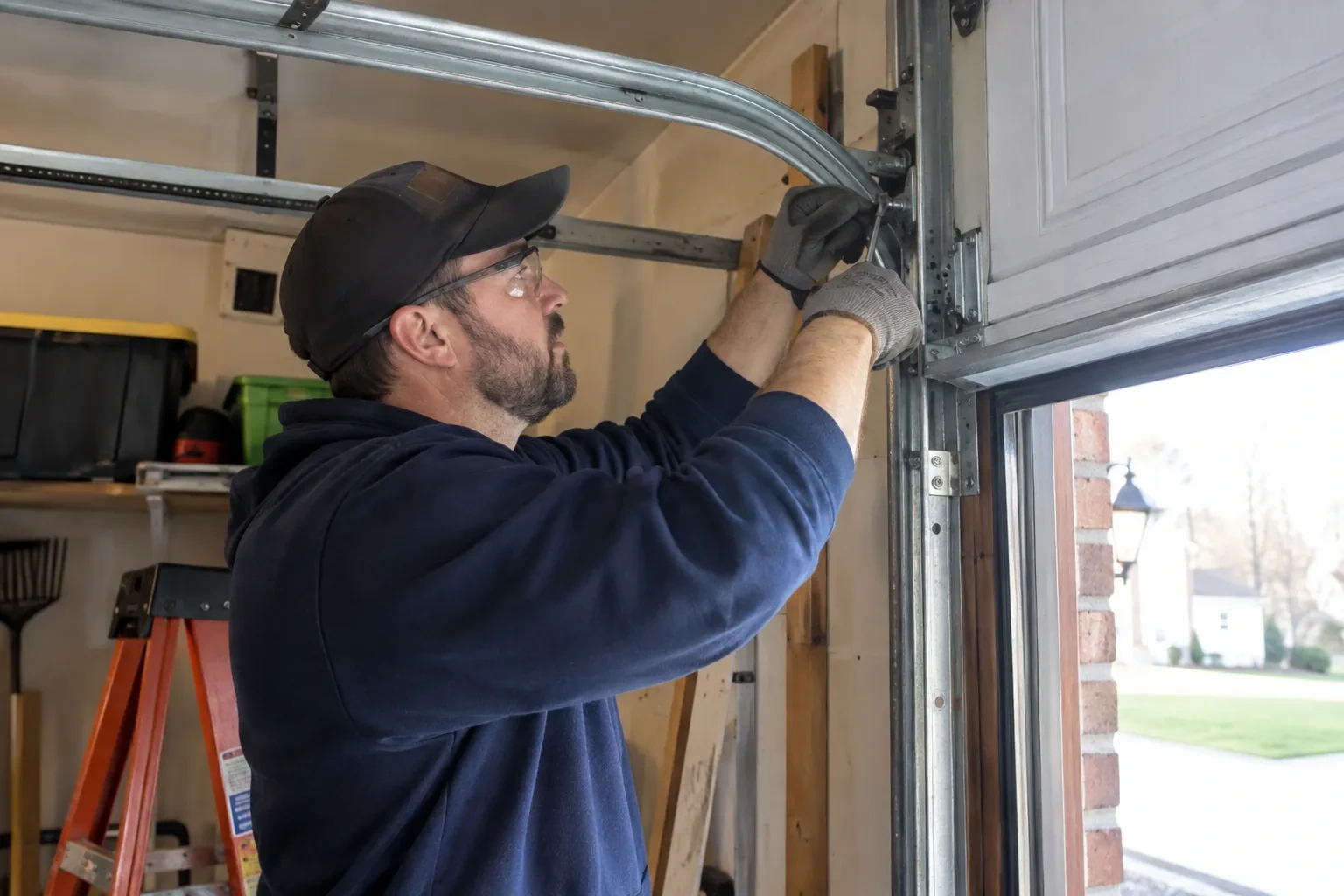
On a chain-drive opener the technician sets the chain so it neither sags onto the rail nor pulls taut, following the maker's measurement at the midpoint, and lubricates the chain and rail only where that maker calls for it. A belt drive is checked for tension, cracking and fraying. The trolley is inspected for wear where it rides the rail, the release lever is worked to confirm it disengages and re-engages cleanly, and the door arm is checked for straightness and secure pins at both ends. Rail hangers are tightened so the whole assembly stops shaking when the door starts and stops. This quiets the ceiling and takes strain off the motor's drive gear.
A written record and a priority list
The visit ends with a plain document rather than a verbal summary. It lists what was tightened, lubricated and adjusted; how the balance and both reversal tests came out; the make and model of the door and opener; and the condition of the main parts, sorted into three groups: healthy, worth watching, and ready for its own repair with a quote attached. This record is what makes the next tune-up a comparison rather than a fresh start. It also gives you exact words when a new sound turns up, so you can say which hinge or which roller instead of describing a noise, and it is a useful page in the home file when the house is sold.
Garage Door Tune-Up
In the van
2x4 test block and tape measure
Silicone or lithium garage door lubricant
Silicone spray for seals
Bottom seal (astragal)
Hinge screws and track bolts
Garage Door Tune-Up
What affects the quote
Time since the last service
A door serviced last year needs a lighter touch than one that has never been looked at, where every fastener may want attention and the sensors and limits are far from where they should be.
Door construction and weight
A heavy wood or insulated steel door works its hardware harder than a light aluminum one, and the balance check and fastener work take a little longer on the heavier door.
Torsion or extension springs
Torsion springs above the header and extension springs beside the tracks are inspected differently, and extension systems have pulleys and safety cables that add items to the checklist.
What to have ready
- Can you lift the door by hand with the opener disconnected, and does it stay up?
- Where in the door's travel does the problem happen?
- Is the door worse in cold weather or after rain?
Garage Door Tune-Up: questions
QuestionsCan a tune-up make my noisy door quieter?
Usually, yes, and often dramatically. Most garage door noise comes from dry hinge pins, dry roller bearings and hardware that vibration has loosened, and those three are exactly what a tune-up addresses. Some noise comes from parts that have worn, such as a roller gone out of round or a chain that has stretched, and the technician tells you which sounds were settled by maintenance and which point to a part worth replacing, with a separate quote for that.
Will the tune-up include replacing worn parts?
Small wear items found on the day, such as a roller or a hinge on a middle section, a bottom seal or a few fasteners, can often be replaced during the visit if you agree and the part is on the truck. Larger items, including springs, cables, drums, bottom brackets, a bent track or an opener gear, are written up as separate repairs with their own quote so you can decide with the facts in hand rather than under a raised ladder.
How often should a garage door be tuned up?
Once a year suits most attached garages here, ideally in the fall before cold weather thickens lubricant and stiffens seals. Door and opener makers suggest lubrication every three to six months and a homeowner balance check and reversal test every month, so an annual professional visit sits on top of that light routine. A lightly used door in a detached garage may go longer; a heavily used one, or one exposed to salt spray, benefits from a spring check too.
Related services
- Off-Track Garage Door ResetOne side of the door hangs a hand's width lower than the other.
- Garage Door Panel ReplacementYears of slap shots have peppered the lower two sections with dents.
- Garage Door Bottom Seal ReplacementOne end of the bottom seal has slipped out of its channel and hangs down like a loose shoelace.