New Doors · Mississauga
Commercial Sectional Door Repair in Mississauga
Cold weather has exposed a widening gap below the closed door.
In plain words
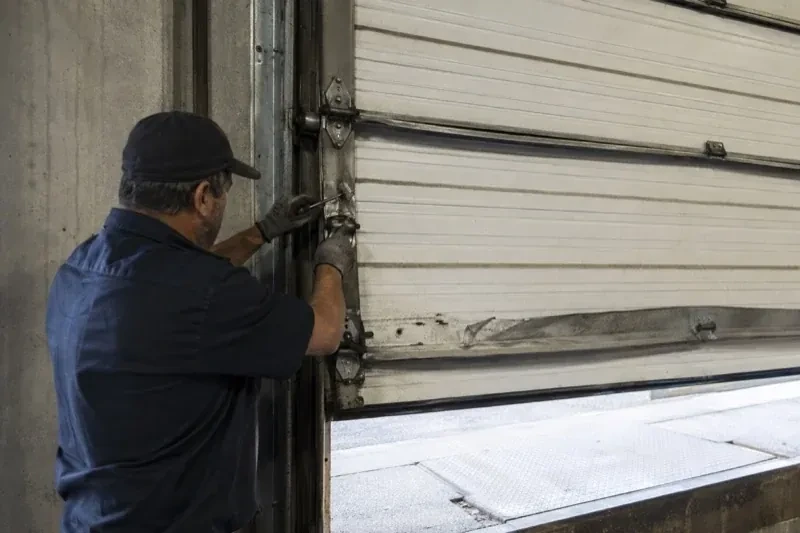
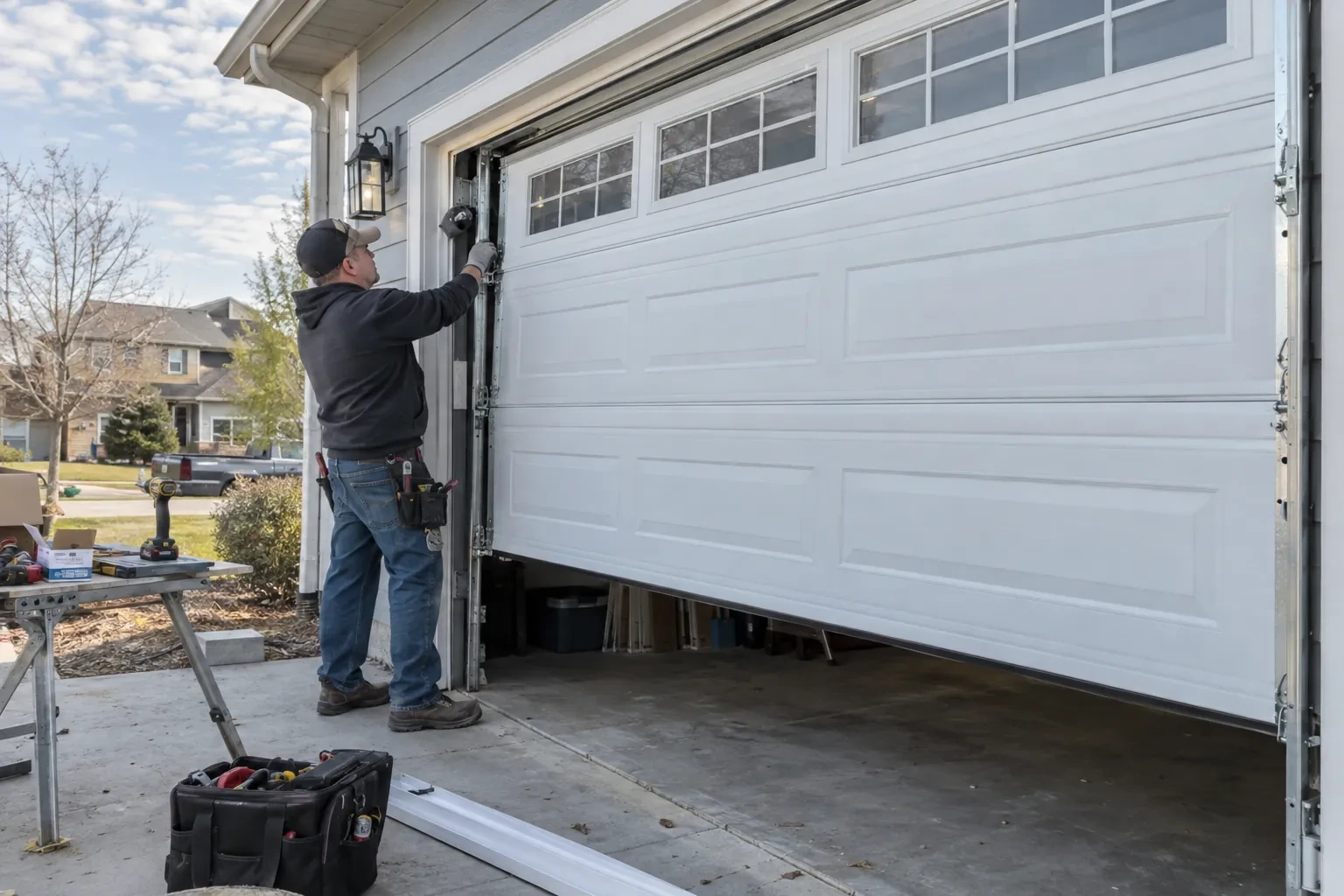
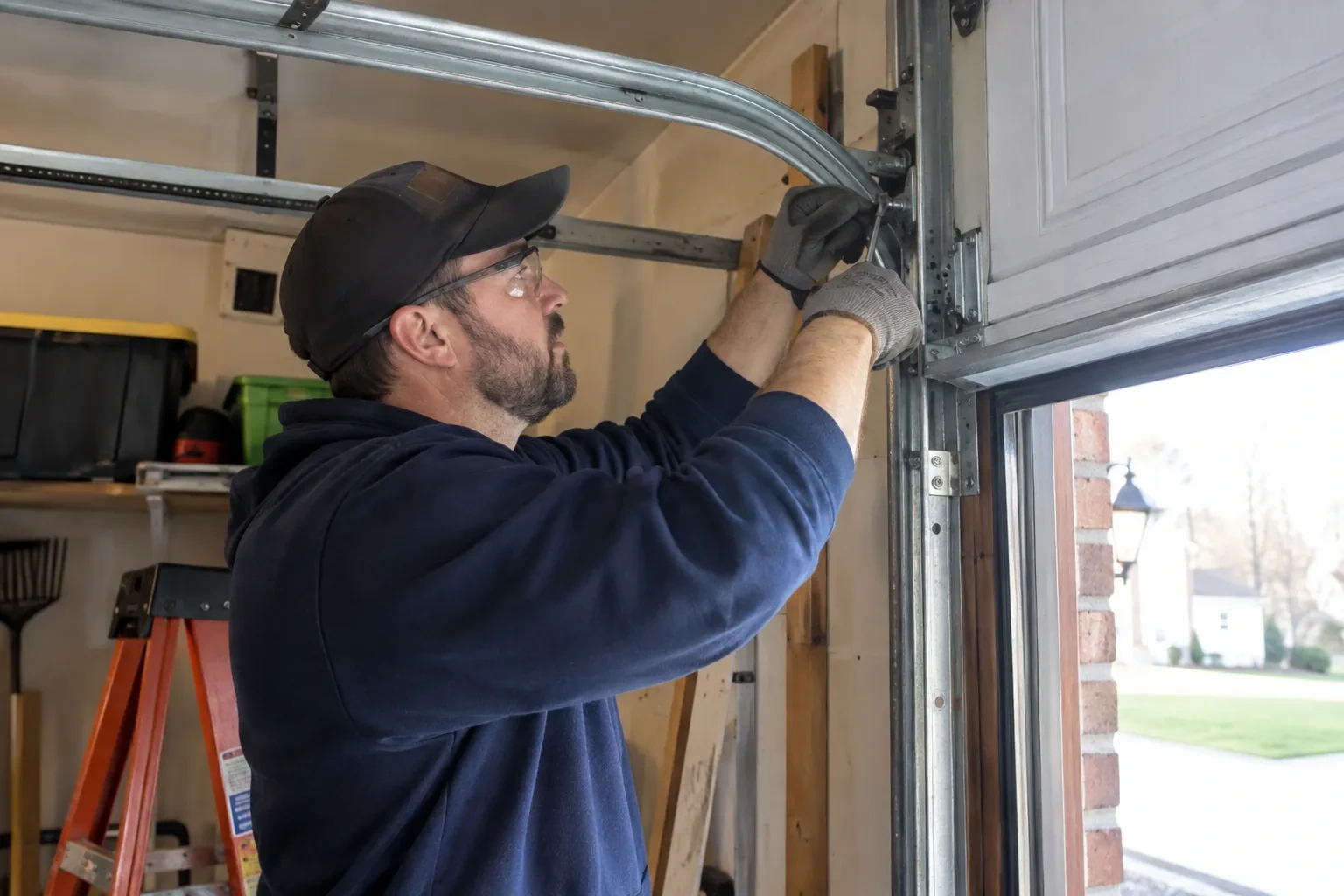
When a bay door hangs crooked, the visible angle is often only the starting clue. A technician compares cable tension on both sides, checks how each cable sits on its drum, examines bottom fixtures and looks for a shifted track or damaged roller. The door is supported before tensioned parts are handled. Once the cause is corrected, the cables are seated, the door is levelled and balance is checked through travel. Powered limits and protective devices are tested afterwards, because the operator depends on a mechanically sound door.
How the visit goesThe loading-bay door rises with one side several centimetres lower than the other. A lift cable looks slack, the bottom section sits crooked, and staff have stopped using the opening until the door can travel level again.
Commercial Sectional Door Repair
How the visit goes
Testing protective controls
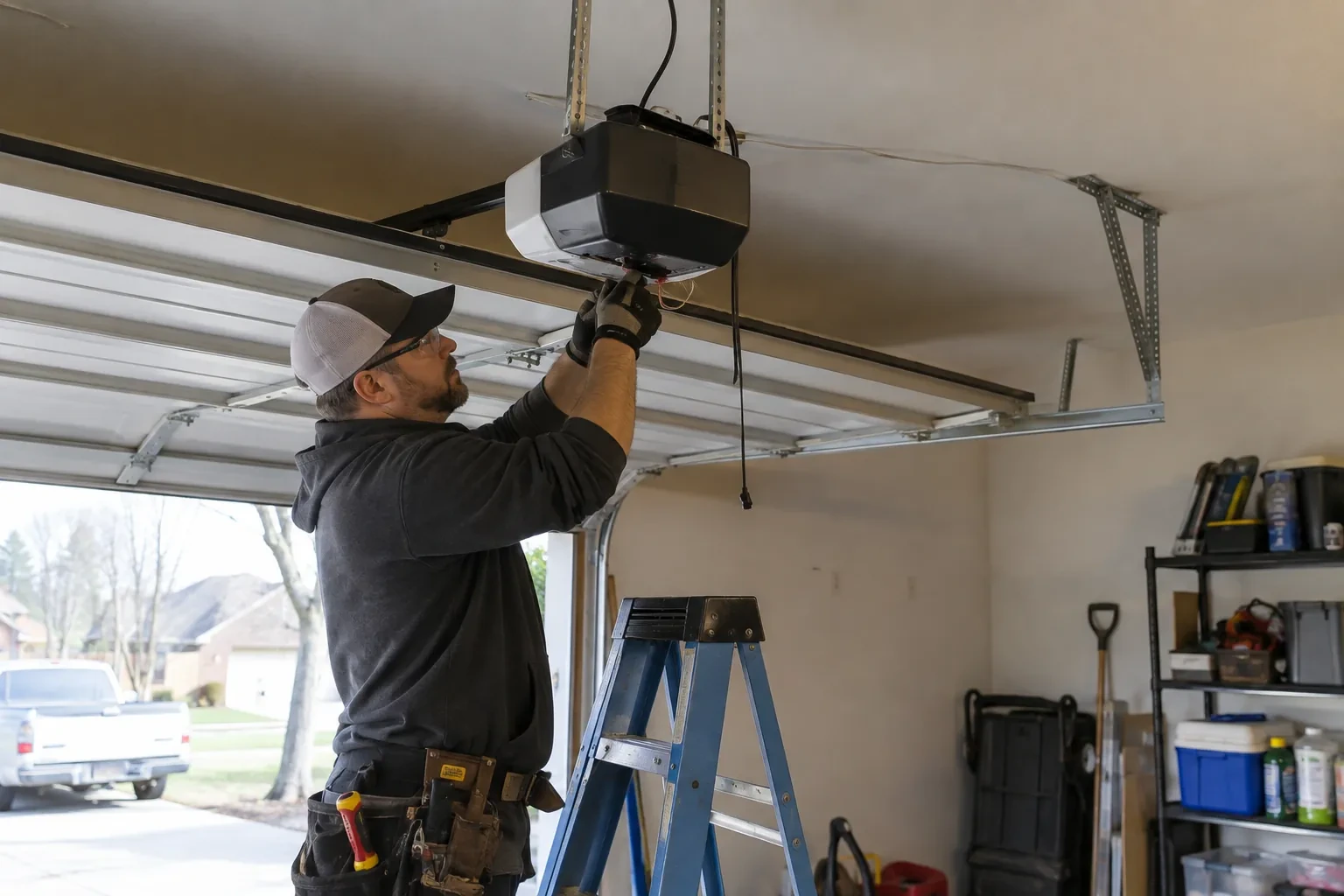
A reversing complaint begins with the travel area and installed protection devices. Photoelectric sensors are checked for alignment, secure mounting, clean lenses and intact wiring. A sensing edge is examined for distortion, connection faults and consistent response along the bottom of the door. The control station, stop circuit and operator indicators add context to the behaviour. Mechanical resistance is checked as well, since a binding door can affect powered movement. This combined assessment identifies whether service belongs at a sensor, its circuit, an operator setting or the moving door itself.
Completing a system-wide test
After tools and supports are cleared, the technician observes the repaired assembly through its entire range. Manual balance is evaluated where the design permits, followed by powered cycles that show cable tracking, roller travel, section alignment and final seating. The operator's stop and reverse responses are checked with its installed protective devices. Unusual vibration, contact marks and loose connections receive a final review. The service record identifies parts fitted, adjustments made, test results and any separate maintenance items the facility may wish to schedule.
Level movement through the opening
After cable, spring or track work, the door should rise with its bottom edge level and move without a side lag. Facility staff can watch the first few routine cycles from a clear position and note whether both cables remain neatly seated on their drums. A new tilt, rubbing sound or loose strand is useful information to report before the opening sees heavier traffic. Keeping pallets and vehicles outside the marked travel zone also protects the restored alignment and gives operators a clear view of the complete door path.
Commercial Sectional Door Repair
In the van
Lift cables and drums
Photoelectric sensors and sensing edges
Shafts and bearings
Reinforcement struts
Vertical and horizontal track
Commercial Sectional Door Repair
What affects the quote
Position of the stopped door
A door resting closed, hanging partly open or displaced from its tracks requires a different stabilization plan before repair work and component removal can begin.
Section construction and finish
Steel, aluminum, insulated sandwich and full-vision sections have different profiles, reinforcement, glazing and hardware patterns that affect matching and replacement scope.
Track support condition
Loose back hangs, shifted brackets, damaged splices or weak anchors add alignment and support work beyond replacing the visibly bent length of track.
What to have ready
- Can traffic use another opening during the work?
- Which numbered bay or opening needs repair?
- Is the track standard, high-lift or vertical-lift?
Commercial Sectional Door Repair: questions
QuestionsDoes a torn bottom seal always mean a seal-only repair?
Not always. The rubber may simply be worn, but a bent retainer, uneven floor, crooked door or impact-damaged bottom section can produce the same gap. The technician checks how the door lands before replacing material. Correcting level or retainer shape first allows the new seal to contact evenly without being stretched to compensate for another fault.
What causes a commercial sectional door to become noisy?
Common sources include roller-bearing wear, loose hinges, dry pivots, a rubbing panel, track movement, shaft-bearing wear and operator-chain vibration. The point in the cycle where the sound occurs helps isolate it. A technician watches and listens during controlled travel, looks for play or contact marks, and services the component creating the repeatable noise.
Can bent track be straightened or must it be replaced?
That depends on the location and degree of deformation. A minor change in an accessible straight section may be corrected while restoring spacing and support. A sharply creased rail, damaged curve, opened seam or track that can no longer hold the roller securely usually calls for a compatible replacement. Brackets, anchors and adjoining track are checked either way.
Related services
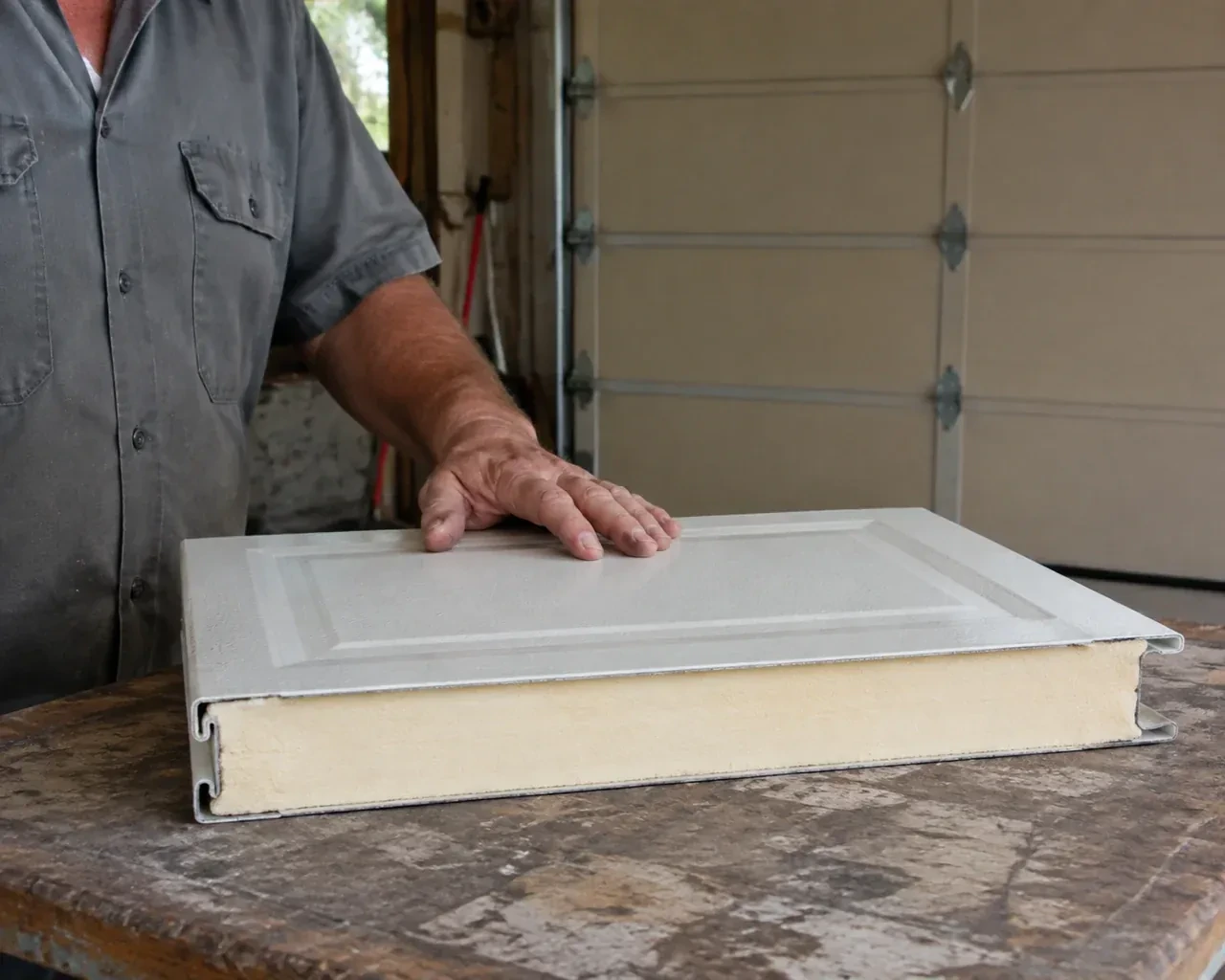
- Insulated Steel Garage Door InstallationYou want windows for natural light without turning the garage into a cold glass wall.
- Wind-Rated Garage Door ReplacementThe property faces open fields, leaving the garage frontage more exposed than neighbouring homes sheltered by trees and buildings.
- Carriage-House Garage Door InstallationYou appreciate the grain and depth of traditional wood doors, though regular refinishing is not part of your plan.