Meadowvale South Garage Door Experts · Mississauga
Garage Door Manual Lock Repair: inside the visit
Garage Doors · Mississauga, Ontario
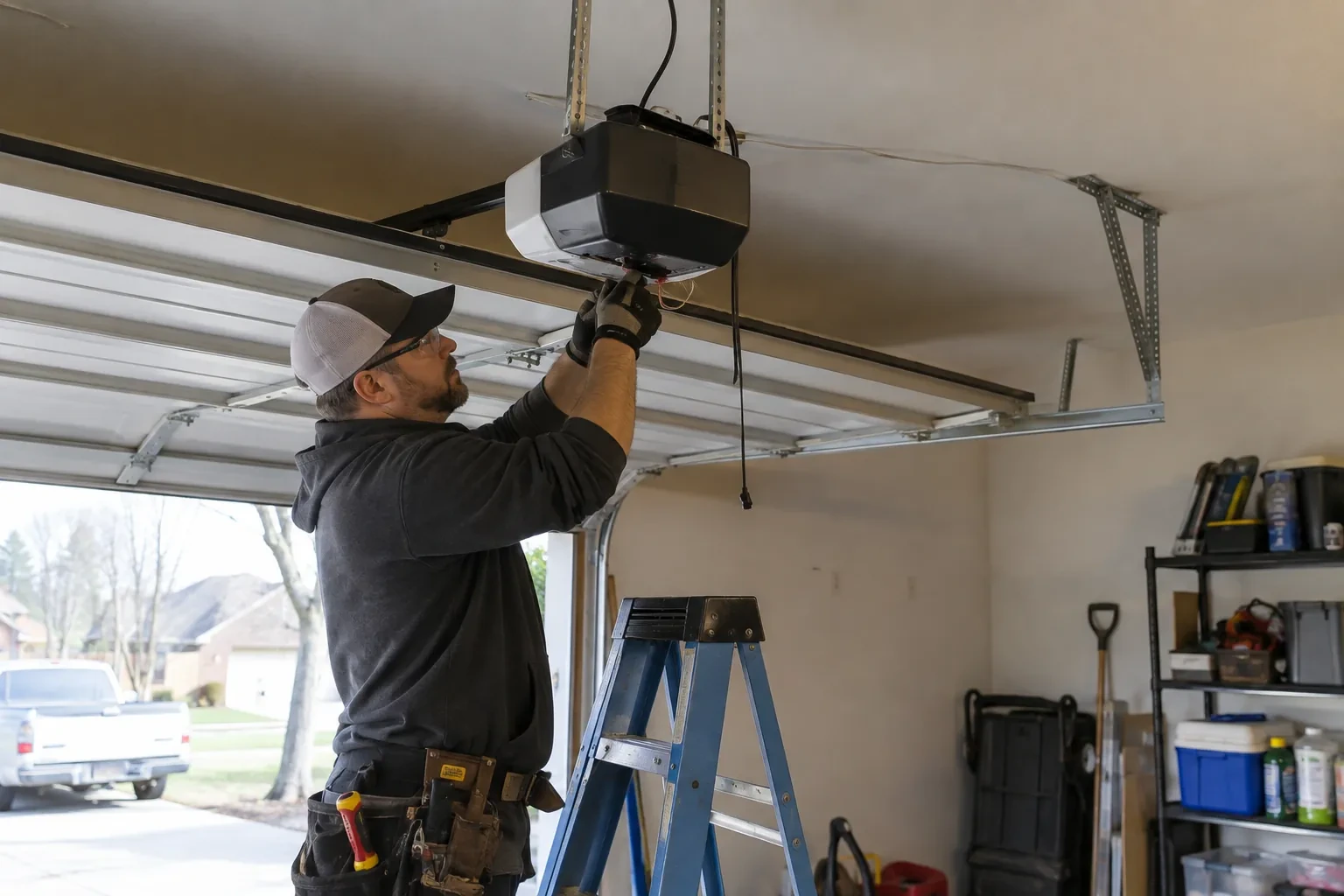
Many lock complaints turn out to be door complaints. The bar on a slide lock or a T-handle has to land in a small slot, and it only gets there if the door stops exactly where it stopped when the lock was fitted. A floor that has heaved, a track bracket that has loosened, a bottom seal that has flattened, or ice under the door all shift that landing point. The visit begins with the door: closed by hand, checked for level and for how it meets the floor and the tracks. With the door where it belongs, the lock often needs only a small adjustment to its guides.
Signs the opener and the lock have met
When an automatic opener shares the door, the technician looks for evidence that the two have collided: a bar bent at the track, a lock body pulled part-way from the section, a crease above the lock, a bent opener arm or a bracket strained at the top panel, and an opener that labours or reverses. The current arrangement is noted as well. Has the lock been disabled as opener makers direct, left live with no reminder, or removed altogether? Does the wall console have a lock-out feature the household knows about? These observations decide what is repaired and, just as importantly, how the door will be set up so the same thing does not happen again.
Fitting a new keyed handle set
When the outside handle is cracked, corroded through or of a pattern that no longer has parts, a complete T-handle set is fitted: exterior handle with cylinder, spindle, inside turn handle and the mounting hardware. The technician measures door thickness to choose spindle length and bolt length, and checks that the new handle's mounting holes match the existing cutout or dresses the opening to suit. On insulated doors a sleeve keeps the spindle centred through the foam. The set is tightened evenly so the handle turns without rubbing the door face, the cylinder is tested with its keys, and the connection to the bars is set so lock and release positions are definite.
Getting the cylinder and bars through winter
The outside cylinder sits on a cold steel face where meltwater runs, so it gets a dry graphite or PTFE lubricant rather than oil, which would trap moisture and grit. A puff at the start of the cold season and another after the first thaw keeps the pins moving. A small tube of lock de-icer in the car is the answer to a keyway that has frozen; hot water is never poured on it. The bars and their guides, which live where salt spray collects, take a light silicone film in late autumn. Keep the threshold clear of packed snow so the door closes to its full depth and the bolt still finds its slot.